
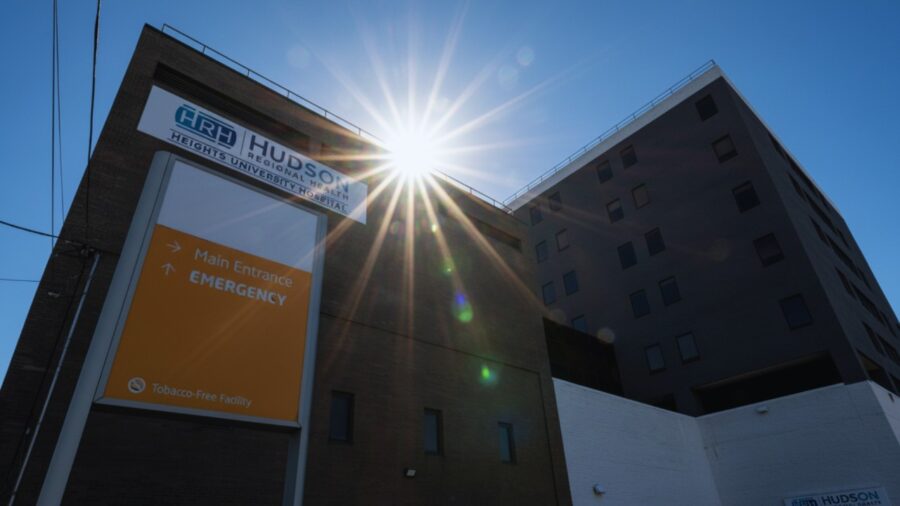

The owner of Heights University Hospital in Jersey City is attempting a remarkable reversal after shutting the facility down, saying it now wants to keep health services alive in the area. New Jersey officials are refusing to go along, arguing the company cannot close a hospital first and then try to rewind the legal process after the fact.
At the center of the fight is Heights University Hospital, formerly Christ Hospital, a long-standing Jersey City institution that has served the community since 1872.
Before its closure, it functioned as a safety-net hospital for many low-income and uninsured patients. Its shutdown left New Jersey’s second-largest city with only one emergency room, intensifying public anger and raising new questions about emergency access in a densely populated urban area.
Hudson Regional Health, which took over the hospital after CarePoint Health’s bankruptcy, says the economics became impossible. According to statements cited in the record, the hospital lost $74 million last year and was projected to lose another $30 million this year.
The company has argued that continuing to operate the facility threatened the stability of its wider health system.
Table of Contents
ToggleA Closure First, Approval Later
Under New Jersey law, a hospital cannot simply shut its doors and settle the paperwork afterward. It must obtain state approval through the certificate of need process.
Yet state records and reporting show Hudson Regional closed most of the hospital in November 2025, kept only the emergency room open, and then shut that department in March 2026 before the closure application had been approved.
State officials said that sequence violated regulations, and Gothamist reported the health department had fined the company $128,000 by the end of March.
In other words, the state is treating the shutdown as a fact that cannot be undone by letter.
Local Officials Say They Were Left in the Dark
Jersey City officials have accused Hudson Regional of acting without transparency and outside the spirit of state law. In a March 14 press release, the city said it sought emergency court action to stop the closure, with Mayor James Solomon arguing the company had steadily reduced services and failed to comply with the legal steps required for a hospital shutdown.
The city also said Hudson Regional had floated a long-term deal tied to fast-tracking luxury residential development on the site, an allegation that deepened local distrust.
Hudson Regional now says renewed talks with its landlord have opened the door to restoring healthcare services, possibly even through relocation. But City Hall says no serious relocation plan was brought to Jersey City, directly contradicting the company’s public posture.
A Legal Fight Still in Motion
Even the state hearing on the closure has now been disrupted. On April 15, the New Jersey Department of Health announced that the scheduled public hearing had been canceled because of a temporary restraining order filed in Hudson County Superior Court on behalf of the hospital.
Separate local reporting said the court temporarily blocked state officials from moving forward with that hearing while the dispute continues.
For now, the case is no longer just about one hospital’s balance sheet. It has become a test of whether operators can close essential healthcare facilities first, absorb modest penalties later, and still retain leverage over what comes next.
In Jersey City, where residents have already lost a major source of emergency care, that question has become far more than procedural.