

Medical malpractice law has always asked injured patients to prove a difficult case. A bad outcome alone is never enough. A claimant usually must show duty, breach of the professional standard of care, causation, and compensable harm.
What is changing in several states is the amount of legal work required before a case can even get moving, along with the level of proof needed for some categories of damages.
National Conference of State Legislatures data shows 28 states require an affidavit or certificate of merit, and 33 states plus Guam impose minimum expert-witness qualifications. Recent reforms in places like New Mexico, Montana, Georgia, and Utah add more screens or narrow how some claims can be argued.
For patients, that matters at the very start of a case. A stronger filing screen can mean paying for an expert review earlier, locating a narrowly qualified physician willing to testify, surviving short deadlines, and building a causation story before discovery has opened in any meaningful way.
In practice, a claim with real merit can still become more expensive, slower, and riskier to file.
Key Points
- More states now require stronger early expert proof.
- Patients face higher filing costs and tighter deadlines.
- Some laws make damages harder to claim or prove.
- Weak procedural mistakes can sink valid cases.
The Basic Burden in Any Malpractice Claim

At baseline, a patient must prove several familiar elements. NCSL summarizes them as duty, breach of the standard of care, injury, and causation. Even before any recent reform, that framework already made malpractice claims different from an ordinary billing dispute or a simple complaint about bedside manner.
Medicine often involves uncertainty, overlapping illnesses, and disputed clinical judgment. A plaintiff usually needs expert testimony to show what a reasonably careful provider would have done and how the alleged departure caused harm.
Causation is where many cases live or die. A patient may have been very sick before a misdiagnosis, surgery delay, medication error, or discharge mistake. Defense lawyers often argue that the injury flowed from the underlying disease, not from negligent care.
Once a state adds a certificate-of-merit rule, stricter expert qualifications, or a higher evidentiary standard for punitive damages, a case that already demanded careful proof becomes even harder to finance and pursue.
Where Lawmakers Are Tightening the Rules
Several states are not moving in exactly the same direction, but a pattern is easy to spot. One group of reforms raises the proof threshold for certain claims.
Another narrows how a plaintiff can frame damages. A third makes the early filing stage more technical and more expensive.
New Mexico Shows the Trend in Plain Language
View this post on Instagram
New Mexico offers one of the clearest recent examples because lawmakers did not merely adjust a cap. HB 99 changed what a plaintiff must prove for punitive damages and when that claim can appear in the lawsuit.
Under the enrolled bill, punitive damages may be awarded only if the prevailing party proves by clear and convincing evidence that the provider acted maliciously, willfully, wantonly, recklessly, fraudulently, or in bad faith.
The same law also says the initial claim for relief cannot include punitive damages. A plaintiff may add punitive damages later only after presenting enough evidence to convince the court that a triable issue is more likely than not after substantial completion of discovery.
A plaintiff’s lawyer now needs stronger proof before a punitive claim can reach a jury, and a judge acts as an early checkpoint. State officials openly described the law as a malpractice reform measure intended to reduce insurance costs and attract physicians.
That policy goal may be defensible in political terms, but from a claimant’s perspective, the path got narrower.
Punitive damages are not available in every malpractice case, of course. Many suits focus on compensatory damages, such as lost income, added medical bills, long-term care, and pain.
Still, punitive claims matter in cases involving concealment, reckless disregard, falsified records, or repeated dangerous conduct. Raising the evidentiary bar in that category changes settlement leverage even when the claim never reaches trial.
Montana Narrowed One Plaintiff Argument About Risk
Montana’s HB 342 is shorter, but its effect can be significant. The law states that in medical malpractice actions, the foreseeability of risks, or of a specific risk, does not change or heighten the duty owed beyond the reasonable standard of care. Lawmakers framed it as a clarification after an unfavorable court decision.
Why does that matter? Consider a case involving a patient with signs of sepsis, an obstetric emergency, or a stroke warning that any clinician knows can spiral into catastrophic harm if time is lost.
Plaintiffs often argue that the obvious gravity of the risk should shape what careful treatment required in the moment. Montana’s statute signals that the legal duty remains tied to the ordinary reasonable standard of care, not a heightened version driven by foreseeable catastrophic harm.
A plaintiff can still argue negligence. Nothing in HB 342 wipes out malpractice claims. Yet one avenue for portraying the urgency and severity of the risk now has less force as a matter of law. For defense lawyers, that can simplify jury messaging. For patients, it trims one argument from an already technical case.
Utah Added More Risk Around Filing and Damages
Utah’s HB 503 moved in a mixed direction. The bill removed the affidavit-of-merit requirement, which sounds plaintiff-friendly at first glance.
But the same legislation also changed damages rules, limited use of billed charges when calculating economic damages, protected a provider’s personal assets unless willful, malicious, or intentionally fraudulent conduct is found, and created routes for defendant providers to seek attorney fees and costs in some situations.
One part of the enrolled bill says a court may not calculate economic damages based solely on amounts listed on a medical bill or invoice. Another part says a plaintiff may not pursue or execute on an individual provider’s personal income or assets unless the court finds willful and malicious conduct, intentional fraud, or inadequate insurance coverage.
A separate attorney-fee provision, reflected in legislative text, allows fee awards where a prelitigation review panel finds no merit or where a claimant fails to cooperate in scheduling.
For patients and their lawyers, fee-shifting changes behavior. A case that once carried ordinary contingency-fee risk can now carry a sharper downside if a panel opinion goes badly or prelitigation procedure is mishandled.
A claimant with modest damages may decide the risk is no longer worth it, even if negligence looks plausible.
Georgia’s 2025 Package Matters Even Though It Is Broader Than Med-Mal
Georgia’s SB 68 was not written only for medical malpractice, yet medical-liability advocates described it as highly relevant to physician defendants, a point that would also resonate with firms like Van Sant Law in Atlanta that operate in Georgia’s personal injury and medical malpractice space.
The package included anti-anchoring rules, trial bifurcation, truth-in-damages provisions, and venue changes, and industry advocates said it was designed to give providers more protection against large verdicts.
Two pieces deserve special attention in the malpractice context. First, “truth in damages” rules can limit how medical expenses are presented, which may reduce the rhetorical force of billed amounts that were never actually paid.
A patient can still sue in Georgia. Yet a stronger defense position at trial often changes what happens long before trial.
Settlement value, expert spending, and venue strategy all respond to procedural reform. In plain terms, a claim can become harder to monetize even when negligence evidence remains strong.
Many States Already Had Early Filing Screens Before Recent Reforms
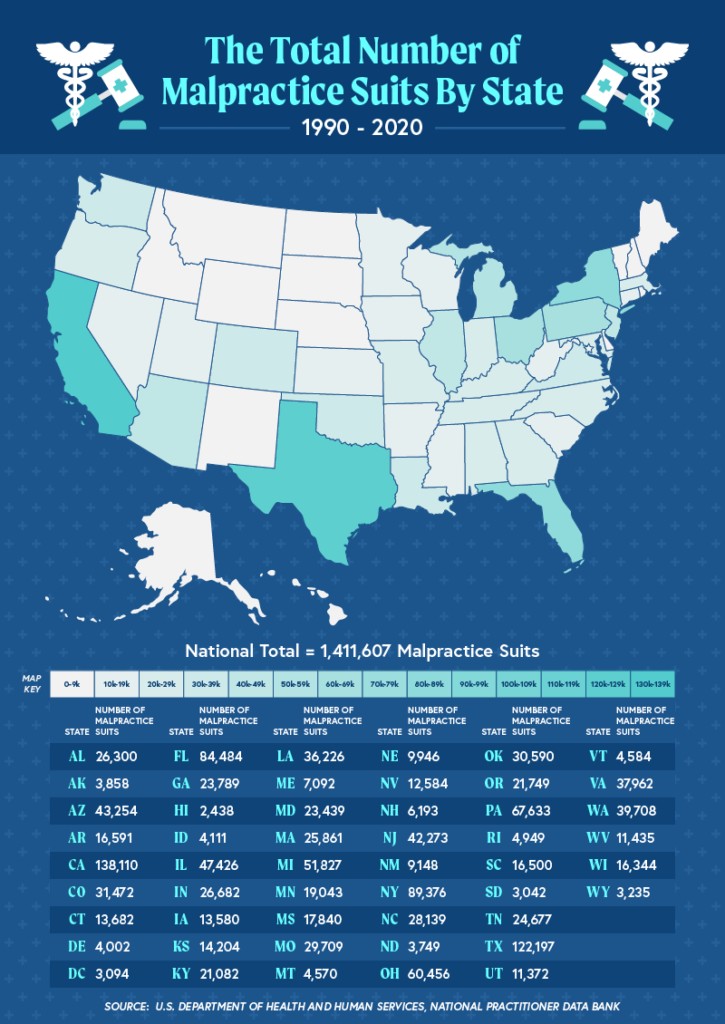
Recent laws get headlines, but a large part of the burden comes from rules that were already on the books and remain active in state court. NCSL says 28 states require some form of affidavit or certificate of merit, and 33 states plus Guam impose expert-qualification rules.
That means a patient in much of the country cannot simply file a complaint, start discovery, and hope to develop the case later. Expert review often must come first.
Iowa is a good example. Iowa Code section 147.140 requires a plaintiff, before discovery and within 60 days of the defendant’s answer, to serve a certificate of merit affidavit signed by an expert witness regarding the standard of care and the alleged breach. Iowa also requires separate affidavits for each defendant.
If the affidavit does not accompany the complaint, and no timely extension motion is filed, the clerk must refuse to file and docket the complaint.
Texas uses a slightly different mechanism. Under section 74.351 of the Texas Civil Practice and Remedies Code, a claimant must serve one or more expert reports, with each expert’s curriculum vitae, by the 120th day after each defendant’s answer is filed. Texas courts may dismiss claims if a sufficient report is not timely served.
Rules like Iowa’s, Delaware’s, and Texas’s do more than filter out weak cases. They also raise the upfront cost of a potentially strong case. Medical experts charge for record review, report drafting, and later testimony.
A family facing lost income, disability, funeral costs, or ongoing care may already be under financial strain. Adding early expert expense can discourage claims that never receive a full factual airing.
A 2026 Supreme Court Ruling Opened One Door, But Only in Federal Court
One major recent development cut the other way. In Berk v. Choy, decided January 20, 2026, the U.S. Supreme Court held that Delaware’s affidavit-of-merit requirement does not apply in federal court because the Federal Rules control the filing of a civil action.
Justice Jackson’s concurrence put the conflict in direct terms: Delaware required an affidavit or extension motion to accompany the complaint, while Federal Rule 3 says a civil action is commenced by filing the complaint.
That ruling matters, but only up to a point. Most malpractice cases are filed in state court. Diversity jurisdiction is not always available, and many claims involve local parties on both sides.
So Berk may relieve one procedural burden in a subset of cases, but it does not erase state-law screening rules where most patients actually litigate. Delaware’s affidavit statute still governs in Delaware state court, and similar state requirements remain widespread.
Why a Higher Burden Changes Real Cases

Legal reform can sound abstract until it lands on a family’s timeline. Picture a newborn brain-injury case, a delayed cancer diagnosis, or a post-surgical infection that turned into septic shock.
Records may be spread across hospitals, specialists, imaging centers, and insurers. One physician may blame another. Causation may require several experts.
If state law adds short deadlines, sealed affidavits, narrow expert matching, or fee exposure, counsel has to spend more money sooner and take on more risk sooner.
That economic reality shapes who gets representation. Large-value cases involving death, paralysis, or lifelong care are more likely to survive screening because the damages can justify the cost.
Smaller but still serious cases, such as preventable complications that led to another surgery, several months off work, or chronic pain, may become harder to place with counsel. A legal standard can stay the same on paper while access to the courthouse shrinks in practice.
Another effect shows up in settlement negotiations. Defense counsel who know a plaintiff must clear a panel, file a compliant affidavit, or survive a higher punitive standard can press harder before mediation. Any procedural weakness becomes leverage. Even when a plaintiff eventually wins, a tougher path often means more delay and more cost.
What Patients and Lawyers Watch Closely Now
For anyone evaluating a malpractice case in 2026, a few questions now matter more than ever:
- Does state law require an affidavit, certificate of merit, or expert report before discovery meaningfully begins?
- Does the state impose unusually strict expert-matching rules by specialty, board certification, or recent clinical practice?
- Has the legislature changed how economic damages, punitive damages, or noneconomic damages are calculated or presented?
- Can defendants seek attorney fees or other sanctions if a panel or court finds the claim lacks merit?
- Is federal court realistically available after Berk, or is state court the only practical forum?
A patient who misses one of those issues early can lose leverage, lose time, or lose the claim altogether.
Final Take
Across several states, malpractice law is becoming more demanding at the front end of a case and more restrictive in the way damages can be pursued or framed.
New Mexico raised the proof burden for punitive damages. Montana narrowed duty-of-care arguments tied to foreseeable risk. Utah added fee risk and tightened damages rules. Georgia adopted broader tort changes that can strengthen defense strategy in medical-liability litigation.
Meanwhile, older affidavit and expert-report rules remain deeply important in states like Delaware, Iowa, and Texas.