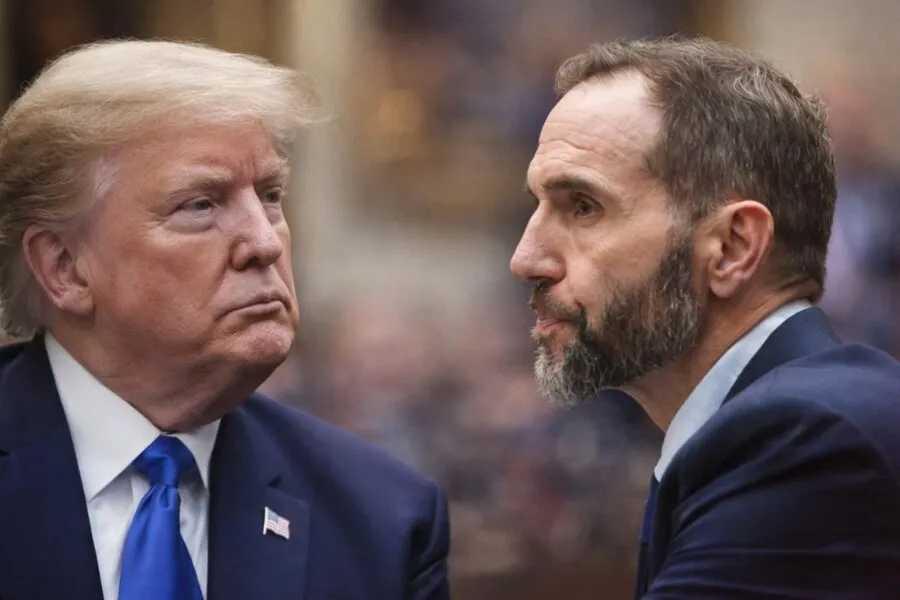

Former special counsel Jack Smith, the prosecutor who brought two federal cases against Donald Trump, told a Republican-led House panel on Thursday that his investigation concluded Trump “caused Jan. 6,” knew it was foreseeable, and tried to “exploit” the violence that shook the Capitol in 2021.
According to ABC News reporting, it was Smith’s most public defense yet of a prosecution that never reached trial, a rare on-the-record confrontation between the architect of the Justice Department’s Jan. 6 case and lawmakers now aligned with a president who returned to office after winning the 2024 election.
Table of Contents
ToggleA Former Prosecutor, Now on Defense
Smith testified before the House Judiciary Committee in a hearing billed as oversight of his office, but the session quickly became something bigger: a live argument over whether the Jan. 6 investigation represented impartial enforcement of criminal law or a politically charged attempt to take down Donald Trump.
Smith, who was appointed special counsel in 2022, insisted the evidence led to charges “without regard to politics,” and said prosecutors pursued the case because they believed Trump “willfully broke” the law in a bid to cling to power after the 2020 election.
Smith’s Headline Claim: “Donald Trump Is the Person Who Caused Jan. 6”
Smith’s core allegation was blunt and repeated. He testified that the investigation found Trump was responsible for what happened on Jan. 6, 2021, that the violence was foreseeable to him, and that Trump sought to use it to his advantage as Congress met to certify the electoral vote.
The message was unmistakable: even though prosecutors never got to present the case to a jury, Smith wanted Congress and the public to hear his office’s bottom line in plain language.
Republicans Press On “Bias,” Democrats Point to Intimidation
Republicans on the committee framed Smith’s work as politically tainted and questioned investigative steps taken by his team, including the use of subpoenas and secrecy orders.
Democrats, meanwhile, leaned on a different theme: that Smith’s investigation and its witnesses faced real-world threats, and that the campaign to discredit the case is part of a broader effort to rewrite the history of Jan. 6.
Al Jazeera reported that as Smith testified, Trump publicly attacked him and called for his prosecution, adding another layer of political pressure around a hearing that was already combustible.
The Cassidy Hutchinson Fight, and What Smith Conceded
A major flashpoint was Cassidy Hutchinson, the former White House aide who gave dramatic Jan. 6 committee testimony in 2022, including an account that she had been told Trump lunged toward the steering wheel of his vehicle as tensions escalated.
According to PBS, Republicans treated Hutchinson’s story as a credibility test. Smith acknowledged important limitations, describing the account as “second hand,” and noting that a Secret Service agent in the car did not confirm the story as Hutchinson heard it.
Smith also said he had not made final trial decisions on which witnesses would have been called, a reminder of what the public never got to see: the prosecution’s final, courtroom-ready version of the narrative.
Still, Smith pushed back hard against the idea that the case rose or fell on one witness. He emphasized that prosecutors had “so many witnesses,” including Republicans and Trump allies whose accounts, he suggested, would have carried particular weight with jurors.
Phone Records and Subpoenas, “Not Spying,” Smith Says
Republicans also focused on the investigation’s collection of “toll records,” metadata showing who called whom and when, tied to some members of Congress. Smith defended that approach as standard in complex criminal investigations and argued it was necessary to map connections relevant to the alleged conspiracy.
He pointed to nondisclosure orders as another ordinary tool, deployed in part to prevent interference or intimidation while investigators sought evidence and spoke to witnesses.
The same lines of questioning surfaced in Smith’s closed-door deposition from December 2025, a partially redacted transcript later released publicly.
Why the Prosecution Ended: DoJ’s Long-Standing “Sitting President” Bar
One of the most consequential facts hanging over the hearing is that Smith did not lose in court. His cases ended because Trump returned to the White House.
Smith abandoned the prosecutions after Trump won the 2024 election, citing Justice Department policy that a sitting president cannot be indicted or prosecuted, even when the government believes it can prove the case.
That policy is rooted in Office of Legal Counsel opinions, including a 2000 DOJ memo concluding that the indictment or criminal prosecution of a sitting president would unconstitutionally undermine the executive branch’s ability to perform its duties.
Legal scholars have long debated that reasoning, but the department’s position has remained durable across administrations, shaping how prosecutors weigh accountability when a target is, or becomes, president.
Smith’s Stance: The Evidence Was There, and He Would Do It Again
For all the legal and political noise, Smith returned again and again to a simple claim: the charges were justified by the evidence.
Reuters reported Smith told lawmakers Trump “willfully broke” laws in his attempt to remain in power, and that the narrative portraying the investigation as partisan was false.
And Smith made one of the clearest statements a former prosecutor can offer after a case collapses for reasons beyond the courtroom: he said he had no second thoughts about bringing it.
Pardons and a Fight Over Memory
Hovering behind Smith’s testimony was the reality of Trump’s second term and its consequences for Jan. 6 accountability.
Trump has issued sweeping pardons for many people convicted in connection with the Capitol attack, a decision that reshaped the legal aftermath of Jan. 6 and deepened the divide over how the event should be characterized in public life.
Smith’s testimony, in that sense, was about more than one prosecution. It was also a warning about what happens when criminal cases become political trophies, and when the justice system cannot reach a verdict because the defendant becomes president again.
What to Watch Next
Several threads remain active after the hearing:
- Public records and oversight pressure: House Judiciary’s oversight campaign is ongoing, and it has already produced extensive transcripts and public documents.
- Legal constraints on what Smith can reveal: Smith is now a private citizen, but the investigative materials remain within DOJ systems and are subject to court rules, privilege fights, and classified-handling restrictions.
- The durability of the “sitting president” policy: DOJ’s OLC opinions remain the central barrier to federal prosecution of a sitting president, and any future shift would likely come from DOJ leadership, Congress, or the courts.
Related Posts:
- Jack Smith Defends Trump Prosecutions, Says Threats…
- 25 Most Dangerous Cities in US - Updated Statistics for 2026
- America’s Murder Capitals - Updated 2026 Rankings of…
- The 100 Most Dangerous Cities in America (2026):…
- Texas Governor Election 2026: Abbott vs Hinojosa Guide
- What Is the Most Dangerous Country in the World in 2025