
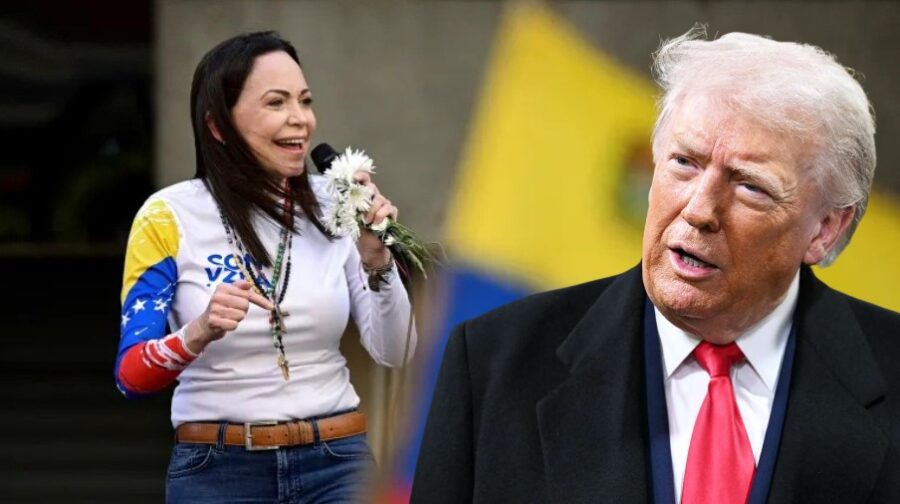

Venezuelan opposition leader María Corina Machado met privately with President Donald Trump at the White House on January 15 and left behind a striking political token: her Nobel Peace Prize medal, presented as a personal tribute to a president who has long signaled he wanted the honor for himself, Reuters reports.
Trump publicly embraced the gesture afterward, describing it on social media as a “wonderful” show of “mutual respect,” while praising Machado as someone who “has been through so much.”
The moment landed globally because it fused two powerful brands, the Nobel Prize and Trump, into a single photo-ready scene.
It also landed for a second reason: Nobel authorities quickly underscored that whatever was physically handed over, the prize itself does not move with the medal.
Table of Contents
ToggleNobel Officials Draw a Hard Line: The Title Cannot Be Transferred
The Norwegian Nobel Institute has been clear that a Nobel Peace Prize cannot be revoked, shared, or transferred once awarded. The medal can change hands as an object, but the status of “Nobel laureate” remains with the recipient named by the Nobel Committee.
That clarification turned the gift into something more pointed than a ceremonial exchange. It was a symbol with limits, and the limits were the story.
A Meeting Shaped by a Power Shift in Caracas
Machado’s White House visit came as Venezuela’s leadership picture remains unstable following sweeping events that removed Nicolás Maduro from power.
Maduro was captured in a covert U.S. operation, and Delcy Rodríguez, formerly Maduro’s deputy, has emerged as acting president while consolidating control.
For months, Machado had been widely viewed as the opposition figure most likely to claim the political center of gravity in a post-Maduro Venezuela. Yet the reporting around Trump’s approach suggests she is no longer the favored bet inside the American administration’s immediate calculations.
Her meeting with Trump lasted a little over an hour, according to Reuters, and she followed it with outreach to U.S. lawmakers on Capitol Hill.
The Wager Behind the Medal
The medal handoff reads as a strategic gamble: a public act of gratitude meant to do private work.
Machado told reporters she “presented” Trump with the Nobel medal, framing it as recognition of what she described as his actions supporting Venezuelan freedom.
Time’s reporting depicts the gift as part of a lobbying push aimed at keeping Washington aligned with democratic claims of legitimacy rather than settling quickly into a pragmatic partnership with whoever controls state power in Caracas.
The political stakes for Machado are unusually personal. Reuters reports she fled Venezuela in December and has been lobbying for a role in what comes next.
Trump, for his part, has sounded skeptical about whether Machado could command enough support to govern, even as he praised her courage and accepted the medal.
Why Trump’s Posture Matters
Trump’s posture matters because it signals where the United States may place recognition, leverage, and resources during a contested transition.
Coverage from Reuters and The Guardian describes Trump as speaking favorably about Rodríguez and emphasizing cooperation, including developments tied to Americans previously held in Venezuela.
That reality is what makes Machado’s gambit so vivid. The medal was not aimed at persuading the world that Trump won a Nobel. It was aimed at persuading Trump that she still belongs in the room.
“Swag Bag Diplomacy”
The scene outside the White House sharpened the backlash. Images showed Machado leaving with a Trump-branded gift bag, and critics quickly framed it as a lopsided exchange: a Nobel medal offered up, and merchandise in return.
The “swag bag” detail spread because it condensed a complicated foreign-policy story into a single, easy-to-share visual. Even sympathetic observers recognized the risk: a democratic opposition icon appearing to barter a prestige symbol for access.
An Extraordinary Gesture With a Narrow Payoff
Nobel history includes refusals and controversies, but it rarely includes a laureate voluntarily handing the medal to a sitting political leader. That novelty helped drive the global attention.
Yet the immediate payoff remains uncertain.
Machado’s supporters see the meeting as proof she can still command attention at the highest level of U.S. power. Euronews reported she greeted supporters afterward and suggested confidence in Trump, though she did not provide concrete policy commitments.
The harder question is whether the medal moved anything measurable behind closed doors. Reuters’ account suggests Trump appreciated the tribute while still questioning Machado’s political viability, a blunt reminder that symbolic gestures do not automatically convert into backing.
What Happens Next
The medal moment is likely to live longer than any single meeting, but Venezuela’s trajectory will be shaped by decisions that are less cinematic:
- Whether Washington treats Rodríguez’s interim government as the fastest route to stability
- Whether opposition figures can unify around a credible transition plan
- Whether democratic elections become a near-term demand or a long-term promise
For Machado, the medal was a message delivered in the clearest language Trump understands: prestige, visibility, loyalty, gratitude. Nobel officials then delivered their own message just as clearly: prestige can be displayed, but it cannot be reassigned.