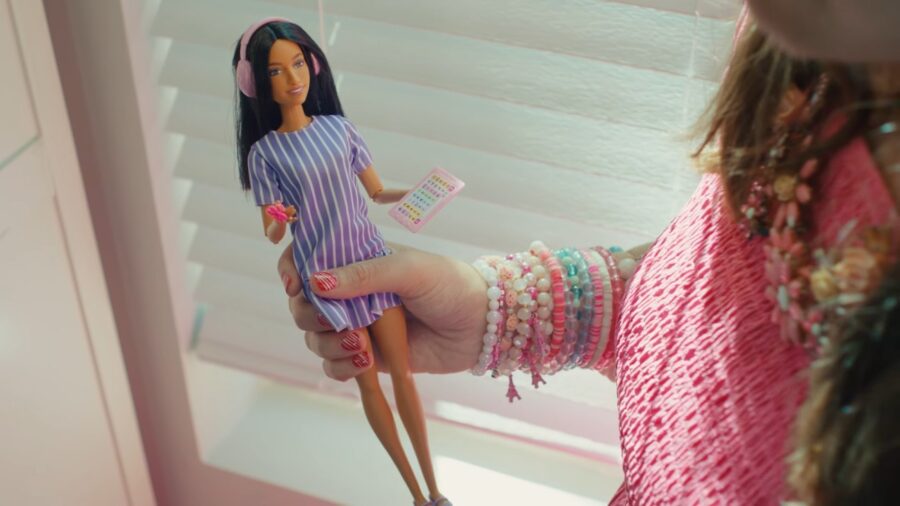

Mattel has introduced its first autistic Barbie, adding the doll to its Barbie Fashionistas lineup, a series the company uses to expand representation across the brand.
The launch, reported by ABC News in an Associated Press wire story published January 12, 2026, places the doll alongside earlier Fashionistas releases that include Barbie dolls with Down syndrome, blindness, vitiligo, and other differences and disabilities.
Mattel said the doll was developed over more than 18 months in partnership with the Autistic Self Advocacy Network (ASAN), a nonprofit run by and for autistic people that advocates for disability rights and better media representation.
Design Choices and Accessories Mattel Says Were Guided by Autistic Input
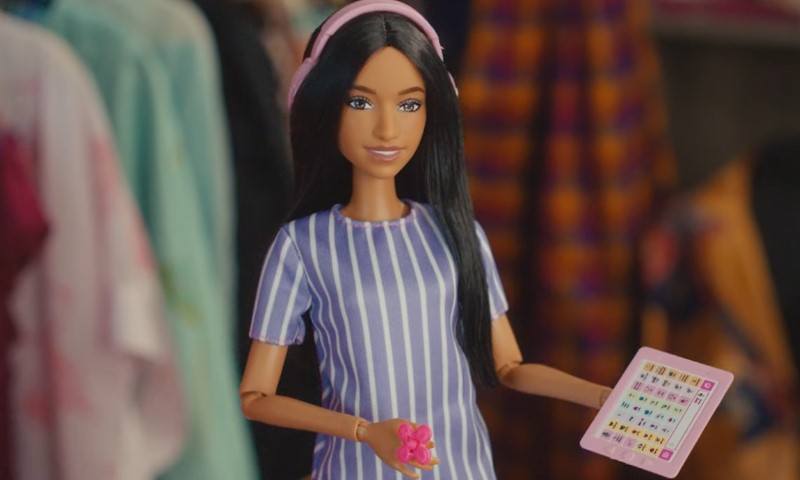
The company and its collaborators framed the doll’s design as a set of deliberate choices meant to reflect common experiences reported by some autistic people, while not presenting any single look or set of traits as universal.
According to the AP story carried by ABC News, the doll’s eyes are angled slightly to the side, a design detail tied to how some autistic people avoid direct eye contact. The doll also includes articulated elbows and wrists, a feature Mattel associates with movement patterns that can include stimming.
Accessories highlighted across reporting include noise-reducing headphones and a fidget spinner. People’s coverage describes a “pink finger fidget spinner” and headphones intended to reduce sensory overload.
The doll is also shown holding a tablet displaying symbol-based augmentative and alternative communication (AAC) apps, a reference to tools some nonspeaking or minimally speaking autistic people use to communicate.
On clothing, People reported that the doll wears a loose-fitting dress described as “sensory friendly,” along with flat shoes intended to support stability and ease of movement.
Availability and Price
The doll’s suggested retail price is $11.87, and it is said that it will be available through Mattel’s online shop and Target starting Monday, with Walmart expected to carry it in March.
Axios likewise reported a $11.87 price point and a Monday rollout at major retailers, with a broader Walmart shelf presence in March.
Statements From ASAN and Mattel
View this post on Instagram
ASAN Executive Director Colin Killick said representation was central to the collaboration. “It is so important for young autistic people to see authentic, joyful representations of themselves,” he said in a statement quoted by People.
Mattel has presented the release as part of its longer-running strategy to diversify Barbie’s image in the toy aisle.
Mattel’s global head of dolls, Jamie Cygielman, said the doll “helps expand what inclusion looks like in the toy aisle and beyond because every child deserves to see themselves in Barbie.”
Broader Context, Autism Prevalence Cited by U.S. Public Health Data
The announcement arrives as autism identification data continues to be updated in U.S. public health surveillance.
The Centers for Disease Control and Prevention’s Autism and Developmental Disabilities Monitoring (ADDM) Network reported autism prevalence among 8-year-old children in 2022 as 32.2 per 1,000, or about 1 in 31, across 16 surveillance sites.
The CDC report also found that autism was more prevalent among boys than girls in the 2022 ADDM data.
For Mattel, the autistic Barbie is the latest in a sequence of Fashionistas releases positioned as representation-driven products.
For families and advocates, the impact will likely be judged less by the headline and more by how the doll is received by autistic children themselves, and how responsibly autism is discussed when the doll appears in marketing, classrooms, and everyday play.