Skip to content
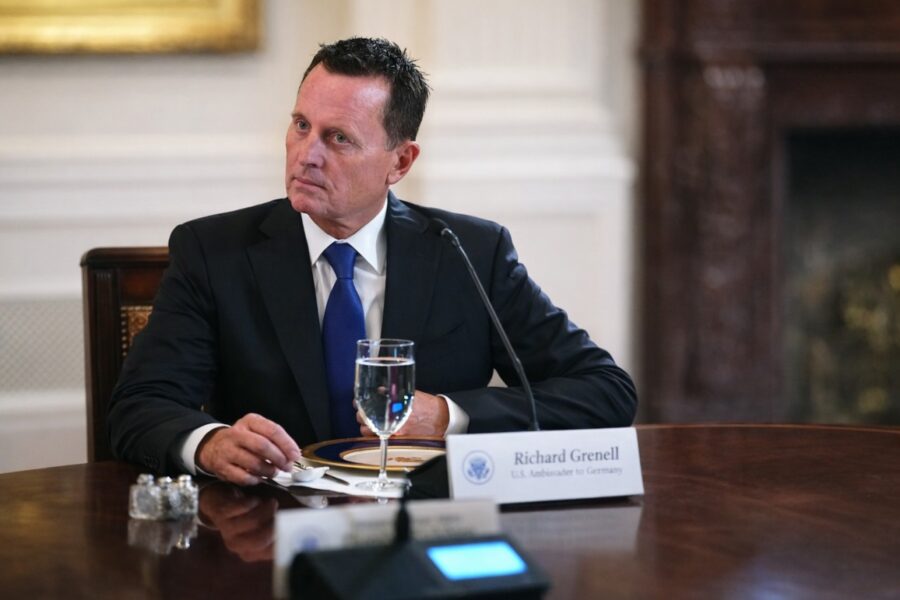

Ric Grenell, one of Donald Trump’s most visible foreign policy loyalists, is at the center of a fresh round of Washington intrigue after reports said he has been angling for the job of U.S. ambassador to Russia.
The report, first amplified through tabloid and follow-on coverage, has not been confirmed by the White House, and Grenell has publicly rejected it as false.
Even so, the episode has drawn attention because it lands at the intersection of Trump’s back-channel style diplomacy, a still-vacant post in Moscow, and Russia’s increasingly severe repression of LGBTQ people.
Table of Contents
ToggleA Sensitive Vacancy in a High-Stakes Capital
The Moscow ambassadorship is no ordinary diplomatic assignment. Reuters reported in June 2025 that Ambassador Lynne Tracy was preparing to leave her post, and later reported that she had departed Moscow on June 27, 2025, with no successor named at that point.
As of the latest reporting tied to the current Grenell story, the position remains unfilled, leaving one of America’s most sensitive diplomatic posts open during a period of deep strain in U.S.-Russia relations.
Grenell would be a politically loaded choice. He served as U.S. ambassador to Germany under Trump and later as acting director of national intelligence, making him one of the president’s most trusted envoys on foreign policy matters.
More recently, coverage cited by The Advocate identified him as Trump’s special envoy for special missions, a role that has kept him inside the administration’s orbit even as formal diplomatic posts remain in flux.
The Report, and the Denial
The central claim, that Grenell wants the Russia posting, rests on reporting that cited unnamed sources. The Advocate said Grenell was “eyeing” the post, while The Daily Beast reported he had denied the account, calling it “totally fake news.”
That leaves the core premise unverified. There has been no public White House announcement naming him to the role, and no formal nomination has surfaced in the reporting reviewed here.
For a story built on palace intrigue, that distinction matters. Political chatter in Washington often starts with trial balloons, internal lobbying, or rival leaks.
Without a nomination, public vetting process, or official confirmation, the Grenell-to-Moscow scenario remains a live rumor, not an established personnel decision.
Why Russia Changes the Meaning of the Story
What gives the report unusual force is Russia itself. Grenell is openly gay, and any move to place him in Moscow would carry symbolic weight because the Kremlin has spent years escalating its campaign against LGBTQ visibility and organizing.
In November 2023, Russia’s Supreme Court labeled what it called the “international LGBT movement” extremist, a step the U.N. human rights office warned could expose people associated with LGBTQ groups to criminal charges and imprisonment.
That pressure has only widened. Human Rights Watch reported in 2025 that the extremist designation had already produced a growing toll for LGBTQ people and supporters, and in March 2026 it warned that Russian authorities had gone further by targeting a leading LGBTQ rights group in St. Petersburg as extremist.
In other words, any prospective U.S. ambassador would arrive in a country where state hostility toward LGBTQ identity is no longer rhetorical theater but an active legal and policing framework.
More Than a Personnel Story
So far, the evidence supports a narrower conclusion than the headlines suggest: Grenell has been mentioned in reporting around the Moscow job, he has denied the claim, and the post remains strategically important and vacant.
Yet the story has traveled because it says something larger about the Trump era’s foreign policy style, where unofficial maneuvering, personal loyalty, and symbolic appointments often matter nearly as much as formal process. In Moscow, symbolism would be impossible to separate from substance.
Related Posts:
- Capital Cities in Europe: Top Destinations For You…
- Safest Countries in the World in 2025 - GPI…
- What Is the Most Dangerous Country in the World in 2025
- 25 Most Dangerous Cities in US - Updated Statistics for 2026
- 17 Worst Prisons in the US in 2026 - America's…
- Most Dangerous Cities in Mexico 2026 - Top 10 Places…