Skip to content
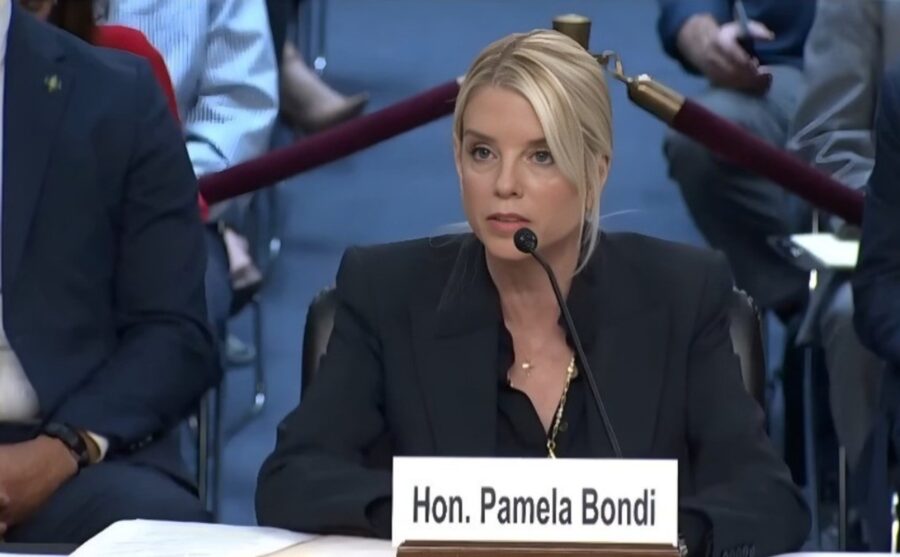

A single page visible in a binder at a combative House hearing has opened a fresh line of attack on the Justice Department, and a fresh set of questions about how Congress is being allowed to review the government’s massive release of Jeffrey Epstein case material.
Photographs from Wednesday’s testimony show Pam Bondi holding a packet that appears to include a printout titled “Jayapal Pramila Search History,” listing specific file entries connected to lawmakers’ review of unredacted Epstein records.
The lawmaker named on the sheet, Pramila Jayapal, called it “totally inappropriate” and warned that an agency-controlled review process could be turned into a way to preview and blunt congressional oversight.
Now Jamie Raskin, the top Democrat on the House Judiciary Committee, says he will press the Justice Department’s inspector general to investigate whether the DOJ monitored members’ searches and then used the information in preparation for an oversight hearing.
Table of Contents
ToggleWhat the Photos Show, and What They Do Not
The most concrete fact is the existence of the document itself in Bondi’s hearing materials. CBS News reported that images taken by photographers captured the “Jayapal Pramila Search History” header and a list of items tied to the DOJ’s Epstein file database.
What remains unsettled is the provenance and intent.
Reporting in multiple outlets notes that it is not publicly clear how the list was generated, whether it came from routine system auditing, security logging, a customized report, or manual compilation.
That distinction matters because a system can log user actions for legitimate security reasons, and the same logs can be repurposed for political or strategic aims.
Jayapal and other Democrats argue that the optics, plus the use of the sheet in a hearing, make the episode look like monitoring designed to anticipate lawmakers’ questions.
Why Congress Was Reviewing Unredacted Epstein Material in the First Place
The dispute sits inside a larger, fast-moving fight over compliance with the Epstein Files Transparency Act, a law passed as H.R. 4405 and signed on November 19, 2025.
DOJ says it released nearly 3.5 million pages of responsive material, including more than 2,000 videos and 180,000 images, describing the production as compliance with the statute.
The department’s public “Epstein Library” also warns that, because of volume and deadline pressure, the website may inadvertently contain non-public personally identifiable information or other sensitive content.
After criticism over redactions and victim privacy, the DOJ announced a process allowing members of Congress to review unredacted versions on DOJ computers, with restrictions including no electronic copies and no staff access, AP News report.
That controlled-access design is central to the current allegations. If members can only search within an agency-run system, the agency can also see what is being searched, unless strong safeguards are in place.
The Hearing That Put the Binder in View
Bondi’s appearance on February 11 was already high-stakes, fueled by claims that DOJ redacted too aggressively in some places and too sloppily in others.
Reuters reported lawmakers accusing the DOJ of shielding the names of alleged associates and failing to meet transparency expectations, with Bondi defending the department’s process and rejecting calls for a direct apology over how materials were released.
Time described a particularly charged moment when Jayapal asked Bondi to apologize directly to survivors present, and Bondi declined.
Against that backdrop, the “search history” sheet landed like a second controversy inside the first.
What Democrats Say Happened
Raskin’s statement argues the department created a review setup that required members to travel to a DOJ site and use DOJ-controlled tools, then tracked “every document” members pulled up and folded that data into the attorney general’s hearing prep.
Courthouse News reported Democrats are demanding an inspector general probe, framing the list as evidence DOJ logged which unredacted files members reviewed and then leveraged it in a political setting.
The implied charge is not merely discourtesy. It is an institutional claim: oversight cannot function if the overseen agency can watch the oversight in real time and tailor testimony around it.
What DOJ Has Said Publicly So Far
As of the latest reporting cited above, DOJ had not provided a detailed public explanation for the “search history” sheet, including whether it is an automated audit output, who requested it, and why it appeared in Bondi’s binder.
DOJ’s broader public posture on the Epstein release has emphasized scale, speed, and the competing demands of transparency and victim privacy, including public warnings that sensitive material could slip through due to volume.
What Investigators Will Likely Look for Next
If the inspector general opens a review, the factual questions are straightforward, even if the politics are not:
- Was search activity logged for members accessing unredacted files, and what exactly was captured (queries, clicked documents, timestamps, user IDs)?
- Were members notified in writing that monitoring would occur as a condition of access?
- Who generated the “Jayapal Pramila Search History” output, on what date, and at whose request?
- How widely were such reports produced, and for which members?
- How did the report end up in hearing preparation materials?
A credible account has to reconcile the existence of the sheet in Bondi’s binder with the DOJ’s obligations to secure sensitive records and protect victims.
Why the Episode Matters Beyond Epstein
The fight is setting a precedent for how Congress reviews large, sensitive datasets held by the executive branch.
If lawmakers accept that controlled access requires monitoring, oversight becomes less independent. If DOJ cannot secure the material without logging and restrictions, full public release becomes riskier, especially given DOJ’s own warnings about inadvertently exposing personal information.
The question Washington is now circling is narrow and sharp: was Wednesday’s “search history” page a routine artifact of a secure review environment, or evidence of an agency using its access controls to map, and possibly counter, congressional oversight.
Related Posts:
- Under Oath and Under Pressure, Hillary Clinton…
- Safest Countries in the World in 2025 - GPI…
- 25 Most Dangerous Cities in US - Updated Statistics for 2026
- Bill Clinton Confronted With ‘Hot Tub’ Photo in…
- Capital Cities in Europe: Top Destinations For You…
- What Is the Most Dangerous Country in the World in 2025