Skip to content
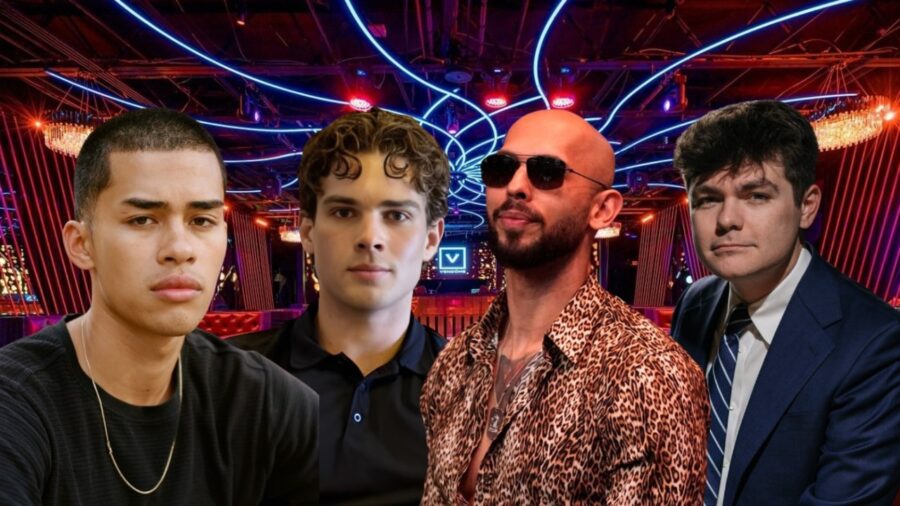

A Miami Beach nightclub is under intensifying scrutiny after videos spread online showing a group of far-right and manosphere-linked influencers singing along to Ye’s “Heil Hitler,” a track widely condemned for glorifying Adolf Hitler.
The incident, filmed inside Club Vendôme, triggered public outrage and prompted the venue to issue a late-night apology and announce an internal review.
Table of Contents
ToggleThe Videos That Set off the Backlash
The footage, compiled and reposted across social platforms on Sunday, shows prominent online personalities, including Nick Fuentes, Andrew Tate, Sneako, and the streamer known as Clavicular inside Vendôme as the song plays.
In one clip referenced by Miami New Times, the group arrives in a limousine with the track blasting. Another clip shows people in the club chanting lyrics that include a Nazi slogan.
Miami New Times also reported that men’s rights influencer Myron Gaines appears in the footage repeatedly making a Nazi salute.
The New Times report described the song as being played “at the request” of the influencers featured in the videos, a claim echoed by the Anti-Defamation League in a social media post condemning the incident.
Vendôme’s Response: “Deeply Offensive and Unacceptable”
By Sunday night, Vendôme issued a public statement through Instagram calling the video “deeply offensive and unacceptable,” and saying the club and its hospitality group do not condone antisemitism, hate speech, or prejudice.
The venue said it is conducting an internal review to determine how the track was played and promised additional safeguards to prevent its venues from being used as platforms for harmful behavior.
CBS Miami, which also reported the video was recorded on Thursday night inside Vendôme, quoted the venue’s statement and noted its pledge to hold responsible parties accountable.
Political Leaders Weigh In as Outrage Spreads
The controversy quickly moved beyond nightlife gossip into civic condemnation.
CBS Miami reported that Miami-Dade County Mayor Daniella Levine Cava posted on X that hate has “no home” in the county, calling the reports “deeply disturbing and unacceptable,” and urging swift accountability.
As the backlash grew, other local figures and advocacy voices amplified calls for consequences, framing the incident as public normalization of extremist symbolism rather than a private stunt.
Why the Song Is Uniquely Inflammatory
Ye released “Heil Hitler” independently in May 2025, according to Miami New Times, and the publication reported it was subsequently banned from major streaming platforms and banned in Germany due to laws restricting extremist symbolism and hate speech.
The track has already carried real-world consequences for Ye. In July 2025, Australia revoked Ye’s visa after the song’s release, a decision confirmed by government officials in reporting by the Associated Press and Reuters.
That history is part of what makes the Vendôme footage particularly combustible. The content is widely recognized as hate-glorifying material, not a politically ambiguous lyric or a misunderstood reference.
The Influencers, and the Ecosystem Behind the Spectacle
The figures seen in the clips operate in a space where outrage reliably converts into attention, and attention converts into income.
Miami New Times described Nick Fuentes as a white nationalist and antisemitic live streamer, and placed the group within a cluster of manosphere and far-right online worlds.
Wired has also reported on Fuentes’ growing influence and extremist organizing ambitions, describing him as a central figure in white Christian nationalist politics online.
The presence of Tate, Sneako, and Gaines ties the video to a broader influencer ecosystem that frequently blends grievance politics, misogyny, and culture-war provocation.
The Guardian has documented how manosphere figures profit by mixing sexist ideology with lifestyle content aimed at young men.
Sneako, in particular, has drawn repeated antisemitism accusations in other public controversies. In 2025, NBC New York reported criticism of New York City Mayor Eric Adams after Adams appeared on a stream with Sneako, who was described as being accused of antisemitism.
What Vendôme Is Really Facing Now
Vendôme’s statement promised an internal review and safeguards.
The harder question is what the club’s operational reality looked like in the moment: who approved the track, what policies exist for hate content, and what staff did when Nazi gestures and chanting were visible.
In nightlife, what happens in the DJ booth rarely stays in the DJ booth. Viral footage turns a private venue into a public stage, and a club’s brand becomes inseparable from what it tolerates.
Vendôme may survive the news cycle, but the incident exposes a bigger vulnerability across the entertainment business: the ease with which extremist aesthetics can be performed in mainstream venues, then distributed as content.
The Broader Context: Online Hate and Real-World Spillover
The Vendôme video also lands in a climate where governments and civil society groups are pressuring platforms to curb antisemitic content and extremist messaging.
In 2024, Reuters reported that the Biden administration pressed companies, including TikTok, Meta, and X, to step up efforts against antisemitic posts.
That tension between moderation and virality shows up here in a different form. Even when music is removed from major services, it can still travel through reposts, private files, and club sound systems. The venue becomes the amplifier.
What Happens Next
For now, the incident is moving through the standard accountability pipeline: public outrage, political condemnation, a corporate apology, and a promised internal investigation.
What remains unknown is whether Vendôme will identify specific staff actions, whether any event partners were involved, and whether local authorities pursue consequences beyond public statements.
Until those answers surface, the nightclub’s apology reads as a damage-control response to a video that succeeded at its core purpose: forcing attention.