Skip to content
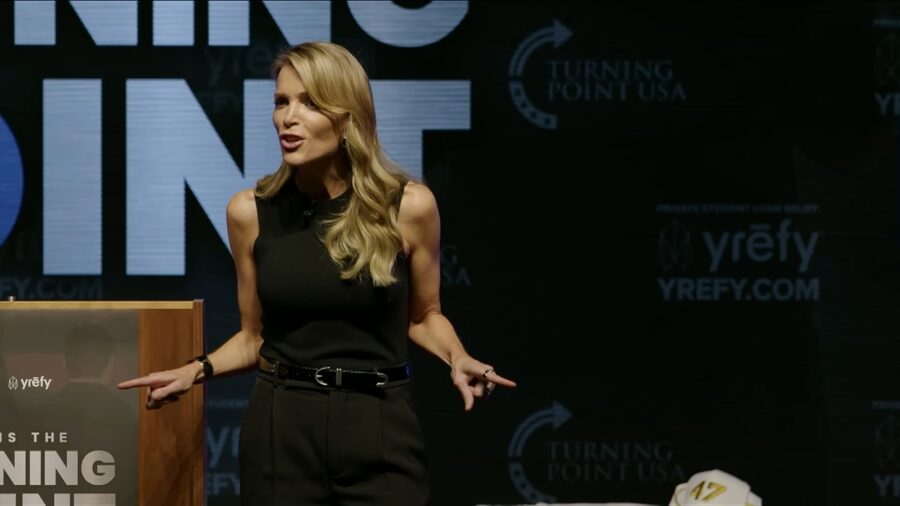

Megyn Kelly has moved from commentary to combat in the national argument over the killing of Alex Pretti, a 37-year-old ICU nurse shot by federal immigration officers in Minneapolis on January 24, 2026.
On her show, Kelly said she did not feel sorry for Pretti and portrayed him as an agitator who brought danger on himself by entering a federal operation while armed.
Her remarks landed in an already unstable moment: federal officials have issued shifting public descriptions of what happened, while video-based reconstructions and an early government account sent to Congress have raised questions about whether Pretti posed an imminent threat at the moment shots were fired.
Table of Contents
ToggleThe Killing That Set off the Current Crisis
Pretti was killed during an immigration enforcement operation in Minneapolis, an episode that has drawn sustained protests and intense scrutiny from state and local officials.
ABC News reports that Pretti was a licensed gun owner with a permit and no criminal record, and that multiple videos show federal agents spraying him with an irritant and pinning him to the ground before the shooting.
ABC’s timeline, built from six verified videos, adds a technical detail that has become central to the dispute: a forensic audio analysis for ABC found 10 shots fired in less than five seconds.
Independent video does not answer every factual question, and even policing experts caution about blind spots outside frame and audio limits.
Still, expert reviewers interviewed by The Washington Post say what is visible suggests the situation could likely have been avoided with basic public-safety tactics and communication.
What the Government Has Said So Far, and What It Has Not
A key development came on January 27, when reporting based on a notice to Congress confirmed that two federal officers fired their weapons during the encounter.
The AP reports the notice stated a Border Patrol officer and a CBP officer each fired Glock pistols, and that CBP’s Office of Professional Responsibility reviewed body-worn camera footage and agency documentation as part of its analysis.
CBS News, citing the report obtained by the network, describes an initial confrontation that included pepper spray, a struggle, and an officer yelling “He’s got a gun!” before two agents fired.
CBS also notes the report does not mention Pretti reaching for his firearm, which is significant because early DHS messaging claimed he “approached” agents with a 9mm and implied an active threat.
That gap, between early public claims and what the preliminary report does and does not allege, has become the core factual battleground.
Gun Rights Advocates Enter the Debate
The shooting has also triggered a rare and politically awkward split inside gun-rights circles.
In an NPR segment republished by VPM, Rob Doar of the Minnesota Gun Owners Law Center said videos show no point where Pretti threatened agents or touched the firearm, and he argued that carrying a firearm at a protest can be legal under Minnesota law.
The segment also highlights the political tension: senior administration figures publicly emphasized the gun as justification, while some gun-rights advocates viewed that messaging as an attempt to chill Second Amendment rights.
Kelly’s Argument: Presence Equals Culpability
Kelly’s position is straightforward: she framed Pretti’s actions as interference with law enforcement and argued that bringing a gun into that environment predictably escalates risk.
In the clips and write-ups of her remarks, she characterizes Pretti as “subversive,” says he was “not there to help,” and links the outcome to the decision to engage agents during an operation.
Her broader claim is cultural, not procedural: she presents protest activity near enforcement operations as organized provocation designed to bait officers into viral confrontation.
Why Her Comments Hit So Hard Right Now
What a totally moronic take after ICE just executed a man in the street cartel style. Your brain is a split pea floating in a bowl of soup.
— Dankchains (@DANKCHAINS) January 24, 2026
Kelly’s critique might have stayed inside the usual media ecosystem if the underlying facts were stable. They are not.
The most consequential reporting to date has emphasized three points that remain in tension:
- Two officers fired, not one, according to the notice to Congress and subsequent reporting.
- Video-based analyses challenge the idea that Pretti advanced on agents in a threatening manner, and ABC’s contributor John Cohen said he has not seen video evidence supporting claims that Pretti arrived intending to shoot officers.
- The preliminary report described by CBS does not claim Pretti reached for his firearm, despite early DHS statements emphasizing the gun as the central threat.
In that context, a categorical moral verdict, “no sympathy,” reads to many listeners as an attempt to resolve unanswered factual questions by force of rhetoric.
Political Damage Control Moves Into View
The White House has signaled a desire to tamp down the blowback. The AP reports President Donald Trump said the administration would “de-escalate a little bit,” and that border czar Tom Homan was dispatched to take over the Minnesota operation after Pretti’s death.
AP also reports Stephen Miller said CBP officers “may not have been following” protocol and that early DHS statements were based on reports “on the ground.”
The Washington Post reports growing Republican criticism of the administration’s handling of the case, framing it as a rare intra-party backlash with potential electoral consequences heading into 2026.
What Matters Next
What happens next is not a cable-news argument. It is evidentiary.
The decisive questions will be answered, or not answered, in a sequence that is already underway:
- Full release and review of body-worn camera footage, plus forensic work that clarifies timing, positioning, and threat assessment.
- Reconciliation of early DHS public statements with what CBP’s internal reviewers say the footage shows.
- Independent assessments from state and local officials, who have publicly disputed the initial federal characterization of events.
Kelly’s commentary is part of the story because it reflects a wider strategy: lock in a moral narrative before the record is complete. The record, so far, is incomplete, and the documented inconsistencies are why the story has not stabilized.
Related Posts:
- 25 Most Dangerous Cities in US - Updated Statistics for 2026
- What ICE Does and Why It Matters - U.S. Immigration…
- America's Murder Capitals: A 2026 Ranking of the…
- Senior Border Patrol Official Greg Bovino Set to…
- Safest Countries in the World in 2025 - GPI…
- Most Dangerous Cities in Mexico 2025 - Top 10 Places…