Skip to content
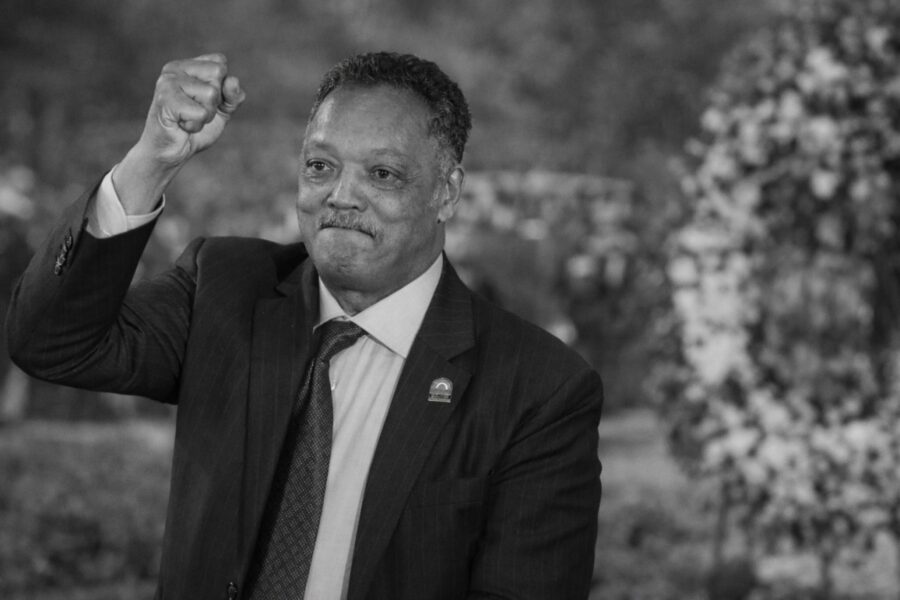

The Rev. Jesse Jackson, a towering figure of the modern American civil-rights movement who fused pulpit rhetoric with street-level organizing and national electoral politics, has died. He was 84.
Jackson died Tuesday, February 17, 2026, at his home in Chicago, according to reporting confirmed by his family, including his daughter, Santita Jackson.
For decades, Jackson held a singular role in public life: part movement organizer, part political entrepreneur, part moral commentator, and part negotiator who periodically inserted himself into international crises.
Admirers called him relentless and necessary. Critics accused him of turning advocacy into a personal brand. The argument itself traced his reach.
Table of Contents
ToggleFrom King-Era Organizing to a Post-1968 Movement Megaphone
Jackson emerged from the orbit of Martin Luther King Jr. and the Southern Christian Leadership Conference, rising through campaigns that treated economic power as a civil-rights battlefield.
Reference histories and major obituaries credit his work in and around Operation Breadbasket with sharpening a model of “selective buying” pressure and corporate accountability that later became a template for broader activism.
After 1968, Jackson moved into the vacuum left by King’s assassination, becoming one of the country’s most visible civil-rights spokesmen for a half-century, with a style built for cameras and crowds: chant-ready slogans, call-and-response cadences, and moral urgency calibrated for prime time.
Building Institutions That Outlasted Election Cycles
In 1971, Jackson founded Operation PUSH in Chicago, a vehicle for economic justice campaigns and community organizing that sought measurable leverage over hiring, contracting, and investment.
A little over a decade later, he launched the National Rainbow Coalition, then later merged efforts under the banner of the Rainbow/PUSH Coalition. The coalition’s premise was practical: assemble voting blocs and advocacy networks across race, class, and identity lines, then force institutions to respond.
Obituaries from the Associated Press and Reuters describe his model bluntly: he organized, he negotiated, he threatened boycotts, and he demanded a seat at the table for communities that were routinely shut out.
Two Presidential Runs That Reshaped Modern Democratic Politics
Jackson’s turn from movement leadership into national electoral politics came through two bids for the Democratic Party presidential nomination, in 1984 and 1988.
In 1988, he mounted a historically strong campaign, winning contests and forcing the party to reckon with Black voter power as a core constituency rather than a reliable afterthought.
A Washington Post reflection from a reporter who covered that race describes the racism he faced as overt and, at times, undisguised, while also noting the scale of his primary victories.
His legacy in that era is often summarized with a single line: he proved a national path existed. Reuters and AP tie that path to the later viability of candidates such as Barack Obama.
Recognition, and a Complicated Public Record
Jackson received the Presidential Medal of Freedom in 2000. The official remarks recorded at the time praised his lifelong work for justice.
His public life also carried controversies that mainstream obituaries routinely include, ranging from political flare-ups to personal scandals that damaged his standing even while he remained influential.
Later Years: Illness, Succession, and Final Chapters
Jackson disclosed a Parkinson’s diagnosis in 2017. Later reporting says his condition progressed and included a diagnosis of progressive supranuclear palsy.
He stepped down from organizational leadership in 2023, marking a formal handoff after decades at the center of the institution he built.
Why His Death Lands as the End of an Era
Jackson’s career fused three lanes of American public life that rarely stay merged for long: moral leadership, protest politics, and party power. He could be a movement spokesman at noon, a negotiator by evening, and a national political figure by night, often in the same week.
That blend, along with his role as a King-era figure who remained central long after the 1960s, is the frame for his place in history.
Related Posts:
- Safest Countries in the World in 2025 - GPI…
- How Many International Airports Are There In The US in 2026?
- How Is Each State Represented in the Electoral College?
- 25 Most Dangerous Cities in US - Updated Statistics for 2026
- Capital Cities in Europe: Top Destinations For You…
- 12 Worst Neighborhoods in Chicago - Dangerous Places…