Skip to content
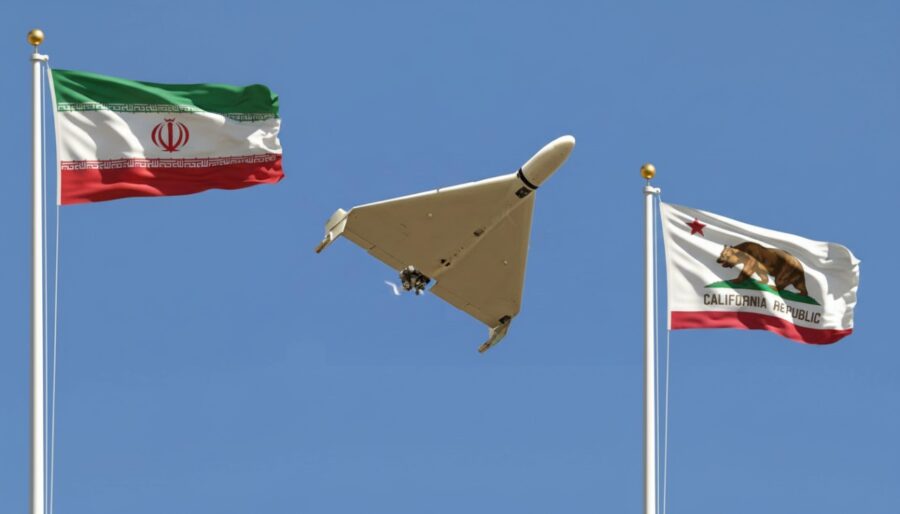

A confidential FBI bulletin warned California law enforcement that Iran had allegedly aspired to carry out a surprise drone attack on targets in the state if the United States struck Iran, according to reporting reviewed by ABC News and Reuters.
The alert said the scenario involved drones launched from an unidentified vessel off the U.S. coast, but it also said authorities had no additional information on timing, method, targets, or perpetrators.
Table of Contents
ToggleWhat the Warning Actually Said
The language of the bulletin is important. Reuters reported that the FBI said Iran had “allegedly aspired” to conduct such an attack as of early February. That wording points to a suspected ambition or contingency idea, not a confirmed, fully developed operational plot.
The bulletin was distributed through the Los Angeles Joint Regional Intelligence Center to agencies in California, giving the warning institutional weight even as the underlying intelligence remained limited.
Why the Alert Surfaced Now
The warning became public as the U.S.-Iran crisis intensified sharply. Reuters reported that the bulletin predated the latest round of open hostilities, meaning federal authorities were already considering homeland retaliation scenarios before the current war escalated.
By March 11, 2026, Reuters said the conflict had entered its 12th day, adding new urgency to older threat streams that might otherwise have remained buried inside law enforcement channels.
California Officials Tried to Project Vigilance, Not Panic
Governor Gavin Newsom said California had elevated its security posture and was in constant coordination with state, local, and federal partners, while also saying the state was not aware of any imminent threat.
Los Angeles Mayor Karen Bass said city officials and the LAPD were closely coordinating with security partners and that there was no specific or credible threat to Los Angeles.
That public posture, heightened vigilance paired with restraint, reflects the tension at the center of the story: officials took the bulletin seriously, but did not present it as evidence that an attack was about to happen.
A Broader Federal Threat Picture Was Already Taking Shape
The California bulletin did not emerge in isolation. Reuters reported on March 2 that a U.S. intelligence assessment found Iran and its proxies probably posed a threat of targeted attacks inside the United States, even though a large-scale physical attack was viewed as unlikely.
That assessment also pointed to likely cyber retaliation, suggesting federal agencies were looking at a wider pattern of possible Iranian responses, not only one drone scenario on the West Coast.
Why Caution Matters in Reporting Drone Threats
American officials have reason to take drone threats seriously, but recent history also shows why caution matters.
In December 2024, the Pentagon publicly rejected claims that Iran was operating a drone “mothership” off the U.S. coast during the New Jersey drone scare, saying there was no Iranian vessel near the coastline and no evidence the flights came from a hostile foreign entity.
That episode does not disprove the current FBI bulletin, but it does underline a reporting standard that matters here: a warning, an allegation, and a verified operational threat are not the same thing.
What Remains Unknown
Several critical facts are still missing. No public evidence has identified a specific California target, a launch vessel, an attack timeline, or the people who would supposedly carry out such an operation.
ABC and Reuters both make clear that the bulletin itself acknowledged those gaps. That leaves the public with a real law enforcement warning, but not with a public case proving an imminent Iranian drone strike on American soil.
The Real Significance of the Bulletin
The most significant part of the story may be less about one hypothetical drone launch and more about the shift in U.S. security thinking. Once a foreign conflict reaches the point where federal agencies are quietly warning California police to consider maritime drone retaliation against the homeland, the strategic horizon has already changed. Even without proof of an imminent plot, the bulletin shows that Washington’s concern is no longer confined to bases, embassies, or cyber networks overseas. It now includes the possibility, however uncertain, that retaliation could reach the American coast.
A State on Guard, With Few Clear Answers
For now, California remains in a familiar posture for moments like this: visibly alert, publicly calm, and dependent on fragmentary intelligence that may or may not point to a real operation. The FBI bulletin is newsworthy because it is real and because it reveals what officials feared. It is not, at least based on what has been publicly reported, proof that Iran had a ready-to-launch drone attack waiting offshore. That distinction is the difference between a serious security concern and a confirmed domestic attack threat, and it is the line responsible reporting has to hold.
Related Posts:
- What Is the Most Dangerous Country in the World in 2025
- 25 Most Dangerous Cities in US - Updated Statistics for 2026
- 17 Worst Prisons in the US in 2026 - America's…
- Most Dangerous Cities in Mexico 2026 - Top 10 Places…
- Safest Countries in the World in 2025 - GPI…
- Violence Against Women Act Protections: How VAWA Can…