Skip to content
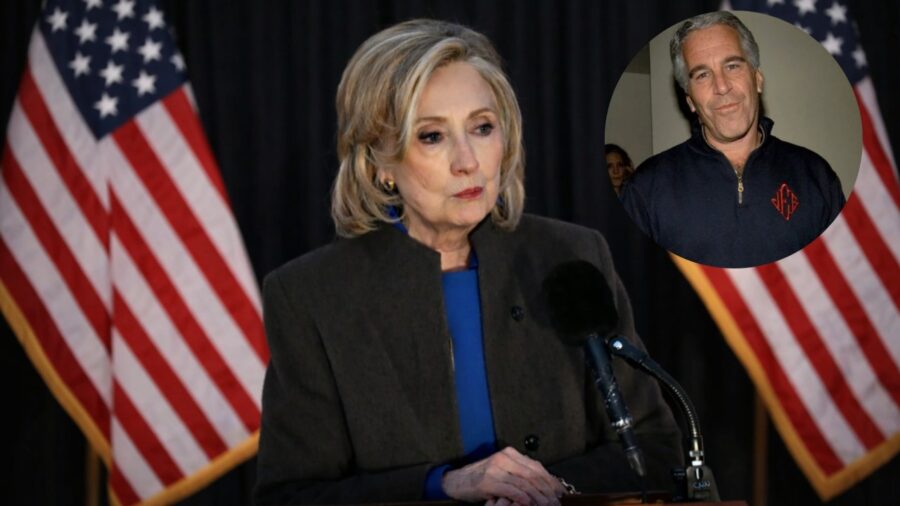

Hillary Clinton spent more than six hours under oath in a closed-door House Oversight Committee deposition tied to Congress’s widening Jeffrey Epstein investigation, then emerged to argue that lawmakers had spent too much time on repetition and political spectacle, not enough on the core failures that allowed Epstein’s crimes to continue.
The hearing was briefly interrupted after Rep. Lauren Boebert sent a photo from inside the private deposition to conservative influencer Benny Johnson, who posted it online, according to multiple outlets.
AP and ABC both reported that the image leak violated committee rules and triggered a pause in proceedings.
Table of Contents
ToggleWhat Clinton Said Under Oath and Afterward
Clinton’s central message was blunt. In an opening statement she shared publicly, she said she had no knowledge of Jeffrey Epstein’s or Ghislaine Maxwell’s criminal activity and did not recall encountering Epstein. AP reported that she repeated that position during the deposition and afterward.
ABC News also reported that Clinton said she repeatedly told lawmakers she did not know Epstein and had never visited his island, homes, offices, or plane.
Outside the Chappaqua Performing Arts Center, Clinton described the day as long and repetitive, and said some questions drifted away from Epstein-related facts into subjects like UFOs and the debunked Pizzagate conspiracy.
ABC quoted her saying the committee could have used its time more productively if it wanted to focus on investigating how past investigations were handled.
AP separately reported that Clinton accused Republicans of pursuing a one-sided inquiry and said one GOP lawmaker questioned her about “vile, bogus conspiracy theories.”
The Boebert Leak Became the Day’s Turning Point
The closed-door deposition was supposed to be tightly controlled. Instead, the unauthorized photo shifted the story.
AP reported that the deposition was paused after Boebert sent a photo of Clinton in the private proceeding to a conservative influencer who posted it on social media, and AP described the act as a violation of committee deposition rules.
ABC added detail on the immediate fallout, reporting that Benny Johnson said Boebert provided the photo and that Boebert, when asked why she sent it, replied, “Why not?”
ABC also reported her saying she was not reprimanded and did not believe any rules were violated, a claim that directly collided with Democrats’ objections and with other reporting describing the leak as a rules violation.
Rep. Robert Garcia, the committee’s top Democrat, told ABC lawmakers were “very taken aback” and said rules were essentially broken immediately.
AP reported that Democrats argued the incident strengthened the case for releasing a full public record, including video and transcript, and said Clinton renewed her demand that the deposition be made public after the leak.
AP also reported that Oversight Chairman James Comer said he would move quickly to release the video and transcript.
Why Clinton Was There in the First Place
Clinton’s deposition is part of a broader House Oversight investigation into Epstein’s network, influence, and the institutional failures that allowed him to operate for years while socializing with powerful people.
AP reported that Comer framed the investigation as an effort to determine how Epstein amassed wealth and surrounded himself with influential men.
AP also reported that the Clintons agreed to testify after their offers of sworn statements were rejected and Comer threatened criminal contempt of Congress charges.
Reuters, in pre-deposition reporting, confirmed that Bill and Hillary Clinton had initially resisted testifying before the House Oversight Committee and relented after lawmakers moved toward contempt.
Reuters also reported the timing and location of Hillary Clinton’s deposition in Chappaqua and noted that Bill Clinton was scheduled to testify the following day.
The Broader Political Fight Inside the Epstein Inquiry
The deposition took place inside a political environment that has grown more volatile as Congress, the Justice Department, and both parties face pressure for fuller disclosure related to Epstein.
AP reported that Democrats on the Oversight Committee have pushed for President Donald Trump to answer questions as well, arguing that a precedent is being set when a former president is compelled to testify. AP also reported Comer has said a sitting president cannot be deposed by the committee.
At the same time, AP reported Comer publicly said that, at least at the time of Hillary Clinton’s deposition, Republicans were not accusing the Clintons of wrongdoing and were focusing on the investigation’s broader scope.
That tension defines the story. One side argues the hearings are overdue accountability work on a case that implicates elites and institutions. The other argues the committee is mixing legitimate investigative goals with partisan theater and conspiracy-adjacent questioning.
Clinton’s comments after the deposition, especially her complaints about repeated questions and off-topic subjects, sharpened that divide.
What Is Confirmed, What Remains Unclear
Several facts are firmly established across AP, ABC, and Reuters reporting:
- Hillary Clinton gave a closed-door deposition on Feb. 26, 2026, in Chappaqua, New York.
- The deposition lasted over six hours.
- Clinton said she had no knowledge of Epstein’s or Maxwell’s crimes and did not recall encountering Epstein.
- The session was paused after a photo from inside the room was leaked and posted online.
- Democrats pressed for release of the full video and transcript, and Comer said he would work quickly to release them.
Several things remain contingent on future releases:
- The full transcript and video, which would allow independent review of how much time was spent on Epstein-specific questioning versus side topics.
- Whether the committee’s future witness list will include additional high-profile Republicans, which Comer has suggested is possible in some cases. AP’s live coverage noted Comer said it was “very possible” Commerce Secretary Howard Lutnick could be called.
- How Bill Clinton’s deposition, scheduled for the following day, affects the committee’s direction and public messaging.
Why the Photo Leak Matters Beyond the Headline
The photo leak was not a sideshow. It cut directly into the committee’s credibility problem.
Closed depositions are defended on the grounds that they preserve witness integrity, limit grandstanding, and protect investigative process. Once a participant selectively leaks imagery from inside the room, critics can argue that confidentiality is being used inconsistently, or strategically.
AP and ABC reporting shows that argument emerged immediately on site, with Democrats citing the leak as grounds for a faster public release of the record.
The incident also changed the optics. A hearing about Epstein accountability, already politically combustible, became a story about rule-breaking by a member of Congress during a closed proceeding. That shift diluted attention from the substance of the testimony and gave both parties a fresh line of attack.
The Significance of the Clinton Testimony in the Epstein Inquiry
Even without a major factual revelation from Hillary Clinton, the deposition carries weight for three reasons.
First, it shows how far the Epstein investigation has expanded into congressional oversight, beyond criminal prosecution and civil litigation, into questions about institutional decisions, elite access, and public transparency. AP described the demand for a reckoning as a force that has become difficult for political actors to resist.
Second, it marks a rare escalation in congressional pressure on former top officials. AP reported that Bill Clinton’s scheduled testimony would be the first time a former president has been forced to testify before Congress.
Third, it underscores a recurring feature of high-profile oversight battles in Washington, procedural conflict can become as politically consequential as the testimony itself. The Boebert photo episode is now part of the record of the hearing, and likely part of how the committee’s handling of the investigation will be judged.
Related Posts:
- Safest Countries in the World in 2025 - GPI…
- 25 Most Dangerous Cities in US - Updated Statistics for 2026
- Capital Cities in Europe: Top Destinations For You…
- Bill Clinton Confronted With ‘Hot Tub’ Photo in…
- What ICE Does and Why It Matters - U.S. Immigration…
- Legislative Tracker: Pro-LGBTQ Nondiscrimination Legislation