Skip to content
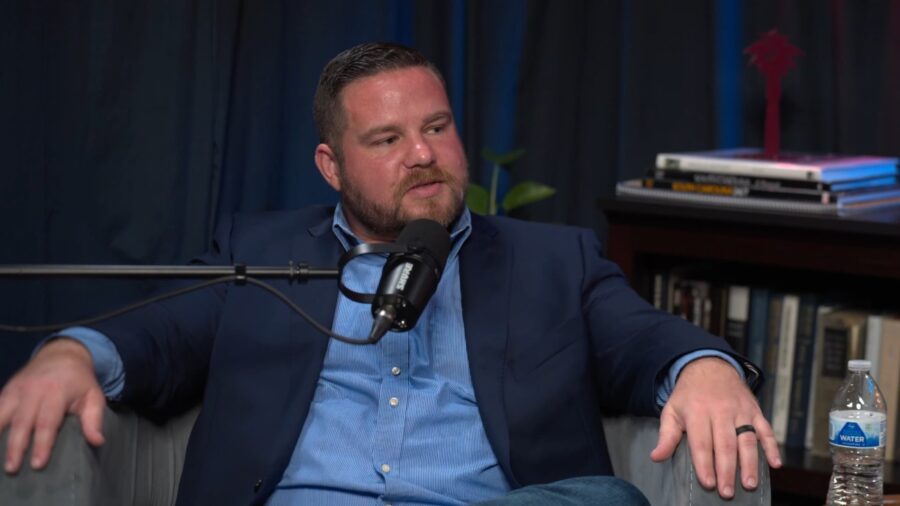

A former South Carolina Republican lawmaker who built part of his political profile around “protecting children” has been sentenced to 17.5 years in federal prison after admitting he distributed child sexual abuse material online.
Robert John “RJ” May III, 39, received a 210-month sentence in federal court on Wednesday and was ordered to pay $58,500 in restitution, followed by 20 years of supervised release after prison, according to reporting by The Associated Press and the U.S. Department of Justice.
The sentencing closes a case that drew national attention because May publicly pushed rhetoric portraying transgender people as dangerous to children, then pleaded guilty to crimes involving the distribution of child sexual abuse material (CSAM), a term federal prosecutors now prefer because it reflects documented harm to victims.
Table of Contents
Toggle“Protect the Kids” Politics, Then a Federal Conviction
May served as a Republican member of the South Carolina House of Representatives, where he backed and promoted initiatives framed as safeguarding children.
In statehouse debate over transgender-related legislation, he delivered speeches warning that children needed protection from harm, language later cited in news coverage of the state’s push to restrict gender-affirming care for minors.
LGBTQ Nation and other outlets noted that May’s arguments often targeted transgender people directly, presenting them as a risk to children in ways that aligned with broader GOP messaging around schools, youth health care, and LGBTQ visibility.
Outside the legislature, May also drew praise from politically active “parents’ rights” networks. LGBTQ Nation reported he was honored by Moms for Liberty as a “Legislator of the Year” in 2023, connecting him to a movement that has pushed aggressive campaigns on school policy and LGBTQ issues.
Prosecutors: A “Five-Day” CSAM Distribution Spree on Kik
Federal prosecutors said May distributed 220 files of child sexual abuse material over roughly five days in spring 2024, using the messaging platform Kik.
Court records and reporting identified the account name used in the exchanges as “joebidennnn69.”
According to AP’s reporting, the case began after Kik systems flagged the content and reported it, prompting law enforcement to investigate.
In a press release, the U.S. Attorney’s Office for the District of South Carolina confirmed that May pleaded guilty to five counts of distributing CSAM and that he was sentenced to more than 17 years in federal prison.
The Court Response: “Deep Harm,” and the Weight of Public Hypocrisy
At sentencing, U.S. District Judge Cameron McGowan Currie emphasized the harm CSAM causes to victims. Reporting from AP described the judge calling out May’s public record of advocating child protection policies while distributing abuse files.
May’s lawyers sought a lesser sentence, pointing to personal struggles and arguing the conduct reflected addiction and self-destruction, according to AP. The court imposed the 17.5-year sentence, along with long-term supervision requirements that will follow May well past his release.
Resignation and the Political Fallout
May resigned from the South Carolina House in 2025 while the case was pending.
PBS reported at the time that a Republican lawmaker had stepped down while awaiting trial on federal child sexual abuse material charges, marking a swift collapse for a politician who had remained a visible voice in social-policy debates.
He later entered his guilty plea on September 30, 2025, and sentencing followed on January 14, 2026, according to the DOJ and AP.
Why the Case Is Reverberating Beyond South Carolina
May’s conviction is landing inside a broader national fight where LGBTQ issues, and especially transgender health care, are repeatedly framed through child-safety language.
In South Carolina, lawmakers debated restrictions on gender-affirming care for minors during the 2024 session, a period when May and other Republicans argued the state needed to intervene to protect children.
That political strategy has become a major feature of state-level legislation across the country. Multiple newsrooms and research institutions have documented the ripple effects of these bans, including measurable stress and health risks tied to stigma and restricted access to care for transgender youth.
Against that backdrop, May’s sentencing has become a case study in what critics describe as the gulf between “protect children” rhetoric used in culture-war politics and the misconduct of some of its loudest messengers.
What Happens Next
May will serve his federal sentence and remain under strict supervision after release. The DOJ notes that federal law still uses the term “child pornography,” but prosecutors and the AP style guidance increasingly use child sexual abuse material to reflect the reality that the content documents abuse.
For South Carolina Republicans, the case has already left a crater. A lawmaker who once cast himself as a defender of children has now been sentenced as a distributor of the very material federal authorities describe as among the most damaging forms of exploitation.
And for communities targeted by his rhetoric, including transgender people who were repeatedly described as a danger to children, the outcome lands as a grim reminder: political scapegoating can thrive in public, even as criminal behavior unfolds in private.
Related Posts:
- 17 Worst Prisons in the US in 2026 - America's…
- Safest Countries in the World in 2025 - GPI…
- 25 Most Dangerous Cities in US - Updated Statistics for 2026
- Should Schools Replace Homework With Supervised Practice?
- What You Need to Know About Federal Prison Sentences
- Parole vs Probation - What Sets Them Apart?