Skip to content
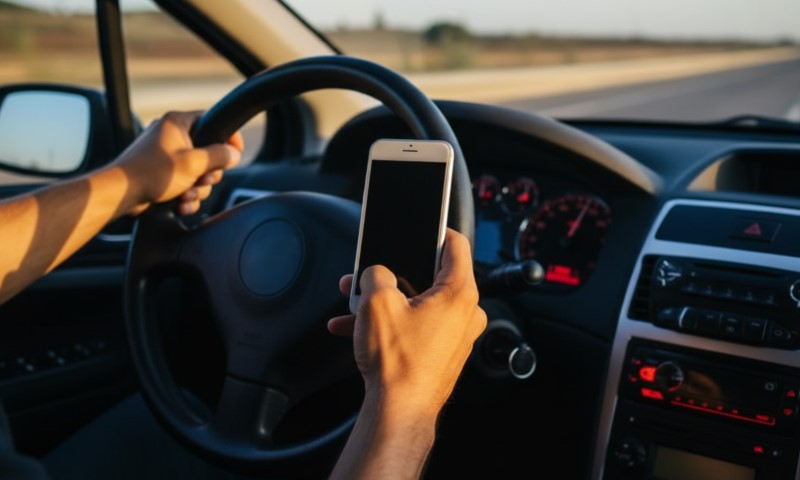

Florida drivers are watching a familiar debate return to Tallahassee in 2026: phone use behind the wheel. Lawmakers are once again taking aim at distracted driving. The difference now is scope. Current law focuses on texting and specific zones. The new proposals go further, targeting handheld device use more broadly.
If passed, the changes could reshape how drivers handle calls, navigation apps, and general phone interaction across the state. For commuters in Miami, delivery drivers in Orlando, parents in Tampa, and long-distance drivers on I-95, the impact would be immediate.
As of early March 2026, Florida is not yet a fully hands-free state for all drivers on all roads. Florida already bans texting while driving statewide. Florida also bans handheld device use in school zones and active work zones. The 2026 proposals attempt to expand or strengthen those restrictions. Here is a breakdown of what the law says today, what is being proposed, and what drivers should do right now.
Why Florida Is Revisiting Phone Use While Driving
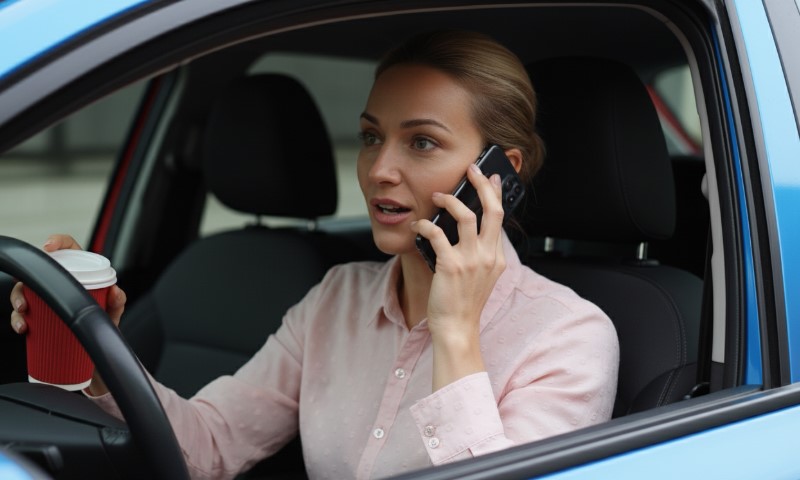
Distracted driving remains a serious road safety issue nationwide and in Florida. According to NHTSA, distracted driving killed 3,275 people in the U.S. in 2023. Federal guidance continues to classify device distraction as high-risk behavior. NHTSA also repeats a widely cited warning: reading or sending a text takes your eyes off the road for about five seconds. At 55 mph, that equals the length of a football field.
Florida officials echo that concern. The Florida Highway Safety and Motor Vehicles agency, known as FLHSMV, has consistently emphasized that distracted driving is often underreported. The reason is simple. Drivers may be cited under multiple statutes, not only texting laws. FLHSMV has repeatedly stated that:
- A crash occurs every 44 seconds in Florida.
- One in seven crashes involves distracted drivers.
That messaging was repeated in 2024 and again in 2025. The underreporting issue matters in policy debates. If distracted behavior is recorded as careless driving or another violation, rather than a specific texting offense, official numbers may not fully capture the scale of the problem. FLHSMV explicitly acknowledges that gap.
Lawmakers are working in that context. They are not arguing that texting alone is the issue. The concern is broader device interaction while a vehicle is in motion.
Note: According to Blakeley Car Accident & Personal Injury Lawyers, victims of accidents caused by distracted drivers often face complex insurance and injury claims, highlighting why clear laws matter.
What Florida Law Says Right Now
View this post on Instagram
Before discussing the 2026 proposals, drivers need a clear picture of the current law. Florida already has two major statutes governing phone use while driving.
Statewide Texting Ban: Section 316.305
Florida Statute 316.305 is titled the Florida Ban on Texting While Driving Law. The statute prohibits operating a motor vehicle while manually typing or entering characters, or sending or reading data, for nonvoice interpersonal communication. That includes texting, email, and instant messaging. In plain language, you cannot manually text while driving anywhere in Florida. FLHSMV outlines current penalties:
- First offense: Non-moving violation, base $30 fine, no points.
- Second offense within five years: Moving violation, base $60 fine, 3 points.
Those are base fines only. Court costs and additional fees can increase the total amount significantly.
School And Work Zone Handheld Ban: Section 316.306
Florida Statute 316.306 addresses handheld device use in specific areas. Using a wireless communications device in a handheld manner is prohibited in:
- Designated school crossings
- School zones
- Active work zones where personnel or equipment are present
Violations in those areas are moving violations. FLHSMV lists the standard penalty as:
- Base $60 fine
- 3 points
Florida law also clarifies that a stationary vehicle is not considered to be operating for purposes of the statute. There are exceptions for emergency personnel, reporting emergencies, certain navigation uses, and similar safety-related situations. Outside school and active work zones, Florida does not currently impose a blanket ban on holding a phone while talking. That is the legal baseline entering 2026.
The 2026 Hands-Free Push: Two Different Models
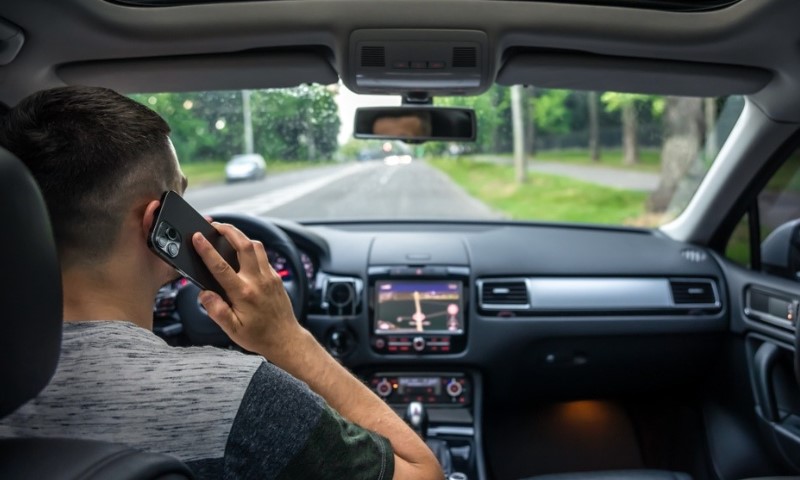
In 2026, lawmakers introduced proposals that approach handheld phone use differently. One proposal comes from the Senate. The other from the House, in a committee substitute form.
Proposal A: SB 1152 And A Broader Statewide Handheld Prohibition
SB 1152, filed in the Senate, proposes expanding Section 316.305 beyond texting. Under the bill text, Florida would move toward prohibiting the use of a wireless communications device in a handheld manner while operating a motor vehicle, with limited exceptions. The bill defines “handheld manner” broadly. It includes:
- Holding the device in one or both hands
- Physically supporting the device with any other part of the body
That language matters. Resting the phone on your shoulder. Holding it in your lap. Supporting it against your body. The wording is designed to cover more than just gripping it in your hand.
The proposal allows limited physical interaction to activate, deactivate, initiate, or terminate a device feature or hands-free accessory. Sustained use must be through a hands-free accessory. In practical terms, tapping to start a call or navigation route may be treated differently from continuing to hold and interact with the device while driving.
Privacy and Search Provisions In SB 1152
SB 1152 includes detailed protections related to device searches:
- Officers must inform drivers of the right to decline a device search.
- Officers may not access a device without a warrant.
- Officers may not confiscate the device while awaiting a warrant.
- Consent must be voluntary and unequivocal.
The bill also addresses billing records or statements from authorities in crash cases involving death or personal injury. Those records may be admissible to determine a violation, as written in the filed text.
Penalty Changes in School and Work Zones
SB 1152 also proposes steeper fines and escalating consequences for violations in school and work zones. The filed text includes the possibility of a license suspension at the third violation.
There is also a first-offense option to complete a safety program in lieu of penalties and points. As of early March 2026, SB 1152 was filed, referred to committees, and listed as introduced. The summary lists an effective date of October 1, 2026, if enacted.
Proposal B: CS/HB 1241 And The Careless Driving Enhancement Model
The House took a different route through committee action. CS/HB 1241, in committee substitute form, ties handheld device use to careless driving violations rather than creating a broad standalone statewide no-holding rule in the same way as SB 1152.
Under the committee substitute text, if a person violates careless driving provisions while supporting the weight of a wireless communications device in a handheld manner, except to activate or terminate a feature, that driver would face additional penalties on top of the underlying careless driving penalty. The additional penalties include:
- An extra $60 fine
- An additional 1 point on the license
A first-offense safety program option can waive the additional fine and additional point.
Other Features of CS/HB 1241
The House committee substitute includes:
- Similar exceptions for emergency duties, reporting emergencies, certain safety and navigation uses, hands-free voice use, and autonomous vehicle mode.
- Search and consent protections.
- Crash-related evidentiary rules for serious bodily injury or death cases.
- Deposit of the added $60 into the Emergency Medical Services Trust Fund.
As of early March 2026, CS/HB 1241 had advanced to a committee substitute and was pending in the State Affairs Committee. The listed effective date is July 1, 2026, if enacted.
Current Law Vs 2026 Proposals
| Issue | Current Florida Law | SB 1152 | CS/HB 1241 |
| Statewide texting ban | Yes, under 316.305 | Expands toward broader handheld prohibition | Does not primarily replace texting rule |
| Statewide handheld ban | No blanket ban | Proposed broader prohibition | Not a blanket ban, tied to careless driving |
| School/work zone handheld use | Already prohibited | Penalties increase and escalate | Conforming changes included |
| Sustained hands-free requirement | Limited context | Sustained use must be hands-free | Focused on careless driving plus handheld use |
| Search protections | Present in current statutes | Included | Included |
| Status early Mar 2026 | In force | Introduced, pending | Committee substitute, pending |
What “Hands-Free” Means in Practice
Many drivers hear “hands-free” and think only about phone calls. The Senate proposal is broader. The bill text defines a wireless communications device to include devices used to:
- Make calls
- Send texts
- View videos or images
- Store or access data
- Connect to internet or communications services
That includes smartphones, tablets, laptops, gaming devices, and similar equipment. The key concept is sustained use. Brief activation may be permitted. Holding and interacting repeatedly would not be. IIHS tracks state electronic device laws and shows major differences across states in:
- Whether holding a device is prohibited
- Whether hand-held calls are banned
- What manipulation counts as a violation
- How temporary stops are treated
Florida lawmakers are attempting to move toward clearer enforcement language. Officers often report difficulty proving texting. A broader handheld standard can be easier to observe.
Why Safety Officials Keep Pressing the Issue
Florida’s safety messaging aligns with national guidance. FLHSMV defines distracted driving as anything that takes:
- Hands off the wheel
- Eyes off the road
- Mind off driving
It categorizes distraction as visual, manual, and cognitive. NHTSA uses similar definitions and includes eating, interacting with passengers, and adjusting navigation or entertainment systems as forms of distraction. GHSA adds context. Using NHTSA data, it cites 3,275 deaths and 324,819 injuries in distraction-related crashes in 2023.
GHSA also highlights that many states are updating hands-free laws as technology evolves. Smartphones are more integrated into daily life than ever. Vehicle systems now connect seamlessly to apps, messaging, and streaming services. The legislative push in Florida reflects that reality.
What Florida Drivers Should Do Right Now
Drivers do not need to wait for final legislative action to reduce risk and avoid citations.
Immediate Compliance Steps Under Current Law
- Do not manually text, email, or message while driving.
- Do not hold or use a device in school crossings, school zones, or active work zones.
- Set navigation before moving.
- Use Bluetooth or built-in vehicle systems.
- Enable “Do Not Disturb While Driving” mode.
- Pull over safely if you need to read or type.
Florida law states that a stationary vehicle is not operating under the statute. Even so, enforcement decisions can depend on surrounding facts and officer observation. Conservative behavior reduces risk.
Habits That Will Matter More If SB 1152 Passes
If Florida adopts a broader statewide handheld prohibition:
- Mount your phone securely
- Connect through Bluetooth
- Avoid resting the device in your lap or hand
- Avoid prolonged interaction while moving
- Limit physical contact to brief activation when necessary
The practical standard becomes simple. Set it up before driving. Leave it alone while moving.
What to Watch During the 2026 Session

1. Which Model Advances
The Senate and House are not aligned on structure. One bill rewrites the handheld framework. The other enhances penalties when handheld use accompanies careless driving.
2. Final Penalty Structure
SB 1152 includes escalation and potential suspension at a third violation in certain zones. Amendments could change details.
3. Effective Dates
Listed effective dates:
- SB 1152: October 1, 2026
- CS/HB 1241: July 1, 2026
Dates apply only if enacted.
FAQs
Endnote
Florida is in the middle of another serious push to tighten phone use rules behind the wheel. Current law already bans texting statewide and handheld use in school and active work zones. The 2026 proposals show lawmakers want to address drivers who may not be technically texting but are still manually handling devices in risky ways. The safest move is straightforward. Mount the phone, use Bluetooth, set routes before moving, and keep hands off the device while driving.
That approach aligns with Florida’s existing safety messaging. It also positions drivers ahead of potential legal changes. Whether the Senate model, the House model, or a compromise becomes law, habits built around minimal physical interaction with devices will protect your license, your wallet, and most importantly, your life.