Skip to content
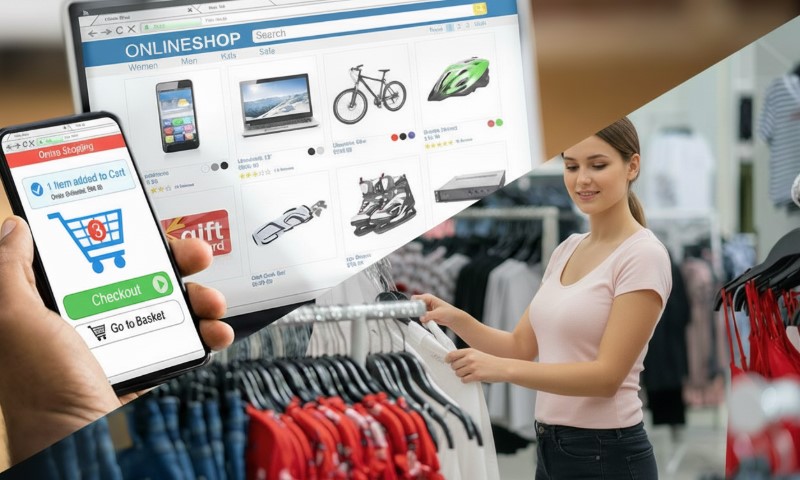

Retail conversations often circle back to one deceptively simple question. How much of retail actually happens online today?
Many people expect a huge share of American shopping to live on the internet by now. Daily life feels digital. Phones handle banking, communication, entertainment, and increasingly product discovery. Shopping behavior feels similar.
Official data tells a more grounded story.
Early 2026 data from the U.S. Census shows online sales represent about 16% to 17% of total U.S. retail spending. The latest official quarterly reading available comes from Q3 2025, which recorded 16.4% of total retail sales occurring online on a seasonally adjusted basis.
That number surprises a lot of people. Retail professionals, marketers, and consumers often assume a much larger share.
Reality is more nuanced. Online retail is massive, growing steadily, and deeply embedded in American shopping behavior. Physical stores still account for most spending across the country.
Retail in 2026 runs on both.
Key Points
- Online retail makes up about 16% to 17% of total U.S. retail sales in early 2026, according to U.S. Census data.
- Physical stores still account for the majority of spending, especially for urgent purchases and products that benefit from in-person experience.
- Modern retail works as a blended system, where shoppers move between online research and in-store buying.
- E-commerce continues growing gradually, supported by mobile shopping, logistics improvements, and digital product discovery.
The Most Reliable Number for 2026
Retail analysts often rely on multiple datasets. The most defensible benchmark comes from the U.S. Census Quarterly Retail E-Commerce Report, which tracks e-commerce as a share of total retail sales.
Latest figures available at the start of 2026 come from Q3 2025.
Key Official Figures
| Metric | Value |
| Adjusted U.S. retail e-commerce sales | $310.3 billion |
| Adjusted total retail sales | $1,893.6 billion |
| E-commerce share (seasonally adjusted) | 16.4% |
| E-commerce share (not adjusted) | 15.8% |
Federal Reserve Economic Data (FRED), which republishes Census data, shows a gradual rise in the share during 2025.
Recent Trend
| Quarter | E-commerce Share Of Total Retail |
| Q4 2024 | 16.2% |
| Q1 2025 | 16.1% |
| Q2 2025 | 16.3% |
| Q3 2025 | 16.4% |
One clear takeaway emerges. Online retail continues to grow steadily. Growth happens gradually rather than through dramatic jumps.
Why The “Online Share” Question Causes Confusion
A lot of articles quote a single percentage and move on. That approach leads to poor decisions and unrealistic expectations.
Retail measurement in the United States uses several frameworks. Each answers a slightly different question.
Major Retail Measurement Sources
U.S. Census Quarterly Retail E-Commerce Report
Tracks e-commerce sales as a share of total retail.
Monthly Retail Sales Report
Covers retail and food services combined. Some analysts mistakenly treat it as identical to the e-commerce report.
Private Analytics Firms
Companies such as Adobe Analytics, Mastercard SpendingPulse, and others analyze digital trends and event-based shopping behavior.
Each dataset has value. Mixing them together creates misleading conclusions.
A responsible answer to the online retail question includes three parts:
- The official Census baseline
- Context about what the data includes
- Supporting insights from credible private datasets
On the marketing side, brands often pair those datasets with practical growth tooling, including the service, to build the audience that actually produces measurable demand.
Why Physical Stores Still Dominate U.S. Retail
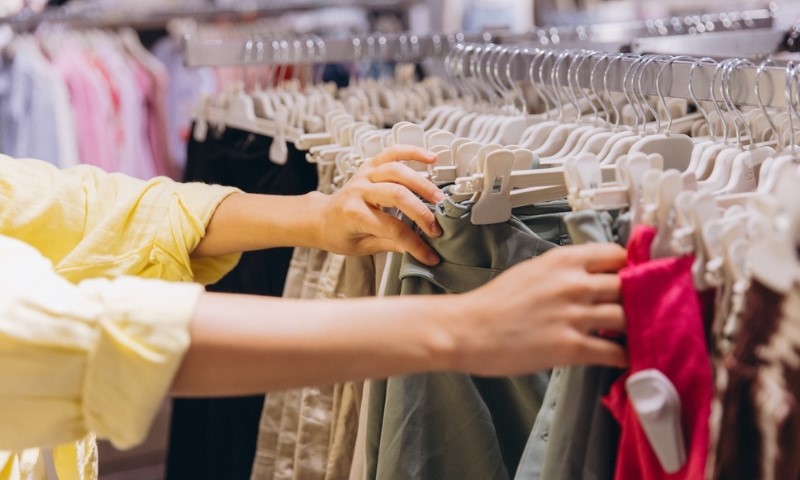
Even after years of rapid e-commerce growth, stores continue to account for most retail spending.
Several practical factors explain the trend.
Immediate Access Still Matters
Plenty of purchases require instant availability.
Common examples include:
- cold medicine
- batteries
- phone chargers
- detergent
- last-minute household supplies
Even fast shipping cannot match walking into a store and leaving with a product immediately.
Urgency remains one of the strongest advantages physical stores possess.
Product Experience Still Influences Purchase Decisions
Certain purchases benefit from physical interaction.
Examples include:
- clothing fit checks
- furniture size and feel
- cosmetics color matching
- electronics testing
Shoppers often research products online before visiting a store to make the final decision.
Retailers see strong evidence of this pattern through analytics and sales attribution models.
Stores Now Support E-Commerce Logistics
Retail stores increasingly serve as infrastructure for digital commerce.
Many chains operate stores as:
- local fulfillment hubs
- pickup points for online orders
- return centers
- same-day delivery launch locations
Retail networks function as hybrid logistics systems. Stores generate revenue and improve e-commerce efficiency at the same time.
Many large retailers rely heavily on store-based fulfillment for online orders.
Consumer Shopping Behavior Changed During 2025
Shopping patterns during 2025 showed a clear pattern. Consumers blend online and in-store activity depending on the situation.
Holiday shopping provides one of the clearest snapshots.
Adobe Holiday Shopping Data
Adobe Analytics tracks digital commerce using transaction data from thousands of retailers.
Holiday season numbers for 2025 showed strong online growth.
Key figures:
- $257.8 billion in U.S. online holiday spending
- 8% year-over-year growth
- $44.2 billion spent during Cyber Week
- $14.25 billion spent on Cyber Monday
Mobile shopping continued gaining share during the holiday period. Promotions remained a major driver of online sales spikes.
AI-assisted product discovery also started appearing in measurable numbers during 2025, although still from a relatively small base.
Mastercard SpendingPulse Findings
Mastercard SpendingPulse tracks retail activity across payment networks and surveys.
Holiday data from 2025 described a blended shopping environment.
Important points included:
- E-commerce grew faster than in-store sales during the holiday period.
- Physical retail still recorded positive growth.
- Shoppers moved between channels throughout the purchase process.
Retail professionals increasingly describe the shopping process as fluid rather than channel-specific.
The Census Data Includes Important Methodology Details
Interpreting e-commerce share correctly requires attention to methodology.
The Q3 2025 Census report includes a note about measurement changes.
Earlier versions of the dataset included nonemployer businesses, which are companies without payroll employees.
Beginning with the April 2025 benchmark revision, nonemployer firms were removed to align with the Annual Integrated Economic Survey.
That technical adjustment matters for analysts comparing long-term trends.
Key Implications
- Some shifts may result from methodology changes rather than behavior.
- Analysts should avoid reacting strongly to a single quarter.
- Long-term comparisons require careful interpretation.
Business planning usually relies on broader trends rather than individual quarterly fluctuations.
Online share continues to rise gradually across multiple years.
Category Differences Matter More Than The National Average
 You will find more infographics at Statista
A national average provides useful context. Category-level analysis offers more practical insights.
Different retail sectors adopt e-commerce at very different rates.
Categories With High Online Penetration
Products that perform well online often share several characteristics.
Common examples include:
- consumer electronics
- books and digital media
- hobby equipment
- standardized home goods
- beauty replenishment products
Products with predictable specifications tend to translate well to online shopping.
Categories That Remain Store-Oriented
Some sectors still rely heavily on physical stores.
Common examples include:
- grocery purchases
- building materials
- furniture
- local convenience items
- urgent household needs
Shopping frequency and urgency often determine channel choice.
Grocery retail provides a good example. Online grocery exists and continues growing, though many households still rely on in-person shopping.
Stores And E-Commerce Now Work As One System
Retail strategies changed significantly over the past decade.
Many companies once treated online and stores as separate operations. Leading retailers now treat them as parts of one system.
Several strategies illustrate the shift.
Stores As Fulfillment Infrastructure
Large retail chains use store networks for online logistics.
Common applications include:
- ship-from-store order fulfillment
- curbside pickup programs
- local delivery partnerships
- in-store product returns
Store-based fulfillment reduces shipping distance and speeds delivery.
Many companies discovered during the pandemic that existing store networks can operate as distributed warehouses.
Digital Discovery Influencing Store Purchases
Many purchases start online and finish in a store.
Typical consumer behavior often follows a pattern:
- Search for product information online
- Read reviews and compare prices
- Visit a store to purchase
Retail analytics teams frequently track what they call digital influence. A product viewed online may later appear in store sales data.
Digital marketing therefore influences revenue across both channels.
Channel-Specific Economics
Retailers also evaluate profitability across channels.
Online orders involve:
- shipping costs
- packaging expenses
- digital advertising costs
- higher return rates
Stores incur:
- rent
- staffing
- utilities
Successful companies balance both environments carefully.
Many brands view stores as essential to long-term profitability.
The Role Of Mobile Commerce
View this post on Instagram
Mobile devices increasingly dominate online shopping.
Consumers often begin product searches on phones during everyday activities such as commuting or watching television.
Mobile shopping now plays several roles:
- product discovery
- price comparisons
- coupon redemption
- purchase completion
Retailers optimize mobile experiences heavily because mobile traffic drives a significant portion of online sales.
Holiday reports repeatedly highlight mobile as the fastest-growing segment of e-commerce activity.
Macroeconomic Context Also Influences E-Commerce Growth
Retail growth depends on broader consumer spending patterns.
Retail goods represent only one portion of total consumer spending.
The Bureau of Economic Analysis (BEA) regularly reports shifts between goods and services spending.
During late 2025, BEA data showed increasing spending on services and declining spending on goods for the month reported.
Changes in spending mix influence how quickly e-commerce share grows.
Periods of strong travel, dining, or entertainment spending may slow the relative growth of online retail share even while e-commerce itself grows.
Common Mistakes When Interpreting E-Commerce Data
Misunderstanding retail statistics often leads to exaggerated claims about online growth.
Several mistakes appear frequently.
Mixing Retail With Food Services
Retail e-commerce reports focus on retail goods. Some media reports combine food service numbers from monthly retail reports.
Definitions differ significantly.
Treating Holiday Records As Annual Norms
Holiday shopping produces huge online spikes due to promotions and seasonal demand.
Annual averages look very different.
Ignoring Seasonal Adjustments
The Census publishes both adjusted and unadjusted data.
Quarter-to-quarter comparisons should use the seasonally adjusted numbers.
Assuming Physical Stores Are Declining
Online retail grows faster than physical retail in many periods. Both often expand at the same time.
Holiday data from Mastercard during 2025 shows growth occurring across both channels.
Retail growth often reflects expanding consumer spending overall.
Practical Advice For Retailers And Brands
Businesses planning retail strategies in 2026 benefit from a realistic perspective on channel dynamics.
Several practical guidelines emerge from current data.
Track Category-Level Benchmarks
National averages provide context. Category benchmarks offer real insights.
A beauty brand, electronics seller, or furniture retailer will experience very different e-commerce penetration rates.
Measure Channel Interactions
Retailers increasingly track cross-channel interactions.
Metrics often include:
- online research leading to store purchases
- store visits following digital ads
- return behavior across channels
Accurate attribution helps retailers allocate marketing budgets effectively.
Treat Stores As Strategic Assets
Retail locations support more than walk-in sales.
Physical locations now function as:
- fulfillment infrastructure
- customer service centers
- marketing showrooms
Retailers that integrate stores into digital strategy often gain operational advantages.
What The Future Likely Holds For Online Retail Share
Official data does not support predictions of sudden e-commerce dominance.
Growth patterns point toward gradual increases over time.
Several forces influence future trends.
Drivers Of Continued Growth
Factors supporting e-commerce expansion include:
- improved logistics networks
- increasing mobile commerce usage
- AI-assisted product discovery
- expanding same-day delivery capabilities
Retail technology investments continue accelerating across the industry.
Structural Limits To Online Growth
Certain product categories remain deeply tied to physical locations.
Examples include:
- grocery purchases
- home improvement materials
- large furniture purchases
Consumer preference for immediate access also preserves the role of physical retail.
Summary
Early 2026 data places online retail at about 16% to 17% of total U.S. retail sales, based on the most recent official Census report.
The latest quarter available, Q3 2025, recorded 16.4% online share of total retail sales on a seasonally adjusted basis.
Online commerce continues expanding each year. Growth remains steady rather than explosive.
Physical stores still account for the majority of U.S. retail spending. Store networks also play a critical role in supporting online logistics and customer service.
Retail in 2026 operates as a blended system where digital discovery, online purchasing, and physical store experiences interact continuously.
Retail strategy no longer revolves around choosing a single channel. Success depends on building an ecosystem where online and physical environments work together to serve customers efficiently.