Skip to content
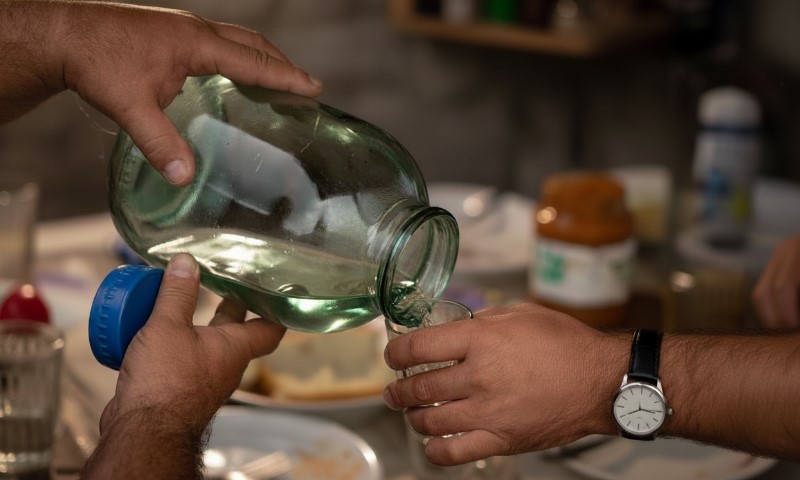

A federal appeals court has struck down a long-standing federal ban on distilling spirits at home, handing home distillers a major legal victory and setting up a broader argument over how far Congress can go when it uses tax authority to police private conduct.
In a unanimous April 10 ruling, the U.S. Court of Appeals for the Fifth Circuit said the statutory prohibitions on in-home distilling are not properly tied to Congress’s taxing power and violate the Constitution’s Taxation Clause and Necessary and Proper Clause.
Table of Contents
ToggleWhat The Fifth Circuit Actually Said
The court’s reasoning turned on a basic constitutional point. Congress may tax distilled spirits, but the panel said it cannot ban the activity outright inside the home merely because the product could otherwise be taxed.
Judge Edith Hollan Jones, writing for the panel, said the law was not “plainly adapted” to tax collection because it prevents the taxable product from being made in the first place. The opinion also rejected the government’s argument that home distilling had to be criminalized because at-home production could make tax evasion easier.
The panel said that kind of theory would push federal power too close to a general police power, something the Constitution does not grant Congress.
Why The Case Matters Now
The challenge was brought by the Hobby Distillers Association and several members in Texas. Reuters reported that the Fifth Circuit affirmed a 2024 district court ruling that had already found the ban unconstitutional, though the lower court’s order had been paused during appeal.
The ban itself dated back to 1868, making the ruling one of the sharpest recent rebukes of a Reconstruction-era federal alcohol restriction.
For people reading the headlines and assuming home distilling is now fully legal everywhere, the picture is narrower.
Federal regulations still say distilled spirits may only be produced at a TTB-registered distilled spirits plant, and all such spirits remain subject to federal excise tax.
The TTB also continues to state that home production of distilled spirits for personal use is prohibited under existing federal regulations, a clear sign that practical enforcement and regulatory guidance may not shift overnight.
A Decision Likely To Travel Further
The ruling does not necessarily settle the issue nationwide. Reuters noted that the government could seek further review, and the Fifth Circuit did not uphold the ban under the Commerce Clause because that argument was not pursued on appeal.
That leaves room for future litigation, a possible request for rehearing, or eventual Supreme Court review if the Justice Department decides the stakes extend beyond alcohol law into the structure of federal power itself.
For now, the decision stands as more than a niche alcohol case. It is a constitutional reminder that even a very old federal law still has to fit within the powers Congress was actually given.
Related Posts:
- Safest Countries in the World in 2025 - GPI…
- 25 Most Dangerous Cities in US - Updated Statistics for 2026
- Capital Cities in Europe: Top Destinations For You…
- What Is the Most Dangerous Country in the World in 2025
- 13 Richest Cities in the US 2026 - Luxury, Money,…
- Do You Have to Pay Taxes on Inheritance in the…