
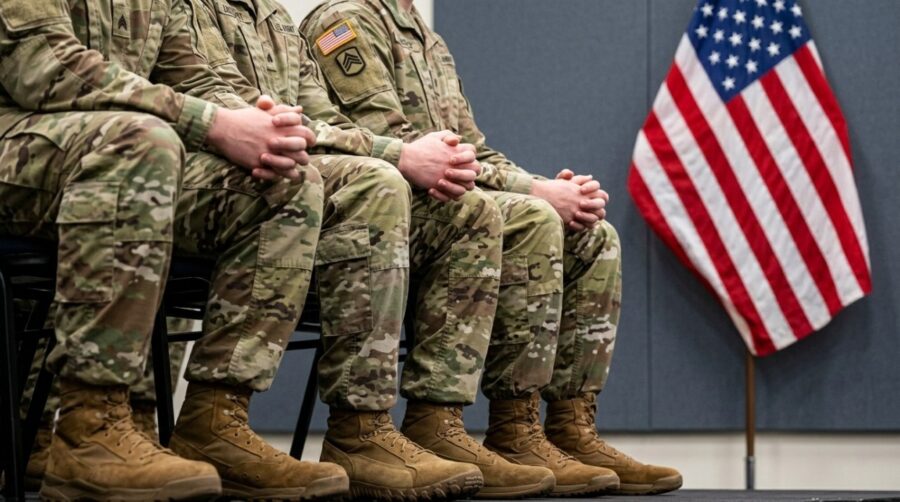

Court Shields Transgender Troops From Removal under a June 1 ruling by the U.S. Court of Appeals for the District of Columbia Circuit, but the Pentagon may still block transgender applicants from joining the armed forces while litigation continues.
The 2-1 decision in the D.C. Circuit opinion protects only the named active-duty plaintiffs from removal, and the panel held the ruling from taking immediate effect so the administration can seek further review.
The case affects transgender service members already in uniform and transgender people trying to enlist, two groups the appeals court treated differently. The Guardian reported that judges narrowed the protection after reviewing a March 2025 injunction, while Reuters reported that the U.S. military has about 1.3 million active-duty personnel, with estimates of transgender personnel ranging from the low thousands to as many as 15,000.
Table of Contents
ToggleAppeals Court Narrows The Injunction To Current Plaintiffs
The ruling came in Talbott v. United States, No. 25-5087, after arguments on January 22, 2026. Judge Robert Wilkins wrote that the policy was likely arbitrary and based on animus, while also finding that the active-duty plaintiffs had spent a combined 130 years in military service and earned more than 80 commendations.
That record drove the distinction. The panel said the government had not shown that keeping the named current service members in the military would harm national security, but it gave the Pentagon more room to control accessions, the formal process for bringing new personnel into service.
What Changed From The March 2025 District Court Order
U.S. District Judge Ana Reyes had issued a broader preliminary injunction in March 2025 that blocked the policy while the case moved forward. On June 1, 2026, the appeals court affirmed that injunction for the named active-duty plaintiffs, vacated it for people seeking admission to the military, and sent the case back for further proceedings.
The legal mechanism matters. A current service member facing discharge may lose an existing career, pay, rank progression, health coverage, and retirement path. A prospective recruit, the court reasoned, may still seek relief after final judgment, even though the panel recognized that applicants also raised constitutional claims.
The Policy Traces Back To Trump’s 2025 Order
President Donald Trump signed Executive Order 14183 on January 27, 2025, directing the Defense Department to revise military rules tied to gender dysphoria, pronoun use, and service standards.
Defense Secretary Pete Hegseth later issued February 26 Pentagon guidance that disqualified many people with a current diagnosis, history, or symptoms consistent with gender dysphoria from service unless they qualified for a waiver.
The ruling fits into a longer policy fight over LGBTQ military service. As we reported earlier in anti-LGBTQ military policies, members of Congress have also pushed for a federal review of past exclusions and discharge practices.
We previously explained in Trump’s 2025 LGBTQ agenda that renewed military restrictions were one part of a wider federal rollback affecting transgender rights.
What Service Members And Applicants Should Know
The ruling does not reopen military enlistment to transgender applicants. Nor does it end the underlying lawsuit. It creates a narrower temporary shield for the named current service members, while leaving the broader policy fight unresolved.
- Current active-duty plaintiffs in Talbott received protection from removal under the panel’s ruling.
- Prospective transgender recruits remain subject to the Pentagon’s accession restrictions while the case continues.
- The panel placed its decision on hold, meaning the immediate operational effect depends on the next appeal step.
- The ban remains tied to separate litigation, including the Washington state case affected by the Supreme Court’s May 2025 order.
The Associated Press reported that Judge Justin Walker dissented, arguing that courts lack the authority and expertise to decide military composition questions. Judge Judith Rogers joined the result protecting current service members but said she would also have protected the would-be recruits named in the lawsuit.
Further Review Could Move Quickly
The administration is expected to seek further review. Hegseth signaled that course on June 1 in a social media post saying, “See you at SCOTUS,” according to the Guardian report.
A separate case, Shilling v. United States, remains important because the Supreme Court allowed the Pentagon’s transgender military ban to take effect on May 6, 2025, while litigation continued, as SCOTUSblog reported. That order did not decide the merits, but it allowed enforcement during the appeal process.
Bottom Line
The June 1 D.C. Circuit ruling is a limited legal win for the named transgender service members already serving, not a full reopening of military service. The immediate risk is that new transgender applicants remain barred while the administration seeks further review.
The next event to watch is the government’s request to the full D.C. Circuit or the Supreme Court after the panel’s hold on its own ruling.
Related Posts:
- US Appeals Court Fines Lawyers $30,000 Over Faulty…
- Ivy League Schools - Opportunities and Admission…
- Green Card Applicants Face A Tougher US Immigration…
- The 100 Most Dangerous Cities in America (2026):…
- How to Lock Your Door Without a Lock - 10 Genius Hacks
- Social Issues in America: 45 Real Examples, 2026…