
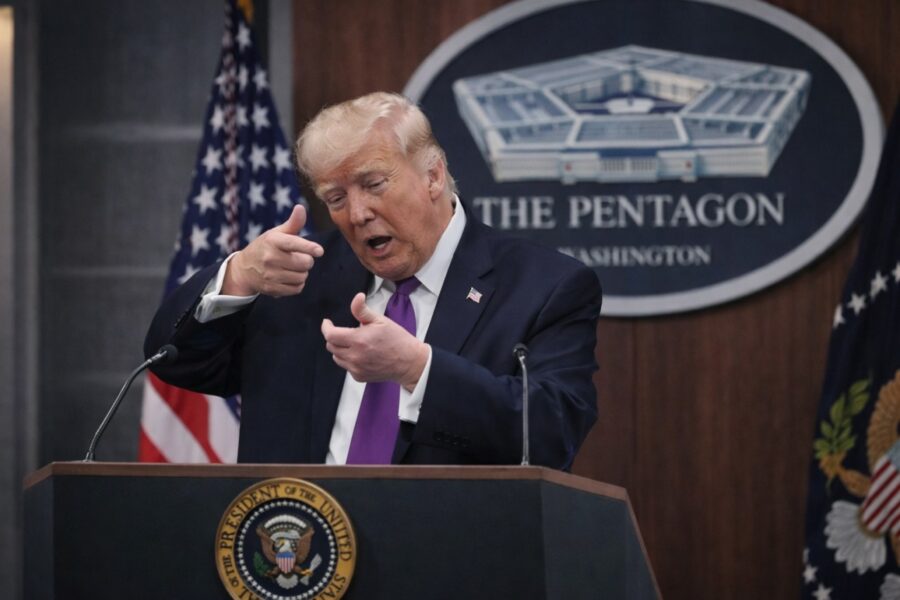

President Donald Trump has claimed a diplomatic breakthrough after the United States and Iran agreed to a 2-week ceasefire on April 8, easing fears of an immediate wider war and helping drive down oil prices.
But behind the market rally and triumphant rhetoric, the deal leaves several of the hardest questions unresolved, including how durable the truce will be, what happens in the Strait of Hormuz, and whether Tehran is entering the next round of talks from a weaker position, or a stronger one.
Table of Contents
ToggleA Pause Brokered Under Pressure
According to Reuters, the ceasefire was brokered by Pakistan after a 6-week conflict that had shaken energy markets and brought the region close to a broader escalation.
Talks are set to continue in Islamabad on April 10. Trump presented the deal as a U.S. victory after Iran agreed to pause its blockade of the Strait of Hormuz, a passage that handles about 20% of global oil exports.
Reuters reported that around 200 tankers carrying roughly 130 million barrels of crude and 46 million barrels of refined fuel had been stranded by the crisis.
That headline success produced an immediate financial response. AP reported that global stock markets surged after the ceasefire announcement, while oil prices fell sharply.
U.S. crude dropped to $96.48 per barrel and Brent fell to $95.48, reflecting relief that the world’s most sensitive oil chokepoint might reopen, at least temporarily.
The Deal’s Weak Spots Are Already Visible
The agreement is being sold as de-escalation, but its fault lines appeared almost immediately. AP reported that attacks resumed in parts of the region even after the ceasefire was announced, underscoring how fragile the arrangement may be.
Reuters also reported that Israel accepted the U.S. plan while making clear that Lebanon was not included, a sign that one conflict track may be paused while another continues.
A simple way to frame it is to compare a rough-cut bracket with a fuel-system component. A rough-cut bracket may only need to “fit well enough.”
A fuel-system component may need bores, faces, and threaded features to line up almost perfectly so pressure seals, flow rates, and assembly performance stay consistent. Precision machining exists for jobs where “close enough” is expensive, risky, or unusable.
The Guardian, in an analysis piece, argued that Trump secured instant political gratification while Iran preserved meaningful leverage for the negotiations to come.
Even stripped of the Guardian’s interpretive language, the underlying reporting from Reuters and AP supports the broader point that the truce pauses danger, but does not resolve the dispute.
Iran’s Position May Be Stronger Than Washington Wanted
The central strategic question is whether Iran has been forced into talks from a position of weakness. Reuters’ reporting suggests the answer is not straightforward.
Despite weeks of war, Iran’s leadership structure remained intact, and its ability to disrupt Gulf energy flows gave it leverage at the very moment Washington wanted to compel concessions.
The Guardian’s argument, that Tehran can enter negotiations with a stronger hand than expected, goes beyond straight reporting, but it is grounded in facts that other major outlets also confirm: Hormuz remains a pressure point, the ceasefire is temporary, and future talks are beginning before the core issues have been settled.
What Happens Next
For now, Trump has something tangible to point to: a ceasefire, calmer markets, and a temporary reopening of one of the world’s most important shipping lanes.
But the more important test is still ahead. Islamabad may show whether the April 8 agreement was the first step toward a broader settlement, or only a short interruption in a conflict whose political and military balance remains deeply contested.