
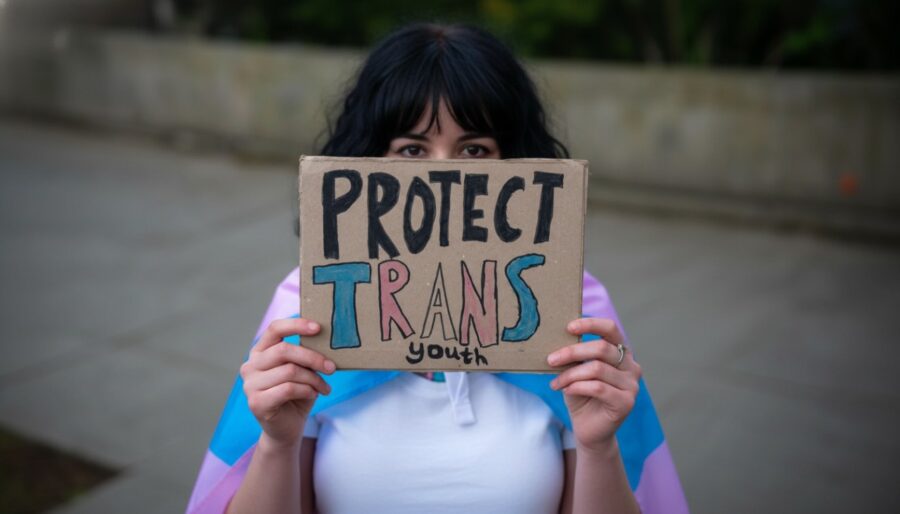

Utah lawmakers are advancing fresh restrictions on medical care for transgender minors even as a state-commissioned evidence review, ordered under the same 2023 moratorium, is widely reported to have found that blanket limits are not supported by the weight of available scientific evidence.
The political arc is stark: legislators demanded a comprehensive review to guide policy, then moved to tighten policy while largely sidestepping the review’s findings in public debate.
At the center of the dispute is a Utah law that took effect on January 28, 2023, creating a “hormonal transgender treatment moratorium” for minors who had not already been diagnosed with gender dysphoria before that date.
It allowed a narrow continuation pathway for those already diagnosed, while setting up a formal process for a systematic evidence review intended to inform future legislative action.
Now, in the 2026 session, lawmakers are pushing bills that would convert the moratorium’s limited carveouts into something closer to a full prohibition on treatment for minors, while also barring the use of public money for certain transgender-related medical care.
A Moratorium That Came With a Promise to Follow the Evidence
Utah’s 2023 legislation did not simply restrict care. It also required the state to produce a systematic medical evidence review regarding hormonal treatment for minors, explicitly framed as a tool for lawmakers deciding whether the moratorium should be lifted or modified.
That review, released in 2025, has been described by major outlets as exceeding 1,000 pages and drawing from hundreds of studies.
The Associated Press reported that the review concluded gender-affirming care was associated with positive mental health and psychosocial outcomes, and that policies preventing access to hormone therapy for minors could not be justified on the scientific record or on fear of regret alone, even while acknowledging risks that require clinical oversight.
Them’s reporting describes the review in similar terms, citing 230 studies and a combined sample of more than 28,000 transgender youth in the analyzed literature, and framing the report as contradicting lawmakers’ repeated claims that evidence is too thin to support care.
The Salt Lake Tribune, covering the new bills in late January 2026, reported that legislators were moving forward while avoiding substantive public discussion of the commissioned review itself, an approach that has drawn criticism from advocates and clinicians who say the evidence is being ignored.
The 2026 Bills: Narrowing Exceptions, Adding Discontinuation Rules, and Cutting off Public Funding
Two measures in particular have become the focal point.
HB 174: From Moratorium Carveouts to a Broader Ban Structure
HB 174 would amend Utah’s framework for “sex characteristic change treatment,” with language aimed at prohibiting hormonal transgender treatment for minors under state law.
The introduced bill text also repeals the statute requiring the systematic evidence review, signaling that lawmakers may be closing the loop on the review requirement even as debate over the review’s conclusions remains unresolved.
Amendments posted during the 2026 session show evolving effective-date language and enforcement structure, including reminders that the policy is targeted at minors as defined in Utah code, and that restrictions on providing hormonal treatment to minors are central to the bill.
News coverage has also focused on provisions that deal with minors already receiving treatment, including requirements around reducing or discontinuing treatment over a defined period.
That kind of “tapering” approach is one of the sharpest flashpoints because it shifts from blocking new patients to managing existing care plans through statute.
HB 193: A Public-Funding Prohibition That Reaches Beyond Minors
HB 193 would prohibit a governmental entity from expending public funds to pay for or reimburse certain transgender-related treatments and procedures, including hormonal transgender treatment and enumerated surgical procedures, according to bill text and legislative summaries.
Civil-liberties groups in Utah argue the practical impact could extend to public insurance programs and state-related health coverage, affecting access for adults as well as minors, depending on how “public funds” and reimbursement pathways are interpreted and implemented.
What Lawmakers Say, and What the Evidence Fight Really Means
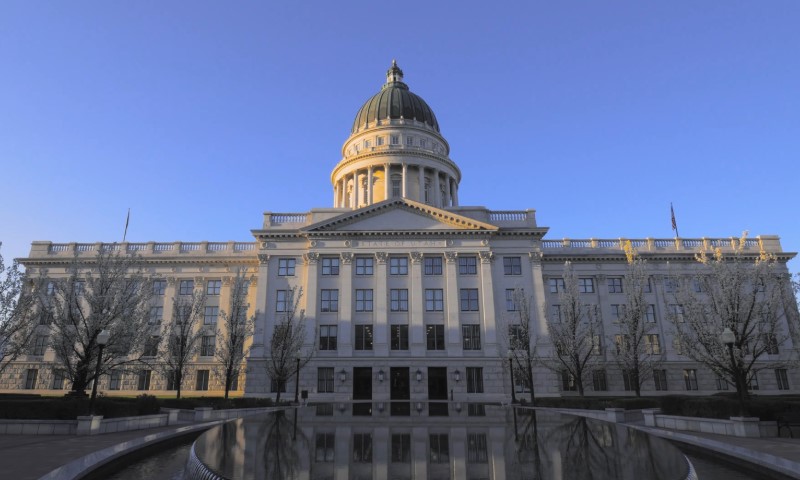
Supporters of restrictions often argue that minors are too young to consent to potentially life-altering medical interventions, and that the evidence base should meet a higher standard before the state permits broader access.
Opponents argue that lawmakers are substituting ideology for clinical decision-making and ignoring a state-ordered review designed to reduce uncertainty.
That clash is not happening in a vacuum. In the United States, major professional medical organizations have supported access to gender-affirming care within structured clinical protocols, while also calling for more research and careful monitoring.
The American Academy of Pediatrics, in a policy statement, supports comprehensive care for transgender and gender-diverse youth and emphasizes reducing stigma and supporting healthy development.
The Endocrine Society’s clinical practice guidance establishes a framework for endocrine treatment, emphasizing careful evaluation, monitoring, and multidisciplinary care.
In Europe, England’s NHS has been implementing recommendations associated with the Cass Review, which emphasized service redesign, data collection, and a more holistic clinical model for children and young people, and it has influenced policy debates well beyond the UK.
Utah’s situation is unusual in one respect: lawmakers themselves mandated a deep evidence review and now face reporting that the review did not support sweeping restrictions.
A National Pressure Campaign Is Reshaping Local Decisions
Utah’s debate is unfolding amid a broader federal push that has intensified scrutiny of pediatric gender-affirming care.
A January 28, 2025, executive order set federal policy against funding or supporting transition-related medical interventions for individuals under 19, using sweeping language that has been widely cited in subsequent federal actions.
In parallel, federal investigations and subpoenas seeking patient and provider records have triggered courtroom fights and privacy alarms.
Reuters reported in January 2026 that the U.S. Department of Justice withdrew parts of a demand for records involving thousands of transgender minors treated at Children’s Hospital Los Angeles, and a separate Reuters report described a judge’s conclusion that a subpoena effort functioned as intimidation rather than a legally justified investigation.
That national posture matters to state policymakers for two reasons. It raises the legal risk environment for providers, and it signals that state restrictions may be reinforced by federal funding threats and investigative tactics, even when state-level evidence reviews point in another direction.
What Happens Next in Utah
Utah’s 2026 bills are moving through the legislature in a climate where evidence, politics, and institutional risk are pulling in different directions.
Legislative text indicates a policy objective aimed at limiting treatment for minors and restricting public reimbursement, even as major reporting describes the commissioned review as finding that a categorical denial of access is not supported by available science.
The practical stakes are immediate for families already navigating care, for clinicians weighing liability and licensing risk, and for public systems that may be forced to redefine what health coverage can include.
For lawmakers, the central question is no longer whether evidence exists. The question is whether evidence will be allowed to shape policy after the state paid to gather it.