


Higher education compliance rarely shows up as one dramatic deadline circled in red. It shows up quietly, month after month, through reporting windows, aid filings, payroll obligations, safety disclosures, and audit clocks that start counting the moment a fiscal year closes.
The institutions that stay ahead do not rely on memory or last-minute heroics. They treat compliance the same way they treat an academic year. Map it early. Assign ownership. Build in review time. Expect questions. Leave room for data cleanup and human error.
What follows is a practical, 2026-focused federal compliance calendar for U.S. colleges and universities that participate in Title IV federal student aid.
It is written for people who actually run compliance, not for policy theory. Every date below connects to real operational work, real documentation, and real risk if missed.
What Counts As A Federal Compliance Date In 2026

For purposes of planning, federal compliance dates include obligations tied directly to:
- Participation and reporting requirements under the U.S. Department of Education, including Campus-Based aid and required audits
- Campus safety disclosures under the Clery Act
- Federal data collections through IPEDS under the National Center for Education Statistics
- Tax reporting handled by institutions as employers, payers, and education providers through the Internal Revenue Service
Some deadlines land on the same date every year. Others float based on fiscal year end or audit completion. Both belong on one master calendar so collisions become visible before they turn into problems.
How To Use A Compliance Calendar Like A Real Tool
A calendar only works when it is tied to execution. The cleanest approach treats compliance as a year-long cycle rather than a series of disconnected filings.
Effective teams usually do four things consistently:
- Assign an owner and a backup for every deliverable
- Set internal cutoffs well before federal deadlines
- Track proof of submission and distribution, not just task completion
- Plan for student and employee impact when filings go live
Students also face deadlines that align with institutional compliance schedules, from research papers and reports to capstones and policy briefs. Meeting these requires careful planning, structured writing, and tools that scale with the calendar’s rhythm. PapersOwl helps students prepare essays, assignments, and other deliverables efficiently. This way, their submissions meet both academic standards and institutional requirements, turning potential overload into steady progress.
The 2026 Federal Compliance Calendar At A Glance
The sections below walk month by month through 2026, followed by rolling deadlines that depend on fiscal year timing.
January 2026 – Furnish Form 1098-T Tuition Statements By January 31, 2026
Multiple institutions publicly cite this IRS expectation, including the University of Texas at Austin, which states that the IRS requires 1098-T forms to be sent no later than January 31 each year.
While the filing of the form with the IRS happens later, the student-facing obligation drives January operations.
What To Operationalize In January
- Validate student SSN or TIN collection and correction workflows
- Confirm delivery method, paper mailing versus electronic consent
- Coordinate with third-party vendors on file transmission timing
- Run exception reports early for missing TINs, name mismatches, dropped enrollments, and scholarship-only accounts
- Schedule a dedicated student support window, since questions spike in late January and early February
January tends to feel routine until the first wave of student emails hits. Planning for that volume matters.
February 2026 – IPEDS Spring Reporting Preparation Continues
IPEDS reporting is not a single submission. It is a sequence of surveys and components that open, close, lock, and validate across the academic year.
The 2025 to 26 IPEDS cycle opened August 6, 2025, and several reporting activities continue into 2026 ,depending on the institution’s survey set.
February is rarely the month a campus misses IPEDS outright. It is the month internal prep time disappears.
Compliance Reality In February
The risk sits in late validation, incomplete cross-office signoff, and underestimating how long data reconciliation takes. February should be treated as a heavy preparation period, not a quiet one.
March 2026 – Form 1042-S Due March 15, 2026 For Payments To Foreign Persons
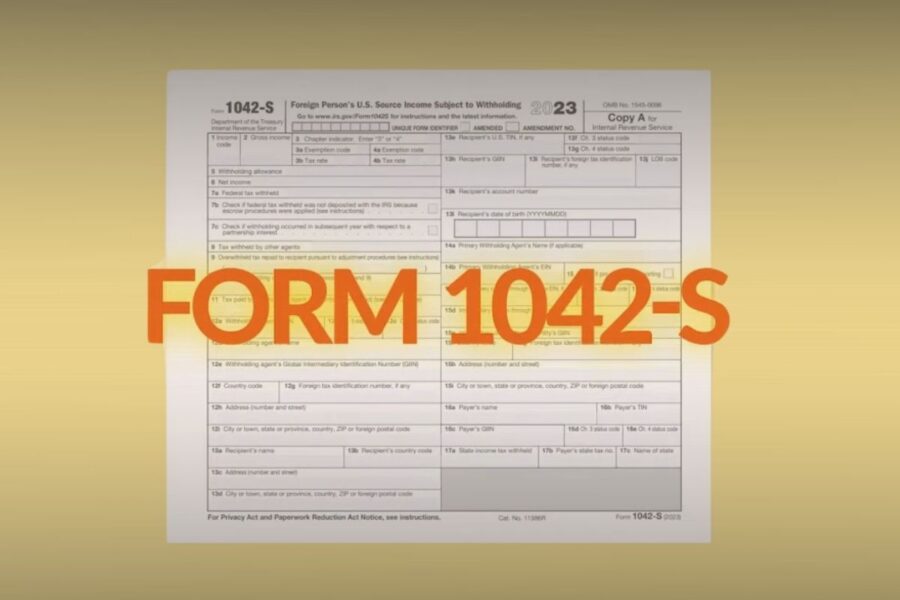
Institutions that make certain payments to nonresident aliens deal with Form 1042-S. Covered payments can include taxable portions of scholarships, fellowships, honoraria, stipends, royalties, and independent contractor payments.
IRS instructions specify that Form 1042-S for 2025 payments is due March 15, 2026. Electronic filing through the IRS IRIS system opens January 1, 2026.
What To Operationalize Before March 15
- Confirm current W-8BEN and W-8BEN-E documentation
- Reconcile general ledger accounts tied to international payees
- Coordinate across payroll, accounts payable, tax, HR, and scholarship offices
- Review treaty application logic and withholding calculations
International tax reporting almost always involves multiple offices. March deadlines tend to surface gaps that were invisible earlier in the year.
IPEDS Spring Submissions Are Often Active
IPEDS workload remains heavy into March for many institutions. Federal estimates published in the Federal Register place the total annual burden for IPEDS collections at 750,793 hours.
That number matters operationally. IPEDS is one of the largest recurring federal compliance efforts in higher education, and it competes for time with tax and audit preparation.
April 2026 – Form 941 Due April 30, 2026 For Q1 Payroll Taxes
Practical Payroll Notes
- Centralized payroll operations tend to handle filings smoothly
- Distributed payroll environments need early reconciliation across entities, such as medical affiliates, auxiliaries, or foundations
April payroll compliance often overlaps with audit fieldwork. Coordination prevents last-minute scrambles.
May 2026 – Form 990 Due May 15, 2026 For Calendar-Year Filers

Tax-exempt institutions or related foundations that operate on a calendar year must file Form 990 by May 15, the 15th day of the fifth month after year-end.
Why May Gets Crowded
- Board-facing disclosures require careful review
- Executive compensation schedules attract scrutiny
- Related-party and foundation transactions take time to document
Institutions that wait until April to draft Form 990 usually feel the pressure. May rewards early internal review cycles.
July 2026 – Form 941 Due July 31, 2026 For Q2 Payroll Taxes
The second-quarter payroll tax filing follows the same structure as earlier quarters. July filings often land during summer staffing gaps, which increases risk if coverage is thin.
August 2026 – Clery Act Data And Policy Build Season
The October 1 Clery Act publication deadline drives most campus safety compliance work backward into August.
August is where data validation and policy drafting need to happen, even if the final report lives with a compliance office.
Inputs typically come from:
- Campus police or public safety
- Student affairs and conduct offices
- Title IX coordination
- Housing and residence life
- Human resources for employee notices
- Facilities for fire safety reporting
Waiting until September to start building the Annual Security Report usually creates avoidable errors.
September 2026 – Final Runway For October 1 Clery Compliance
September is the last realistic window to finalize crime statistics, policy statements, and distribution logistics.
Institutions that push validation into mid or late September often rush disclosures that require precision. Internal cutoffs matter here.
A practical internal schedule often looks like:
- Early September for crime statistic freeze
- Mid-September for policy review signoff
- Late September for final formatting, posting, and distribution testing
October 2026 – Clery Act Annual Security Report Due October 1, 2026
Congressional Research Service materials also describe the October 1 requirement when summarizing Clery Act obligations.
Important 2026 Update: Hazing Statistics Required
October 1, 2026 marks the first Annual Security Report that must include hazing statistics under the Stop Campus Hazing Act. The requirement covers hazing incidents from calendar year 2025.
Institutions that have not historically tracked hazing data in this way need to coordinate early with student affairs and conduct offices.
How To Run October 1 Correctly
- Treat the ASR as both a publication and a communication obligation
- Verify distribution to current students and employees
- Confirm notice procedures for prospective students and employees
- Archive the final report, landing page, and distribution records for audit trails
Campus-Based Aid Planning And FISAP
The Fiscal Operations Report and Application to Participate, known as FISAP, is due no later than October 1 each year for Campus-Based programs.
Federal Student Aid guidance states that the FISAP must be completed by October 1 or earlier if the date falls on a weekend. Education Department announcements consistently reinforce the statutory nature of the deadline.
Even when a specific award year’s FISAP was submitted in the prior calendar year, the workflow repeats annually. Institutions that treat FISAP as a late-September task often encounter avoidable corrections.
November 2026 – Form 941 Due For Q3 Payroll Taxes With Weekend Adjustment
For the third quarter ending September 30, 2026, the IRS lists a standard due date of October 31, 2026. When that date falls on a weekend, filing moves to the next business day.
Operational payroll calendars should reflect that adjustment to avoid confusion.
December 2026 – Lock In The Next Compliance Cycle

December rarely has a major external filing deadline, but it carries strategic weight.
December is where strong compliance teams:
- Close the crime data year for Clery tracking
- Clean vendor and payee files ahead of January reporting
- Assign audit owners and timelines for spring and summer
- Update the next year’s master compliance calendar
Ignoring December planning usually shows up as January stress.
Rolling Deadlines That Depend On Your Fiscal Year
Some of the most consequential federal requirements do not live on a fixed calendar date. They live on a clock tied to fiscal year end and audit completion.
Annual Audits And Financial Statements For Title IV Participation
Title IV institutions must submit annual audits and financial statements through Education Department systems such as eZ-Audit.
A widely cited compliance standard requires submission no later than six months after the last day of the institution’s fiscal year. Federal regulations reflect that six-month outer limit.
How To Calendar Audit Deadlines
Rather than listing a single date, calculate it dynamically:
- Fiscal year end plus six months equals the outer submission deadline
For example, a June 30, 2026 fiscal year end places the deadline around late December 2026, subject to specific submission rules.
Why The Audit Clock Matters
Late audits can lead to delayed funds, additional oversight, and financial responsibility issues. Even when the deadline sounds generous, the internal work rarely is.
Single Audit Submission Under Uniform Guidance

Institutions that meet the federal expenditure threshold for a Single Audit under 2 CFR 200 Subpart F face a strict submission timeline:
- 30 days after receipt of the auditor’s report, or
- 9 months after the end of the fiscal year
Whichever comes first applies.
That timing appears clearly in FAC guidance and in regulatory text under 2 CFR 200.512(a).
How To Track Single Audit Timing
- Set a hard nine-month deadline from fiscal year end
- Add a second trigger based on the auditor report delivery date
When auditor reports arrive early, the 30-day clock often becomes the real constraint.
Turning Dates Into A Working Compliance System
Deadlines alone do not prevent findings. Workflow does.
Institutions that struggle with compliance tend to fail in predictable ways:
- Ownership is unclear
- Data validation happens too late
- Proof of submission or distribution is missing
- Community impact is underestimated
A simple structure keeps things grounded.
A Four-Step Framework That Holds Up
A reliable compliance operation depends on a small set of repeatable steps that turn deadlines into managed processes rather than last-minute scrambles.
1. Assign A Primary Owner And Backup
Every deliverable needs two names attached.
Examples:
- Clery ASR: Compliance director as owner, campus police analyst as backup
- Form 1098-T: Bursar as owner, IT data operations as backup
2. Set Internal Data Freeze Dates
Internal cutoffs protect accuracy.
For an October 1 ASR:
- September 1 for crime statistic freeze
- September 15 for policy review
- September 25 for final approval
3. Track Proof, Not Just Completion
Maintain:
- Submission receipts
- Archived PDFs
- Change logs
- Distribution records
4. Plan For Human Impact
Compliance often creates questions.
- 1098-T releases drive student inquiries
- ASR publication raises safety questions
- International tax forms require specialized explanations
Time for those conversations belongs on the calendar.
Summary Table Of Key 2026 Federal Compliance Dates
| Deadline | Requirement | Typical Owner |
| January 31, 2026 | Furnish Form 1098-T to students | Bursar, Student Accounts |
| March 15, 2026 | File and furnish Form 1042-S | Tax Office, Payroll, AP |
| April 30, 2026 | Form 941 for Q1 payroll | Payroll |
| May 15, 2026 | Form 990 for calendar-year filers | Finance, Controller |
| July 31, 2026 | Form 941 for Q2 payroll | Payroll |
| October 1, 2026 | Clery ASR publication and distribution | Compliance, Campus Safety |
| October 1, 2026 | Hazing statistics included in ASR | Compliance, Student Affairs |
| Fiscal year end plus 6 months | ED audit and financial statements | Finance, Audit |
| Fiscal year end plus 9 months or 30 days after auditor report | Single Audit submission | Grants Finance, Audit |
Closing Perspective
Federal compliance in higher education does not reward urgency. It rewards planning, documentation, and steady ownership. A calendar that reflects real workloads, real people, and real review time becomes a management tool rather than a stress trigger.
When the year is mapped clearly, compliance stops feeling reactive. It becomes another operational cycle the institution knows how to run.