


Michigan civil practice is about to feel different. A new statute moves into place in 2026 that adds a fast, aggressive screening tool for lawsuits aimed at punishing speech and civic participation rather than resolving real disputes.
Public Act 52 of 2025, enrolled as House Bill 4045, adopts the Uniform Public Expression Protection Act and builds a special early motion with a discovery freeze, mandatory timelines, fee shifting, and an automatic appeal path.
Attorneys who handle defamation claims, business tort disputes, online review fights, protest-related litigation, public meeting clashes, and activism-centered lawsuits will need to rethink their early case strategy.
The law introduces an early merits checkpoint that can reshape settlement leverage and litigation cost exposure almost overnight.
Why Michigan Adopted A SLAPP-Style Statute
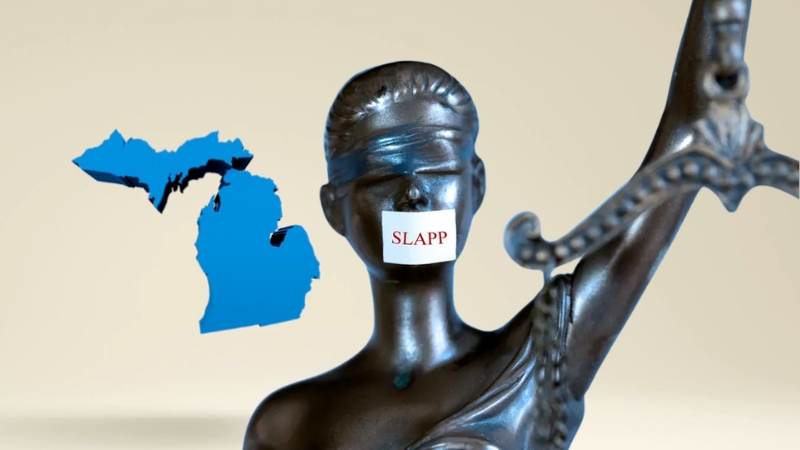
Strategic lawsuits against public participation, often shortened to SLAPP, describe a litigation tactic rather than a formal cause of action. The tactic centers on filing claims that target speech, petitioning, reporting, protest, or organizing activity.
The real goal often involves financial pressure and delay rather than a true plan to win at trial. Defense costs climb quickly. Discovery drags on. Public critics grow quieter.
Public Act 52 speaks directly to that pattern. The statute labels such lawsuits “retributive and abusive” and explains that they chill public participation.
The legislature then builds a procedural fix rather than a new substantive defense. The fix includes expedited review, a stay of discovery, defined evidence rules, burden shifting, and fee awards.
Supporters described the goal in plain language during the bill’s path through Lansing. Defendants needed an early off-ramp before discovery costs ballooned. Courts needed a way to keep litigation from becoming a weapon against criticism, organizing, or dissent.
The Institute for Free Speech, which tracks national anti-SLAPP coverage, reports that Michigan became the 39th state with a comprehensive anti-SLAPP statute. House Bill 4045 passed 103-0 in the House and 36-0 in the Senate. The governor signed the bill on December 23, 2025.
For local perspectives on Michigan practice and litigation preparation, attorneys might review materials from the Clark Law Office.
Effective Date And What “In 2026” Means
Public Act 52 lists its effective date as “Sine Die,” defined as the 91st day after final adjournment of the 2025 Regular Session. In real-world planning terms, practitioners should treat the statute as effective in 2026.
The statute also answers an immediate question about application. It applies to a civil action filed, or a cause of action asserted, on or after the effective date. Pending cases filed earlier remain governed by the older procedural framework.
That line matters. Litigators should not assume every existing case suddenly becomes subject to the new rules.
What Claims Can Trigger The New Motion
The statute avoids naming specific torts. Instead, it defines an “eligible cause of action” by the nature of the conduct targeted by the lawsuit.
Core Categories That Trigger Coverage
A cause of action qualifies as eligible when it arises from any of the following:
- A communication in a legislative, executive, judicial, administrative, or other governmental proceeding
- A communication on an issue under consideration or review in a governmental proceeding
- Exercise of constitutional rights of speech, press, assembly, petition, or association on a matter of public concern
The third category reaches far beyond formal government filings. Reporting, public criticism, issue-based advocacy, organizing activity, and many forms of consumer and political speech often land in that bucket.
Statutory Carveouts That Can Remove A Claim From Coverage
Public Act 52 also includes explicit carveouts that shape pleading and motion strategy.
Goods And Services Carveout
A claim does not qualify as an eligible cause of action if it targets a person primarily engaged in selling or leasing goods or services and arises from a communication related to that sale or lease.
The statute then narrows the definition of goods or services by stating that goods or services do not include the creation or promotion of dramatic, literary, musical, political, journalistic, or artistic works.
Civil Rights And Employment Statutes
Claims arising from violations of several Michigan and federal statutes sit outside the Act. The list includes:
- Elliott-Larsen Civil Rights Act
- Persons with Disabilities Civil Rights Act
- Whistleblowers’ Protection Act
- Workers’ compensation laws
- Federal laws such as Title VII, Title IX, ADEA, ADA, FMLA, and FLSA
FOIA
Claims arising from violations of Michigan’s Freedom of Information Act also remain outside the Act.
Quick Spotting Guide
| Scenario | Likely Coverage | Why It Matters |
| Citizen speaks at a city council meeting and faces a lawsuit | Often in | Communication in a governmental proceeding |
| A social media post criticizing a public project leads to a claim | Often in | Speech on a matter of public concern |
| Consumer review tied to a transaction | Fact dependent | Goods and services carveout may apply |
| Whistleblower retaliation styled as defamation | Often out | Whistleblowers’ Protection Act is carved out |
| FOIA denial dispute | Out | FOIA is expressly excluded |
The Special Motion For Expedited Relief

The heart of Public Act 52 lies in a new procedural device. The statute creates a special motion for expedited relief to dismiss.
Filing Deadline
A defendant may file the motion not later than 60 days after service of a pleading asserting an eligible cause of action. A later filing remains possible on a showing of good cause.
That deadline stands apart from familiar summary disposition timing. Defense teams must track service dates closely. Missing the window can forfeit access to the statute’s protections.
Automatic Stay Of Proceedings And Discovery
Once the motion is filed, the default rule switches on an immediate stay of all other proceedings between the moving and responding party. Discovery pauses. Pending hearings or motions between those parties pause as well.
The court also holds discretion to stay proceedings involving other parties when those proceedings would adjudicate or require discovery on an issue material to the special motion.
Two timing rules expand the effect of the stay:
- The stay continues through the court’s order on the motion and through the time to appeal.
- When an appeal follows, proceedings between all parties remain stayed until the appeal concludes, subject to limited statutory exceptions.
For plaintiffs who often rely on discovery to build a case, the ground rules shift. Early evidence preparation becomes essential.
Limited Discovery Under A Narrow Standard
Limited discovery remains possible, though only under a narrow showing. A party must demonstrate that specific information is necessary to establish whether a statutory burden has been satisfied and that the information cannot be reasonably obtained without discovery.
The design pushes litigants toward focused requests, such as a narrow set of documents or a short deposition rather than open-ended fishing.
Hearing And Ruling Deadlines
Public Act 52 imposes tight timelines:
- The court must hear the motion within 60 days after filing, unless a later hearing is ordered for limited discovery or other good cause.
- When discovery is allowed, the hearing must occur within 60 days after the discovery order unless extended for good cause.
- The court must rule within 60 days after the hearing.
The motion track, therefore, compresses early litigation into a fast, predictable window.
Evidence The Court May Consider
The court must consider pleadings, motion papers, and documentary evidence. Documentary evidence includes affidavits, depositions, admissions, and other documents.
The motion therefore, functions as an early evidence review rather than a pure pleading attack.
The Burden Framework And Grounds For Dismissal

Public Act 52 outlines a two-step framework that controls dismissal.
Step One: Eligibility
The moving party must establish that the challenged cause of action qualifies as an eligible cause of action. The responding party must then fail to show that a statutory carveout removes the claim from coverage.
Expect heavy briefing around the goods and services carveout and whether a dispute qualifies as speech on a matter of public concern.
Step Two: Merits Screening
Dismissal with prejudice follows when one of the following conditions appears:
- The responding party fails to establish a prima facie case as to each essential element of the claim, or
- The moving party establishes either a failure to state a claim or the absence of a genuine issue of material fact, along with entitlement to judgment as a matter of law
The structure borrows familiar early-motion concepts while pushing the case into a fast merits check.
Voluntary Dismissals And Fee Exposure
A voluntary dismissal does not necessarily shield a plaintiff from fee consequences.
- When a plaintiff voluntarily dismisses without prejudice while the motion remains pending, the moving party may still seek a ruling and pursue costs, fees, and expenses.
- When a plaintiff voluntarily dismisses with prejudice, the moving party qualifies as the prevailing party for fee purposes.
Dropping a case, therefore, does not automatically close the door on fee disputes.
Appeals As Of Right

A moving party may appeal as of right from an order denying the motion in whole or in part. The appeal must be filed within 21 days after entry of the order.
The stay provisions continue through the appeal, which can place significant time pressure on a plaintiff even after surviving the trial court phase.
Mandatory Fee Shifting
Fee shifting forms another core feature of Public Act 52.
On a motion brought under the statute, the court must award court costs, reasonable attorney fees, and reasonable litigation expenses related to the motion:
- To the moving party when the moving party prevails
- To the responding party when the responding party prevails and the court finds that the motion was frivolous or filed solely to delay
The mandatory nature of the fee award reshapes risk analysis for both sides.
Broad Construction Language
View this post on Instagram
The statute states that it must be broadly construed and applied to protect constitutional rights of speech, press, assembly, petition, and association.
Defense counsel will rely on that directive when framing close questions around public concern, communications tied to governmental proceedings, and procedural ambiguities. Plaintiff-side briefing will often respond by leaning on carveouts and the statute’s burden structure.
Typical Timeline Under Public Act 52
A streamlined timeline emerges under the statute when no extensions or discovery orders intervene:
- Service of pleading asserting an eligible cause of action
- Within 60 days, defendant files special motion
- Immediate stay of proceedings and discovery between moving and responding parties
- Hearing held within 60 days after filing
- Court rules within 60 days after hearing
- If denied, defendant files appeal within 21 days, with the stay continuing through the appeal
Practical Guidance For Defense Teams
- Spot eligibility immediately. Calendar the 60-day window as soon as service occurs.
- Prepare evidence early. Affidavits, copies of communications, and background records can shape the outcome.
- Address carveouts directly. The goods and services carveout often drives the fight.
- Use the stay strategically. The stay shifts leverage where discovery had been a pressure tool.
- Limit discovery requests. Ask only for specific information tied to statutory burdens.
- Price fee risk carefully. A prevailing movant recovers fees. A frivolous motion can lead to fee exposure.
Practical Guidance For Plaintiffs
- Prepare to prove claims early. A prima facie showing may be required while discovery remains paused.
- Draft pleadings with carveouts in mind. Identify commercial disputes or statutory civil rights grounds clearly.
- Account for fee exposure. Losing the motion can trigger mandatory fee awards.
- Plan for interlocutory appeals. Even a successful response can lead to delayed proceedings if an appeal follows.
What Changes In Michigan Motions Practice
Michigan has adopted an anti-SLAPP law!@rcfp had expressed support for the legislation, which allows courts to quickly dismiss meritless lawsuits intended to chill speech about matters of public interest. https://t.co/Oplm79wf5l
— Reporters Committee for Freedom of the Press (@rcfp) January 5, 2026
Michigan courts already possessed strong early dismissal tools. Public Act 52 reshapes the procedural landscape through a dedicated motion with its own deadlines, a statutory discovery freeze, compressed hearing and ruling schedules, mandatory fee shifting, and a built-in appeal route paired with a continuing stay.
Litigation leverage shifts accordingly. Plaintiffs who seek to impose cost and delay through speech-related claims face a shortened runway. Legitimate plaintiffs still retain access to the courts, though early preparation and evidence gathering now play a larger role.
Public Act 52 does not alter substantive defamation standards or tort elements. It changes the pace, cost structure, and early posture of speech-centered disputes across Michigan courts in 2026 and beyond.