

With the Kids Online Safety Act (KOSA) back in the news this winter, some commentary has turned apocalyptic, claiming the law will wipe queer and trans content off the internet or give federal agencies unlimited censorship power.
A careful look at the bill text, the legislative record, and outside reporting shows where that fear intersects real policy questions and where it strays into speculation.
What KOSA Is and What It Actually Does
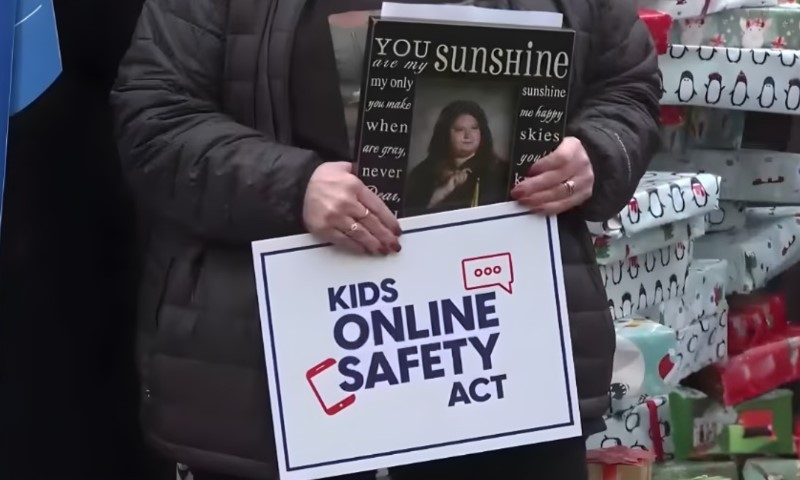
KOSA (S. 1748) is a federal bill introduced in the 119th Congress on May 14, 2025, aimed officially at protecting minors online by imposing safety requirements on digital platforms.
The bill has wide bipartisan sponsorship, with more than 70 co-sponsors in the Senate from both Republican and Democratic parties.
Under the bill’s text, platforms that are “covered” (those likely used by people under 17) would be required to exercise a “reasonable duty of care” in designing and implementing features so as to prevent or mitigate foreseeable harms to children.
Specifically, the bill spells out harms like eating disorders, substance use disorders, and suicidal behaviors as examples platforms must address where they are predictable outcomes of design features.
For many lawmakers and advocates, that “duty of care” language is the heart of the bill. It means platforms could be held responsible if their choices meaningfully contribute to harms that experts agree were foreseeable.
Supporters say this is about child safety and accountability, while critics say it could chill free expression if poorly applied.
Who Is Supporting the Bill
Contrary to claims that the bill is a partisan, fringe measure, Senators from both parties have signed on. In addition to Republican lead sponsor Marsha Blackburn, Democrats such as Amy Klobuchar, Mark Kelly, Margaret Hassan, and Brian Schatz are co-sponsors.
That broad spread reflects the fact that concern about online harms to kids, from mental health issues to addictive design features, cuts across political lines.
Where the Fear of Censorship Comes From
A major source of controversy is the fear that this duty of care standard could be used to justify removing speech or content that certain groups find objectionable, not just obviously harmful content.
Some activists worry that regulators or courts could interpret the law in a way that suppresses speech about gender identity, reproductive health, or other topics that provoke debate about what is “harmful.”
This is part of why organizations, including the ACLU, have voiced concern that the act could compound attacks on young people’s rights online.
Another flashpoint in debates around the bill is the broader political context. Opponents of KOSA often point to Project 2025, a blueprint circulated in conservative circles for the next presidential administration, which contains language that redefines pornography broadly and ties it to “transgender ideology.”
Some media analyses (not legal texts) describe that framework as part of a wider cultural fight over how sex, gender, and expression are regulated online and offline.
Mainstream fact-checking and advocacy groups, including GLAAD, have pushed back on alarmist interpretations of Project 2025, noting that the document does not literally mandate specific censorship actions in education or online content.
It’s important to separate KOSA itself — which is a debated but traditional safety bill — from separate efforts like Project 2025 that advocate for broader cultural and legal shifts and use incendiary rhetoric about “pornography” and gender.
One is a specific piece of federal legislation with text you can read and analyze; the other is a political roadmap with ideological goals that may or may not become law.
The Mental Health Context
@bbcsounds “The law is changing – but will it work?” Listen to Laura Kuenssberg unpack what the Online Safety Act means for children’s safety online on #BBCNewscast
The focus on anxiety, depression, suicide, and compulsive usage in the debate has a factual backbone: researchers and lawmakers have pointed to rising rates of mental health struggles among youth and concerns that aspects of social media — particularly addictive design features — may be contributing factors.
For example, public health reporting shows significant increases in youth depression and suicide considerations over the last decade, and many Americans now believe social media plays a role in that trend.
That research record is part of what motivated lawmakers to propose laws like KOSA and other proposals aimed at dealing with the digital ecosystem’s effects on young people. Whether the resulting laws strike the right balance between protecting kids and preserving free expression is the central battleground in the current legislative debate.
What KOSA Does Not Do (and What It Doesn’t Legally Authorize)
KOSA does not explicitly single out LGBTQ+ content for removal. The bill’s text focuses on platform practices and design features that foreseeably contribute to harm, not on content categories per se.
It also does not automatically give the FTC unlimited power to “censor” content on its own. Like most federal statutes affecting technology policy, the act would require legal interpretation, rulemaking, and, likely, litigation before any substantial change to content moderation or legal liability standards takes effect.
Why This Matters Right Now
Debate around KOSA touches on real policy questions about children’s safety, mental health trends among teens, and how and whether tech companies should be held accountable for the structure of their products.
That debate is happening in a highly charged political environment where broader cultural fights, over gender, speech rights, censorship, and regulatory authority, often get folded into specific policy fights.
What’s most useful for readers is to understand what the bill’s language actually says, where the fears come from, and which parts of the argument are grounded in the text versus broader political rhetoric. That allows for debate informed by evidence and law, not just fear or slogans.