

Electric cars keep getting cheaper to drive and easier to live with. Charging at home cuts fuel costs. Maintenance stays simple. Quiet cabins make daily commuting calmer. Yet a new type of bill has started appearing in mailboxes across the country. Annual EV registration surcharges, highway use fees, and road user charges are now part of ownership.
By mid-2025, 39 states had already adopted some form of special registration fee for EVs, with most charges landing between $50 and $290 per year.
More changes are scheduled for 2026. Some states are raising existing fees. Others are switching formulas. A growing group is preparing per-mile alternatives that work like a modern gas tax.
EV ownership is still expanding. State transportation budgets are still shrinking. Registration fees have become the preferred pressure valve between those two forces.
Key Points
- 39 states had EV registration surcharges in place by mid-2025, with annual fees commonly ranging from $50 to $290.
- Many states are raising fees for 2026 and shifting toward indexed or weight-based pricing models.
- Flat EV fees of $200 to $250 often exceed the federal gas tax paid by average gasoline drivers.
- Per-mile road usage charges are expanding, with Oregon setting a 2.3 cents-per-mile rate for 2026.
Why States Keep Adding EV Fees

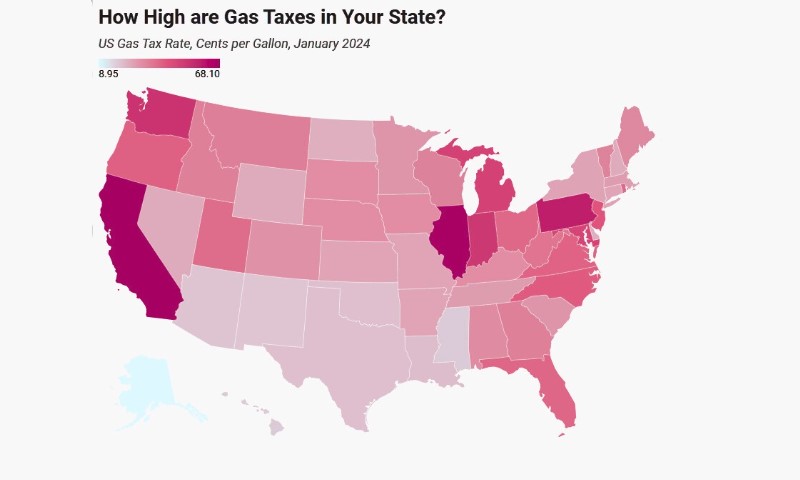
Gas taxes have funded roads for decades. Electric vehicles use those same roads yet do not buy gasoline. That design choice bypasses the fuel tax system entirely.
At the federal level, gasoline is taxed at 18.4 cents per gallon and diesel at 24.4 cents per gallon, as per the Federal Highway Administration.
That revenue supports the Highway Trust Fund, the backbone of federal transportation spending.
Two problems now collide:
- EVs pay no gas tax.
- Even gas vehicles generate less fuel tax than before because modern engines use less fuel per mile.
Construction costs keep rising. Fuel tax revenue keeps weakening. The Highway Trust Fund has struggled with structural shortfalls for years.
Projections show that under the current law, federal funds will fall short of obligations by FY2028.
States have chosen the fastest administrative fix. They add an annual EV fee at registration time. Because registration systems already store detailed vehicle records, tools like vingurus.com plate lookup can surface that information instantly.
Plate lookup services matter because they allow buyers, insurers, lenders, and investigators to verify a vehicle’s identity, title status, accident exposure, mileage pattern,s and possible theft or fraud risks without waiting on manual records requests.
They reduce information gaps in used-car transactions, support pricing accuracy, and lower the risk of hidden defects that lead to financial loss.
The Policy Logic States Use
Public explanations usually fall into three categories.
Replacing Missing Fuel Tax Revenue
State agencies state the logic directly. Electric vehicles use little or no gasoline. That means less contribution to the fuel tax system, which remains a primary funding source for road maintenance.
Registration fees attempt to replace part of that missing revenue.
Accounting For Vehicle Weight
Battery packs add mass. Many EVs weigh more than similar gasoline models. More weight leads to more road wear. Several states use that argument to justify tiered pricing tied to vehicle weight classes.
Using Existing Collection Systems
Per-mile tracking systems require mileage reporting, data processing, compliance checks, and enforcement. Registration fees require none of that. States already collect registration payments every year. EV surcharges simply attach to that cycle.
What “EV Registration Fee” Really Means
The phrase sounds simple. In practice, states apply EV charges in several forms:
- Flat annual surcharges added to standard registration
- Tiered fees based on vehicle weight or powertrain type
- Indexed fees that rise automatically over time
- Per-mile road usage charges that may be voluntary or mandatory
For 2026, the major trend is movement away from flat pricing and toward weight-based or indexed formulas.
Pennsylvania
Pennsylvania wrote its EV fee increases directly into law.
- 2025 EV fee: $200
- 2026 EV fee: $250
- Plug-in hybrid fee in 2026: $62.50
- Indexing after 2026: CPI-based annual adjustments begin in 2027
NCSL information shows that the law applies the $250 rate to registrations or renewals submitted in 2026. Starting in July 2026, PennDOT will also allow monthly payment plans for EV and plug-in hybrid owners.
Practical impact:
| Vehicle Type | 2026 Fee |
| Battery electric | $250 |
| Plug-in hybrid | $62.50 |
Pennsylvania shows the future direction clearly. Fees are not static. They rise. They index. Payment systems adjust to normalize the cost as part of routine ownership.
Minnesota
Minnesota raised its EV surcharge effective August 1, 2025. CBS News reported the following:
- Previous EV surcharge: $75
- New EV surcharge: $150 minimum
- New plug-in hybrid surcharge: $75
- Indexing mechanism: tied to gasoline excise tax indexing adjustments
Owners renewing registrations in 2026 will feel the change directly. The structure also positions Minnesota fees to rise automatically over time.
Delaware
Delaware begins collecting Alternative Fuel Vehicle fees on October 1, 2025. That makes 2026 the first full year most owners experience the new charges.
Key context from Delaware’s own data:
- 57,500 alternative fuel vehicles were registered when the fee program was announced.
- Delaware confirmed that 39 other states already had similar fees in place.
Delaware uses tiered, weight-based pricing. For example:
- Plug-in electric vehicles 6,000 pounds or less face an $85 annual fee.
- Heavier vehicles pay higher fees based on weight brackets.
Delaware signals where many legislatures are headed. Flat fees are being replaced by schedules that tie price to vehicle mass and class.
A Practical Snapshot Of EV Fees Going Into 2026
The following table shows well-documented examples with active change dynamics entering 2026. Amounts reflect special EV charges only.
| State | Fee Type | Approx EV Charge Near 2026 | Notes |
| Pennsylvania | Annual EV fee | $250 | Scheduled increase, CPI indexing later |
| Minnesota | Annual surcharge | $150 minimum | Indexed to gas tax adjustment |
| Delaware | Tiered AFV fee | Varies by weight | Weight-based schedule |
| Texas | Annual EV fee | $200 | Higher initial registration fees apply |
| Indiana | Indexed annual fee | $221 | CPI updates every 5 years |
| Washington | Annual EV fee | $150 | Separate hybrid fee applies |
| Virginia | Highway use fee | Varies | Includes per-mile alternative |
| Utah | Additional annual fee | Indexed | Per-mile option available |
| Oregon | Surcharge or RUC | $115 surcharge plus base reg | Per-mile OReGO program |
| Tennessee | Annual EV fee | $200 | Hybrid fees also apply |
Where Per-Mile Charges Fit
Vehicle miles traveled systems aim to charge drivers based on distance driven rather than flat annual fees. The concept tracks road use more precisely, yet the administration burden is heavier.
Estimated administrative and enforcement costs for VMT systems fall in the 5% to 13% range of total collection. Gas taxes cost far less to administer because they are collected upstream from fuel suppliers.
Oregon’s Role
Oregon remains central to the national conversation.
- Starting in 2026, OReGO members pay 2.3 cents per mile.
- Policy discussions in Oregon have included flat fees around $340 or per-mile charges near 3 cents per mile as budget solutions.
Utah and Virginia also offer voluntary road usage charge programs.
Even when optional, per-mile programs shape long-term fee design and normalize mileage tracking systems.
How EV Fees Compare To Gas Taxes
Drivers often ask if EV registration fees exceed what gasoline drivers pay.
A quick federal-only comparison shows why the debate exists. According to AP News:
- Average annual miles per driver: 13,476
- Gas vehicle efficiency: 30 mpg
- Annual gallons: 13,476 / 30 ≈ 449 gallons
- Federal gas tax: 449 × $0.184 ≈ $82.62
A flat $200 to $250 EV fee exceeds that federal gas tax alone. States counter that total fuel taxes include state and local levies and that heavier vehicles cause more road wear.
EVs and plug-in hybrids still represented only 1.7% of the total U.S. vehicle fleet in 2023, which limits how much revenue EV-only fees can raise in the near term.
Transportation funding gaps remain far larger. Projections show an average $41 billion annual Highway Trust Fund deficit for FY2026 to FY2035.
What “More States Are Planning To Add Charges” Means For 2026
The next phase is not about introducing EV fees from scratch. The next phase focuses on refinement.
Fee Schedules Become More Technical
Weight-based tiers, vehicle class categories, and powertrain distinctions are becoming standard legislative language. Delaware already models that approach.
Indexing Becomes The Default
Pennsylvania and Minnesota now rely on automatic adjustment mechanisms. Indexing reduces repeated legislative battles and steadily increases long-term costs to owners.
Payment Systems Are Being Normalized
Monthly payment options and streamlined collection systems make EV fees feel routine rather than exceptional. Pennsylvania’s 2026 monthly payment rollout illustrates that shift.
Per-Mile Charges Move Closer To Mandates
Oregon and Hawaii discussions show that per-mile models are no longer theoretical. They now tie directly into state budget planning.
How To Estimate Your 2026 EV Fee In Minutes
Use a short checklist.
- Identify vehicle category: Battery electric, plug-in hybrid, or hybrid. Many states price them differently.
- Confirm registration cycle: Annual or biennial terms change how fees are calculated.
- Check vehicle weight: Weight-based tiers can raise or lower costs significantly.
- Review scheduled increases: Look for increases that activate in 2026.
- Check for per-mile options: Some programs allow mileage charges instead of flat fees.
The Debates That Will Shape Future Laws
Fair Share Versus Overcharge
Supporters argue EV drivers should contribute to road funding. Critics point out that flat fees can exceed fuel taxes paid by many gasoline drivers.
Flat Fees Versus Mileage Tracking
Flat fees are easy to administer. Mileage systems align cost with use yet raise privacy, enforcement, and administrative cost concerns.
State Fees Versus Federal Action
A 2025 federal proposal suggested national registration fees of $250 for EVs and $100 for hybrids, administered by states. The proposal did not pass.
Federal involvement would immediately change double-payment questions across states.
Bottom Line For 2026
EV registration fees are expanding. Scheduled increases, indexed formulas, weight-based tiers, and per-mile pilots define the next stage of policy.
Use your state’s DMV publications and statutory trackers to verify current amounts. Fees can change mid-year and can apply differently by registration cycle, vehicle class, and weight category.
For many owners, 2026 will feel less like a new rule and more like a normalization of annual EV charges as part of routine vehicle ownership.