
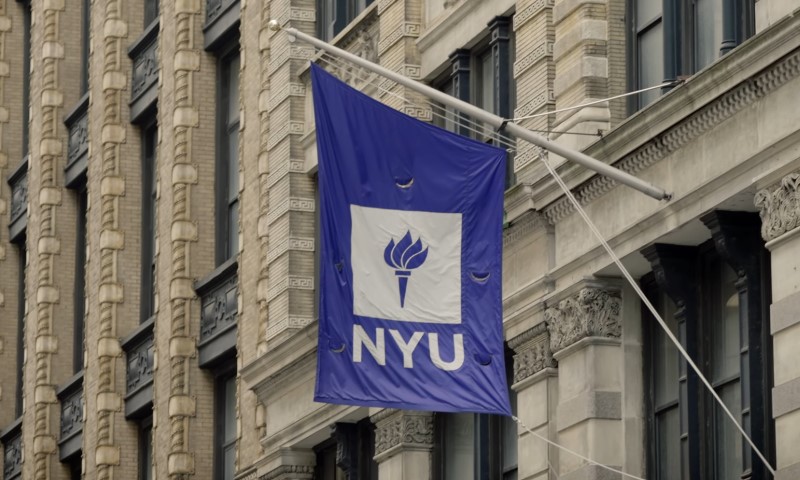

New York University has stepped into the quantum technology race with a move that signals long-term commitment rather than a symbolic announcement.
In October 2025, the university launched the NYU Quantum Institute, often shortened to NYUQI, and positioned it as a central hub for research, education, and real-world collaboration across quantum computing, quantum communications, and quantum sensing. The tone from the university was clear. NYU does not want to spectate. It wants to build.
The institute sits at the intersection of science, engineering, and applied problem solving, and it brings together researchers who once worked in separate corners of the university. Physicists, engineers, computer scientists, chemists, biologists, and medical researchers are now part of a shared ecosystem.
The university is also pushing new degree programs, industry partnerships, and global alliances to build a strong talent pipeline.
The result is an institute designed to produce both scientific breakthroughs and skilled professionals who can work on quantum systems in real settings.
The effort reaches from undergraduate programs all the way to large collaborative projects that involve multiple departments and external partners.
Key Points
- NYU launched the NYU Quantum Institute as a unified hub for quantum research, education, and industry collaboration across computing, communications, and sensing.
- The institute brings together multiple disciplines under one structure and anchors its work at a large shared facility at 770 Broadway.
- New academic programs, including a master’s in quantum science and an expanded undergraduate minor, aim to close the growing quantum workforce gap.
- NYU emphasizes cross-campus, industry, and global partnerships to accelerate real-world applications and long-term talent development.
What the NYU Quantum Institute Actually Is

NYUQI is described by the university and several science outlets as a world class research institute focusing on quantum information science and technology. It is not a single lab tucked inside a department.
The institute is designed as a cross-campus structure that distributes expertise while maintaining a unified strategy.
Launch and Leadership
According to EdScoop, the formal launch took place on October 23, 2025. Coverage from EdScoop and MeriTalk highlighted the announcement as part of a broader push to strengthen New York’s presence in the quantum sector.
Leadership includes:
Director: Javad Shabani
- Professor of physics
- Director of the Center for Quantum Information Physics
- Known for work on quantum materials and devices used in computation research
Senior Champion: Juan de Pablo
- NYU’s Anne and Joel Ehrenkranz Executive Vice President for Global Science and Technology
- Executive Dean of the Tandon School of Engineering
- A leading figure coordinating the institute with the university strategy
As Quantum Zeitgeist reports, together, they describe NYUQI as a way to build a unified ecosystem capable of pushing research into real-world systems.
Core Mission
NYU states that the institute will advance discoveries and applications in quantum information science with a broad spectrum that covers physics, engineering, materials science, computer science, biology, chemistry, and medicine. The mission emphasizes both scientific innovation and societal impact.
Three pillars form the backbone of the research agenda. They give shape to the institute’s priorities and help organize teams working across departments.
Research Focus & the Three Quantum Pillars
View this post on Instagram
Researchers at the NYU Quantum Institute organize their work around three pillars that guide the scientific and practical direction of the entire center.
Each pillar shapes how teams approach real hardware, emerging applications, and long-term technological goals.
Quantum Computing
Quantum computing remains the most visible part of quantum research, and NYUQI places heavy emphasis on it. Several core areas define the work ahead:
- Quantum algorithms for problems that are too difficult for classical supercomputers
- Quantum materials capable of supporting stable qubits
- Error correction systems and control methods required for practical computation
- Applied research that touches physical sciences, life sciences, and finance
Researchers will look at molecular modeling, simulation, and financial analysis. The goal is to design computational approaches that make possible what classical systems cannot handle within a reasonable time.
Quantum Communications
The second research pillar centers on secure and high performance communications. Key areas of work include:
- Quantum key distribution techniques for encryption
- Development of quantum repeaters for long-distance communication
- Protocols for linking quantum computers through a network
NYU’s Tandon School of Engineering has long pointed to quantum communication as a future pillar of infrastructure security. The institute expands that vision and integrates it with collaborations inside and outside the university.
Quantum Sensing
Quantum sensing is often overshadowed by computing, but NYU treats it as an equally high-priority area with immediate real-world use. The institute plans to explore:
- Ultra-precise sensors for medical diagnostics
- Devices that measure fields, forces, and time with quantum-level accuracy
- Materials and systems used for imaging and environmental analysis
Coverage from Quantum Zeitgeist highlighted interest in sensing technologies that could transform medical diagnostics and improve materials used in renewable energy systems like solar cells and battery storage.
A Large Physical Hub at 770 Broadway

One of the strongest signals of NYU’s commitment appears in its real estate choices. The institute will occupy part of a major facility at 770 Broadway in Manhattan.
Reports from Quantum Zeitgeist and Teknovation point out that NYU has secured roughly 1,000,000 square feet in the building for research and academic work.
The location is designed as a shared space where engineers, scientists, students, and industry partners can collaborate in close proximity. A few practical advantages stand out.
Proximity to Industry
Many companies active in quantum work have offices or labs in New York. That includes major technology firms and financial institutions. Students will have easier access to internships, joint research labs, and mentorship from industry teams.
Shared High-End Infrastructure
Cryogenic systems, cleanrooms, and secure data environments are expensive to build and maintain. Concentrating those assets in one location reduces duplication and supports larger multi-group projects.
Space for Growth
The building can support new research labs, teaching spaces, specialized equipment, and even startup incubator-style environments as the institute expands its programs.
Building the Talent Pipeline
A strong quantum workforce requires early exposure, structured training, and access to real hardware and software. NYU has linked the institute to new and existing academic programs across the university.
Master of Science in Quantum Science and Technology
In October 2025, shortly before NYUQI’s launch, NYU Tandon announced a new master’s degree designed to prepare students for emerging technical roles.
Training includes:
- Quantum computation and information
- Quantum programming
- Physics of quantum devices
- Quantum optics
- Quantum machine learning
The program is open to students from physics, mathematics, chemistry, computer science, computer engineering, and electrical engineering. It blends theory with hands-on lab training and exposure to real hardware.
Tandon notes that fewer than twenty institutions in the United States offered similar specialized degrees at the time, and only seventeen such programs existed nationally in 2025.
Around eighty-six exist worldwide, many created after 2021. Those numbers reveal how young quantum education remains and how quickly demand is rising.
Undergraduate minor in quantum technology
Before the MS program, NYU Tandon launched a minor in quantum technology in 2024. The minor has since been expanded to all NYU undergraduates. It gives early exposure to:
- Basic physics
- Mathematics
- Introductory quantum information concepts
- Device level foundations
Students can move toward the master’s program or seek industry roles directly.
Broader academic ecosystem
Multiple undergraduate and graduate degrees connect to quantum work. NYU Tandon highlights programs such as:
Undergraduate Majors
- Physics and Mathematics
- Electrical and Computer Engineering
- Computer Engineering
Graduate Programs
- Computer Engineering
- Electrical Engineering
- Cybersecurity
- Mechatronics and Robotics
The institute uses these programs as feeders for research groups and workforce initiatives.
The Talent Gap NYU Wants to Address
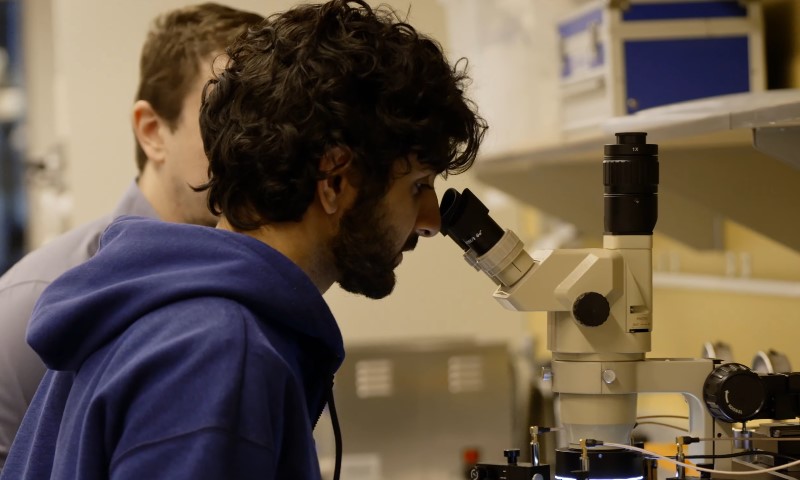
NYU was clear that there is a major imbalance between quantum workforce demand and available candidates. Tandon cites external analyses showing:
- Roughly three open quantum-related jobs for every qualified candidate
- About a 180 percent increase in job listings from 2020 to 2024
- Limited structured educational programs at the graduate level
The institute aims to train students who can work with quantum architectures, write quantum algorithms, and design applications grounded in real hardware rather than just simulation.
In parallel, students can also explore writing and research-support services such as PaperWriter to prepare for high-level academic work.
Students gain exposure to laboratory systems, industry projects, and collaborative research teams. Companies gain access to graduates who are ready to work with practical constraints rather than theoretical models alone.
Why NYU Emphasizes Collaboration
One message appears repeatedly across NYU statements and coverage from Quantum Zeitgeist and MeriTalk. The institute is meant to eliminate fragmentation and replace it with a connected research environment.
Cross-Disciplinary Research
Researchers across physics, computer science, materials science, chemistry, biology, and medicine are encouraged to work together. The institute plans to support projects that explore:
- Quantum sensors for early disease detection
- Energy materials for improved solar cells and batteries
- Quantum simulation for complex biological or chemical systems
The approach places quantum work inside real scientific and engineering challenges rather than isolating it in a single department.
Industry Collaboration
The 2018 National Quantum Initiative Act accelerated national investment in quantum research. Corporations expanded their quantum departments soon after.
NYU plans to integrate its work with companies such as IBM, Google, Microsoft, Cisco, and several financial firms including JPMorgan Chase.
Collaborative opportunities include:
- Research sponsorships
- Internships
- Seminars and workshops
- Joint labs inside the 770 Broadway facility
- Commercialization pathways for NYU inventions
Support Across Academic Levels
NYUQI supports undergraduates, graduate students, postdocs, and senior researchers. The structure allows:
- Undergraduates to join labs early
- Graduate students to work on interdisciplinary projects
- Senior researchers to organize multi-institution collaborations
This model encourages long-term continuity inside research groups.
NYU In a Global Quantum Network
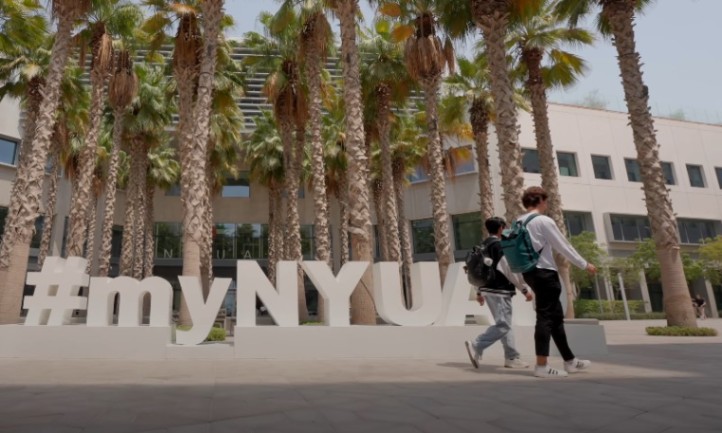
The institute is not limited to New York. Earlier projects at NYU Abu Dhabi show a global strategy forming around the university’s quantum work.
NYUAD and GESDA Collaboration
In 2023, NYU Abu Dhabi and the Geneva Science and Diplomacy Anticipator signed an agreement to support quantum research related to the United Nations Sustainable Development Goals. Key elements include:
- An annual Hackathon for Social Good in the Arab World
- Participation from roughly 200 students from around 24 countries
- Quantum applications tied to health, climate, and inequality
- Mentorship and prizes from GESDA’s Open Quantum Institute
While the Open Quantum Institute is separate from NYUQI in New York, the partnership creates a global bridge. Students and researchers in New York can connect with international projects and policy-oriented work.
NYUQI can also draw from NYUAD’s experience in building outreach programs that combine quantum science with social impact frameworks.
How NYU’s Quantum Strategy Fits Tandon’s Areas of Impact
NYU Tandon has six areas of impact that guide research planning. Quantum science and technologies occupy one of those top tier areas.
According to Tandon:
- Quantum methods will influence computing, secure communications, sensing, logistics, and infrastructure security
- Progress often slows because work is scattered across separate institutions
- A university-based ecosystem can help align research and reduce siloing
The Quantum Institute functions as a primary platform for that strategy.
Who Gains the Most
A quick look at the institute’s structure reveals clear benefits for the groups that interact with it every day, from students and researchers to industry teams across New York.
For Students
- Clear academic pathways from undergraduate programs to advanced degrees
- Opportunities to work with quantum hardware early in their education
- Access to internships and collaborations with New York based companies
For Faculty and Researchers
- Greater access to shared facilities such as cryogenic systems and cleanrooms
- A structured environment for interdisciplinary projects
- Networks that include global partners such as GESDA and NYUAD
For the Industry and the New York Region
- A steady supply of graduates skilled in both theory and hardware
- Opportunities to co-sponsor research with direct application value
- A regional hub that attracts new quantum-oriented startups
Summary
| Dimension | What NYU Is Doing |
| Research focus | Quantum computing, communications, and sensing, with additional work in materials, biology, chemistry, and medicine |
| Physical hub | Large facility at 770 Broadway with flexible labs and collaboration spaces |
| Teaching programs | MS in Quantum Science and Technology, expanded undergrad minor, integrated degree pathways |
| Workforce focus | Response to a market with three open roles per qualified candidate and strong job growth |
| Collaboration model | Cross campus structure linking scientists, engineers, companies, and global partners |
| Global context | Connections to NYU Abu Dhabi and GESDA initiatives supporting international quantum education |
Why the NYU Quantum Institute Matters
Quantum technologies are moving from experimental stages into early real world adoption. Governments, corporations, and universities are investing heavily in areas that could redefine computing, communication, sensing, and materials science.
NYU’s Quantum Institute strengthens the university’s position in that landscape. It consolidates research strengths into one environment. It aligns education with workforce needs. It supports projects tied to medical diagnostics, sustainable energy materials, secure communications, and global development goals.
For institutions trying to prepare for quantum technologies that influence science, industry, and policy, NYUQI represents a model built on collaboration, shared infrastructure, and strong academic foundations. It is not only a new research institute. It is a coordinated effort to train the people who will shape quantum systems for decades.