Skip to content

Immigrant survivors of abuse often face a very specific trap. An abusive partner or family member may control housing, money, identity documents, and immigration paperwork, then use immigration status as leverage.
Threats to call authorities, refusal to file petitions, or withholding documents become tools of power. VAWA immigration protections were created in part to break that control and to give survivors a way forward that does not depend on the person who caused the harm.
VAWA, short for the Violence Against Women Act, includes immigration protections that allow certain abused immigrants to seek lawful status without relying on the abusive family member.
The law also includes broader survivor protections, including housing protections in many federally assisted programs and support through victim services funded under VAWA programs. Despite the title, legal protections are not limited to women.
Today, we will explain what VAWA means in immigration law, who may qualify, what evidence matters, how the process usually works, where confusion often arises, and why these protections matter in real life for immigrant survivors.
Key Points
- VAWA lets eligible immigrant survivors seek protection and legal status without relying on an abusive family member.
- Abuse under VAWA includes non-physical harm, and cases can be proven using any credible evidence.
- Protections can include work authorization, a path to a Green Card, court-based relief, and strict confidentiality rules.
- VAWA also offers housing protections that apply regardless of immigration status in many federally assisted programs.
What VAWA Means in the Immigration Context
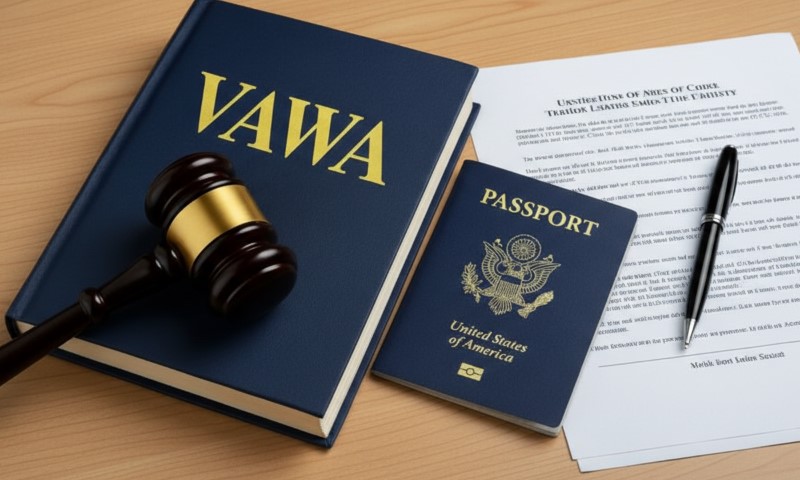
When people say “VAWA” in immigration conversations, they usually mean several related forms of survivor-based protection.
The most widely known is the VAWA self-petition. It allows certain abused spouses, children, and parents of U.S. citizens or lawful permanent residents to apply for immigration relief on their own, without sponsorship by the abusive relative.
Law firms with dedicated survivor-based immigration practice, including The Mendoza Law Firm, regularly handle these self-petitions and the evidence planning that goes with them.
The agency that adjudicates those petitions is USCIS, which continues to update policy materials and guidance, including updates published through late 2025.
A second major protection is the VAWA cancellation of removal. That option can help some survivors who are already in immigration court proceedings. The statute includes a special rule for battered spouse or child under 8 U.S.C. § 1229b(b)(2).
There are also related protections that matter in practice, including:
- confidentiality protections under 8 U.S.C. § 1367
- work authorization after approval of a VAWA self-petition, and sometimes during later stages
- adjustment of status pathways to a Green Card
- housing and program protections outside immigration status itself, depending on circumstances and the programs involved
VAWA is best thought of as a framework of protections rather than a single form.
Why VAWA Protections Matter for Immigrants
Abusers often weaponize immigration status. That may look like threats to withdraw a petition, refusal to file papers, confiscation of passports, or constant warnings about deportation.
VAWA protections were designed to reduce that control and to limit retaliation through the immigration system. The statute includes confidentiality rules that restrict how certain agencies may use perpetrator-provided information.
Public health data also shows why these protections matter. The Centers for Disease Control and Prevention describes intimate partner violence as a major public health issue.
The agency reports that IPV affects millions of people in the United States each year and leads to severe health and economic consequences, including a lifetime economic burden estimated in the trillions nationally.
CDC data also reports that about 41% of women and 26% of men have experienced contact sexual violence, physical violence, or stalking by an intimate partner during their lifetime, with lasting impacts on health and economic stability.
For immigrant survivors, barriers often pile up faster. Language access issues, financial dependence, fear of immigration enforcement, and misinformation can trap people in dangerous situations.
The Office on Violence Against Women and national advocacy groups consistently point out that immigration status and language access can compound those barriers.
Who Can Benefit From VAWA Immigration Protections

VAWA does not cover every immigrant survivor, but it reaches far more people than many assume.
VAWA Self-Petitioners Using Form I-360
VAWA self-petitions may be available to certain survivors who have qualifying relationships to a U.S. citizen or lawful permanent resident. Categories commonly include abused spouses, certain children, and certain parents.
USCIS eligibility summaries emphasize several core requirements, including the qualifying relationship, battery or extreme cruelty, and other statutory criteria.
The Immigrant Legal Resource Center explains that approved VAWA self-petitioners may gain protection from deportation, lawful work authorization, and eligibility to apply for a Green Card. ILRC also stresses that VAWA is available to men and women.
Survivors in Immigration Court Who May Qualify for VAWA Cancellation
For people already in removal proceedings, VAWA cancellation of removal can be critical. The law appears at 8 U.S.C. § 1229b(b)(2) and allows cancellation and adjustment of status if statutory requirements are met.
Materials from the Executive Office for Immigration Review show that Form EOIR-42B is used for cancellation applications and includes abuse-related questions relevant to VAWA scenarios.
Survivors Who Need Non-Immigration Protections While a Case Is Pending
VAWA is not limited to immigration status. Housing protections, for example, can be lifesaving.
The U.S. Department of Housing and Urban Development explains that VAWA provides protections in many federally assisted housing programs for survivors of domestic violence, dating violence, sexual assault, and stalking.
Those protections may apply regardless of immigration status.
What VAWA Self-Petitioning Can Help an Immigrant Do
A successful VAWA self-petition can reshape a survivor’s legal options in concrete ways.
It Removes the Abuser From the Sponsorship Role
The core purpose of the VAWA self-petition is independence. Survivors can file on their own rather than relying on the abusive U.S. citizen or lawful permanent resident relative to sponsor them.
Organizations such as ASISTA Immigration Assistance describe that independence as one of the most important features of the law.
It Can Support a Path to Lawful Permanent Residence
USCIS states that approved VAWA self-petitioners may seek lawful permanent residence and obtain a Green Card, subject to eligibility rules and procedural steps. USCIS also maintains dedicated Green Card eligibility guidance for VAWA self-petitioners.
It Can Support Work Authorization
Federal law states that once a person is approved as a VAWA self-petitioner, they are eligible for work authorization and may receive documentation incidental to approval. That ability to work lawfully often stabilizes housing and financial safety.
It Triggers Confidentiality Protections
Under 8 U.S.C. § 1367, government agencies are restricted from disclosing certain information and from making adverse immigration determinations based solely on information provided by the perpetrator in covered contexts. For survivors who fear retaliation, that protection is central.
Basic VAWA Self-Petition Eligibility in Plain Language
Legal analysis can get technical, but most VAWA self-petition cases revolve around a few core issues.
A Qualifying Relationship
USCIS policy identifies qualifying relationships to a U.S. citizen or lawful permanent resident abuser as foundational.
ILRC explains the most common categories, including certain spouses, children, and parents of U.S. citizen sons or daughters.
Battery or Extreme Cruelty
The statutory standard is not limited to physical violence. The law uses the phrase battery or extreme cruelty. Depending on the facts and evidence, that can include non-physical abuse patterns such as coercive control, threats, isolation, or severe emotional abuse.
Credible Evidence Rather Than Perfect Evidence
A critical feature of VAWA law is the any credible evidence rule. Under 8 U.S.C. § 1154, adjudicators must consider any credible evidence relevant to the petition. Credibility and weight remain within agency discretion, but survivors are not limited to one specific type of proof.
Other Requirements That May Apply
Depending on category, USCIS and legal service providers also look at issues such as good moral character, proof of the relationship, shared residence in some cases, and good faith marriage in spousal petitions. Requirements vary based on facts and procedural posture.
What Counts as Evidence in a VAWA Case
Evidence is where many survivors feel overwhelmed. A common myth is that a police report or criminal conviction is required. That is not always true.
Because of the any credible evidence standard, cases are often built from a combination of materials, based on what the survivor can safely access.
Common types of evidence include:
- a personal declaration describing the relationship and abuse
- proof of the relationship, such as marriage or birth certificates
- proof of the abuser’s U.S. citizenship or lawful permanent resident status, when available
- medical or hospital records
- counseling or therapy records
- protective orders
- police reports, if they exist
- photographs of injuries or damaged property
- text messages, emails, call logs, or threats
- statements from friends, relatives, neighbors, clergy, counselors, or advocates
- proof of shared residence, such as leases, bills, mail, or school records
ASISTA resources also note that proving the abuser’s immigration status can be a practical challenge in many cases and describe alternative survivor-based options when status proof is difficult.
VAWA Self-Petition Process, What It Usually Looks Like
Each case depends on immigration history, location, and court posture, but many follow a similar sequence.
Step 1: Safety Planning and Evidence Preservation
Before any filing, safety often comes first. Survivors may need emergency housing, confidential support, and help preserving evidence in a way the abuser cannot access. DOJ’s OVW directs survivors to state-by-state resources and national hotlines.
Step 2: Filing the VAWA Self-Petition Using Form I-360
USCIS identifies Form I-360 as the form used for several special immigrant classifications, including VAWA self-petitions.
Step 3: Adjustment of Status When Eligible
If the petition is approved and the person is otherwise eligible, they may apply for permanent residence. USCIS explains that approved VAWA self-petitioners can pursue this path, and the adjustment statute at 8 U.S.C. § 1255(c) includes a specific carve-out relevant to VAWA cases.
Step 4: Work Authorization and Related Filings
Approved self-petitioners are eligible for work authorization by statute. Timing and filing strategy depend on whether adjustment is filed and whether the person is in court proceedings.
VAWA Cancellation of Removal for Cases in Immigration Court
VAWA cancellation of removal is separate from the self-petition process and often overlooked.
ILRC describes it as a powerful but underused remedy for noncitizen survivors already in removal proceedings. The statutory basis is 8 U.S.C. § 1229b(b)(2).
Core Idea
If an immigration judge grants VAWA cancellation, removal is canceled and the person may be adjusted to lawful permanent resident status, assuming all legal requirements are met.
Why It Matters
Some survivors learn about VAWA only after court proceedings begin, or they may never have had access to family-based petitions because the abuser controlled the process. In those cases, VAWA cancellation may be the primary path to lawful status.
VAWA Confidentiality Protections and Why They Matter
@attorneyabhisha Confidentiality is crucial for VAWA applicants seeking safety and independence. Learn how Uscis safeguards your information and prevents disclosure to your spouse🤝💼 #attorneyabhisha #immigration #legalstatus #visa #asylum #greencard #daca #fyp #vawaapplicant
Fear of retaliation keeps many survivors silent. VAWA confidentiality rules exist to address that fear.
Under 8 U.S.C. § 1367, officials in DHS, DOJ, and the State Department are restricted from disclosing certain information and from making adverse determinations based solely on perpetrator-provided information in covered contexts. The statute applies to VAWA self-petitioners and reaches other victim-based immigration categories as well.
Recent USCIS policy updates in 2024 and 2025 show continued attention to how these confidentiality protections apply in practice.
Practical takeaway: confidentiality protections are strong, but survivors still need to plan carefully. Mail addresses, online accounts, and communication methods should be chosen with safety in mind.
VAWA Is More Than Immigration Status, Housing Protections Matter Too
VAWA also provides housing protections that can stabilize a survivor’s life while an immigration case is pending.
HUD explains that VAWA protects people applying for or living in certain federally subsidized housing programs who have experienced domestic violence, dating violence, sexual assault, or stalking. Rights may include:
- protection against denial of housing because of abuse
- protection against eviction or termination tied to abuse
- emergency transfer rights for safety
- self-certification options
- confidentiality of survivor information
- lease bifurcation in some situations
- protection against retaliation for seeking VAWA protections
HUD emphasizes that these housing protections do not require marriage, family relationship, or cohabitation with the perpetrator. For immigrant survivors, housing stability can make it possible to pursue legal relief safely.
Common Misunderstandings and Risk Areas
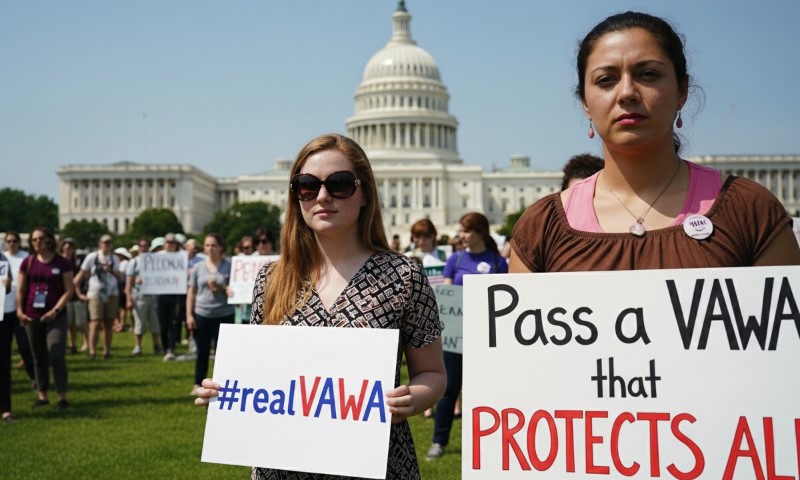
“VAWA Is Only for Women”
The name is historical. Legal protections are available to eligible survivors of all genders. DOJ and ILRC materials make that clear.
“A Police Report Is Required”
Not always. The any credible evidence rule allows many forms of proof.
“Any Family Conflict Qualifies”
VAWA has legal standards. Battery or extreme cruelty must be shown. Filing weak or false claims can cause serious immigration harm.
“Any Consultant Can File a VAWA Case Safely”
Fraud and bad advice are real risks. Notarios and unqualified consultants may cause irreversible damage. Survivors should seek reputable legal help.
A-Related Protections for Immigrants
| Protection | Who It May Help | Main Benefit | Where It Happens | Key Authority |
| VAWA self-petition (I-360) | Certain abused spouses, children, and parents of U.S. citizens or lawful permanent residents | Self-petition without abuser sponsorship, path toward lawful permanent residence | USCIS | 8 U.S.C. § 1154 |
| VAWA-related Green Card path | Approved VAWA self-petitioners who meet eligibility rules | Adjustment to lawful permanent residence | USCIS | 8 U.S.C. § 1255 |
| Work authorization after approval | Approved VAWA self-petitioners | Lawful employment | USCIS | 8 U.S.C. § 1154(k) |
| VAWA cancellation of removal | Certain survivors in removal proceedings | Cancellation of removal and adjustment | Immigration Court | 8 U.S.C. § 1229b(b)(2) |
| VAWA confidentiality protections | Covered survivor-based applicants | Limits disclosure and retaliation | DHS, DOJ, State | 8 U.S.C. § 1367 |
| VAWA housing protections | Survivors in covered HUD programs | Protection against denial or eviction tied to abuse | HUD programs | HUD VAWA rules |
Final Takeaway
VAWA can be life-changing for immigrant survivors, but it is not a single form or a one-size approach. It is a set of protections that may include self-petitioning, immigration court relief, confidentiality rules, work authorization, and housing protections in covered federal programs.
The right strategy depends on the survivor’s relationship to the abuser, the abuser’s status, the survivor’s immigration history, and whether court proceedings are already underway.
For anyone considering VAWA relief, the strongest first step is a confidential, trauma-informed legal screening with a reputable immigration attorney or accredited representative who has real experience with survivor-based cases.