Skip to content
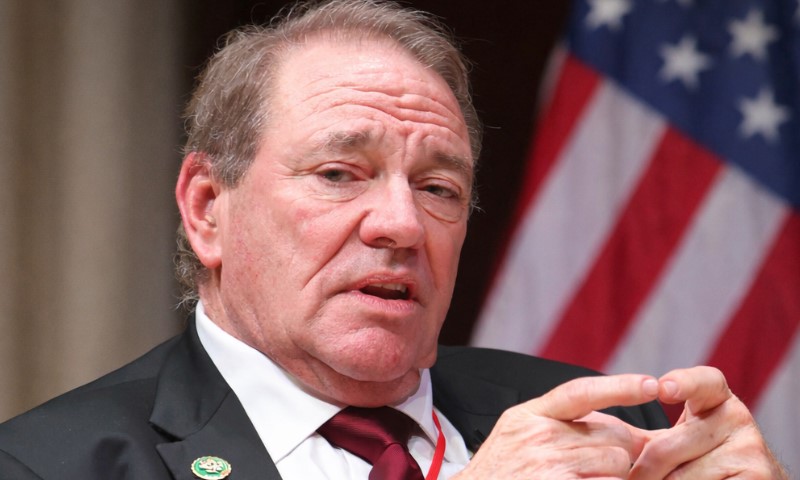

President Donald Trump on Monday publicly disclosed that Rep. Neal Dunn, a Florida Republican, had once been given what Trump and House Speaker Mike Johnson described as a terminal diagnosis, an extraordinary revelation that instantly turned a private medical matter into a national political story.
The disclosure came during a Kennedy Center board meeting as Trump and Johnson were discussing the fragility of the Republican majority in the House.
The congressman at the center of the episode is Rep. Neal Dunn of Florida’s 2nd Congressional District, a physician by training who announced on January 13, 2026, that he would not seek reelection after five terms.
In that retirement statement, Dunn cited family and a desire to “pass the torch,” but he did not publicly disclose any grave illness.
Table of Contents
ToggleThe Moment the Information Became Public
According to multiple reports, Trump began speaking about the strain Johnson faces in governing with one of the narrowest House majorities in modern memory.
He then turned to Dunn’s case, saying a Republican lawmaker had been so ill that “it looked like he wasn’t going to make it.” Johnson identified Dunn and called the diagnosis “grim.”
Trump then interrupted with a much starker formulation, saying Dunn “would be dead by June,” prompting Johnson to reply, “OK, that wasn’t public.”
That exchange is what transformed the event from an offhand political anecdote into a remarkable breach of political and medical discretion.
Dunn had not publicly laid out the diagnosis himself, and as of the latest reports, his office had not issued a detailed public medical statement in response to Trump’s comments.
A Heart Condition, Emergency Treatment, and a Claimed Turnaround
According to Axios, Trump and Johnson both said Dunn’s condition involved a serious heart problem. Trump said he connected Dunn with specialists through his doctors, and Johnson said Dunn was taken to Walter Reed National Military Medical Center for emergency treatment.
Trump added that Dunn underwent a long procedure involving additional stents, while Johnson said the intervention gave the congressman “a new lease on life.”
What remains unclear is the precise medical diagnosis. Public reporting has established only the broad outline: a severe heart-related condition, a dire prognosis at one point, emergency treatment, and a reported improvement afterward.
None of the major reports I reviewed included a direct medical explanation from Dunn or his office spelling out the exact condition, prognosis timeline, or procedure details beyond the public remarks from Trump and Johnson.
Politics Was Never Far From the Story
Trump did not present the matter as purely personal. He openly linked Dunn’s health to the arithmetic of House power, saying the diagnosis was bad for two reasons: he liked Dunn, and he needed Dunn’s vote.
Axios reported that Johnson and Trump were discussing a majority so narrow that Republicans could afford to lose only two members on party-line votes. Separate current congressional tallies show the House at 217 Republicans, 214 Democrats, and 3 vacancies, underscoring how much every available vote matters.
That political subtext had already surrounded Dunn’s status before Monday’s remarks. Local Florida reporting in late February said Dunn’s team had moved to tamp down rumors by confirming he would finish his term, even after announcing he would not run again.
Monday’s disclosure cast that earlier insistence in a harsher light, suggesting a lawmaker privately confronting a potentially fatal condition while remaining publicly committed to serving through the end of the term.
Why the Disclosure Landed So Hard
Washington is no stranger to leaders discussing colleagues’ health in vague terms. What made this episode different was the specificity.
Trump did not merely say Dunn had been ill. He publicly attached a deadline to the prognosis, identified the illness as heart-related, and described the medical intervention in unusually personal terms, all before Dunn himself had done so in public.
Johnson’s immediate acknowledgment that the information “wasn’t public” only sharpened the sense that a boundary had just been crossed.
The incident also revealed something larger about the current political climate. The private condition of a sitting congressman was discussed not as a matter of personal dignity first, but as part of a real-time conversation about legislative head counts, loyalty, and survival.
In that sense, the story was not only about Trump’s disclosure. It was also about the way fragile political power can pull intensely personal matters into public view. That conclusion is an inference drawn from the remarks and the surrounding reporting.
Dunn’s Silence Leaves the Final Word Unsaid
For now, the central unanswered question is Dunn’s own account. His January retirement statement made no mention of life-threatening illness.
Reports published after Trump’s remarks say his office did not immediately respond to requests for comment. Until Dunn or his representatives speak more fully, the public record remains shaped largely by what Trump and Johnson chose to say about him, not by what Dunn chose to say for himself.
That is what gives the episode its lingering force. A veteran lawmaker’s medical struggle became public not through a controlled statement, a family disclosure, or a carefully framed health update, but through a president’s improvisational retelling of a private crisis. By the time Johnson tried to note that it was not public, it already was.
Related Posts:
- Can I Pack a Bluetooth Speaker in Checked Luggage?…
- Safest Countries in the World in 2025 - GPI…
- 25 Most Dangerous Cities in US - Updated Statistics for 2026
- Capital Cities in Europe: Top Destinations For You…
- Top 15 LGBTQ+ Podcasts Discussing Politics, Culture,…
- How Many International Airports Are There In The US in 2026?