Skip to content
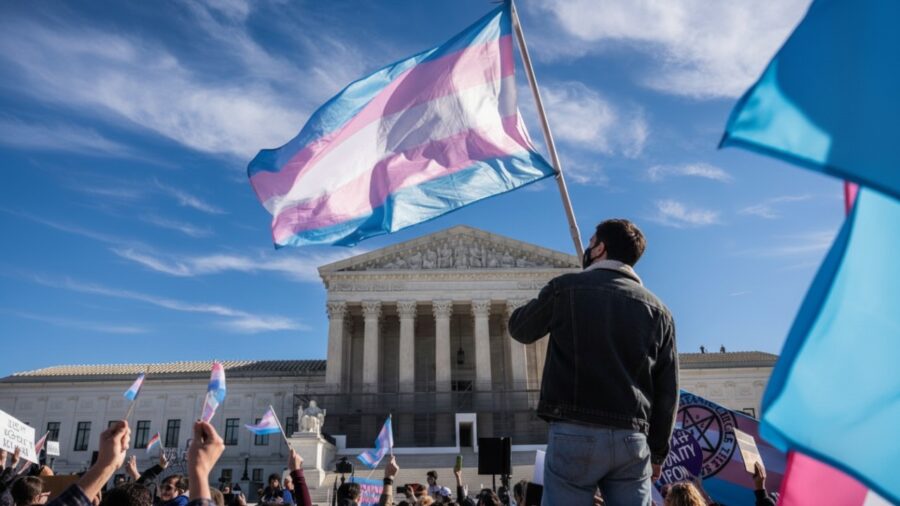

The U.S. Supreme Court appeared poised Tuesday to uphold laws in Idaho and West Virginia that bar transgender girls and women from competing on girls’ and women’s school sports teams, a move that could reshape how Title IX and the Constitution apply to a fast-expanding set of state restrictions.
The justices heard back-to-back arguments in two cases testing whether sex-based team eligibility rules can exclude transgender athletes without violating the Equal Protection Clause of the 14th Amendment or Title IX, the federal civil-rights law that bans sex discrimination in federally funded education programs.
Two Cases, Two Athletes, One Question the Court Could Answer Broadly
As SCOTUSblog reports, the disputes reach the court through challenges brought by Lindsay Hecox in Idaho and Becky Pepper-Jackson in West Virginia, a teenager who has said she understands the coming track season may be her last if the bans take effect.
In the West Virginia case, lawyers for Pepper-Jackson argue the state’s ban violates Title IX and equal protection by singling out transgender girls for exclusion even when an individual athlete has no relevant competitive advantage, including when puberty suppression has prevented male puberty.
West Virginia, joined by the federal government as amicus in support of the states, argues the law regulates sports by sex, not gender identity, and is permitted under Title IX’s longstanding allowance for sex-separated teams.
What the States Told the Justices
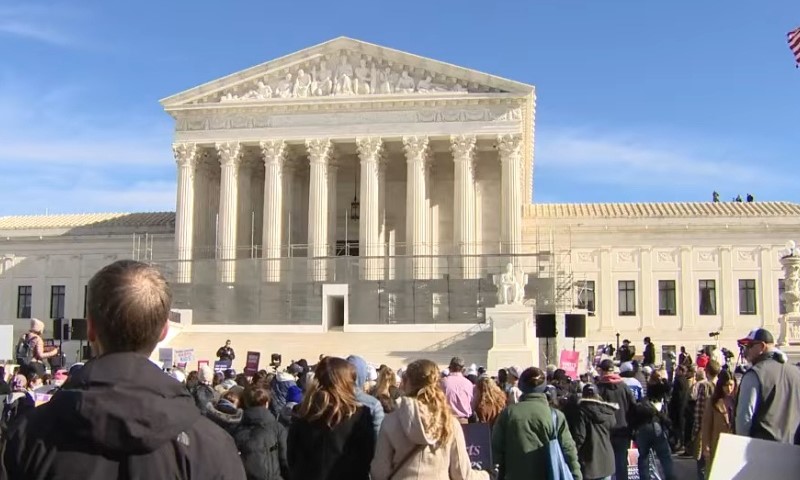
In court, West Virginia’s solicitor general framed the issue as a defense of sex-separated athletics: “ The law is indifferent to gender identity because sports are indifferent to gender identity,” he said in his opening statement, according to AP’s live updates.
In the Idaho case, counsel for the state opened with a similar premise, telling the justices that “ sex is what matters in sports,” linking the state’s classification to physiological differences the law says are relevant to fairness and safety.
Where the Arguments Suggested the Court Is Heading
AP reported that at least five of the court’s six conservative justices signaled they were prepared to rule that the Idaho and West Virginia laws do not violate the Constitution or Title IX, after more than three hours of arguments.
Reuters similarly described conservative justices as leaning toward allowing the bans, with questions that repeatedly returned to fairness in girls’ and women’s sports and the consequences of a nationwide rule requiring inclusion.
One recurring theme, highlighted in AP’s live coverage, was whether any rule that permits transgender girls to play if they lack a competitive advantage could also open the door to boys joining girls’ teams based on comparable skill.
Pepper-Jackson’s lawyer rejected that framing, arguing the purpose of girls’ teams is to protect athletic opportunity from the effects associated with male puberty, and that Pepper-Jackson “did not go through male puberty.”
The Larger Stakes: Title IX, State Laws Nationwide, and a Policy Patchwork
The arguments arrive as restrictions on transgender participation in sports have spread rapidly. AP reports that at least 25 states have adopted laws restricting where transgender athletes can compete, with enforcement in three states (Arizona, Idaho, and Utah) currently on hold.
At the center of the legal fight is how Title IX’s ban on sex discrimination, “No person in the United States shall, on the basis of sex, be excluded from participation in… any education program… receiving Federal financial assistance,” applies when states define eligibility by biological sex and exclude transgender girls from girls’ teams.
A ruling is expected by the end of June 2026.