Skip to content


Construction in the United States already runs on a thin labor margin. Builders are trying to finish homes, warehouses, roads, schools, hospitals, data centers, and factory expansions while competing for electricians, framers, roofers, drywall crews, plumbers, concrete workers, and general laborers.
Against that backdrop, any policy that sharply reduces the available workforce can affect schedules fast. Mass deportation would almost certainly be one of those policies.
A careful look at labor data, housing research, industry surveys, and recent Federal Reserve analysis points in the same direction.
Large-scale removals would likely slow many construction projects, push labor costs higher, and make bottlenecks worse in places already struggling to build enough housing and infrastructure.
Pace and severity would vary by region and project type, but the broad risk is hard to ignore.
Why Construction Is Especially Sensitive To Labor Shocks
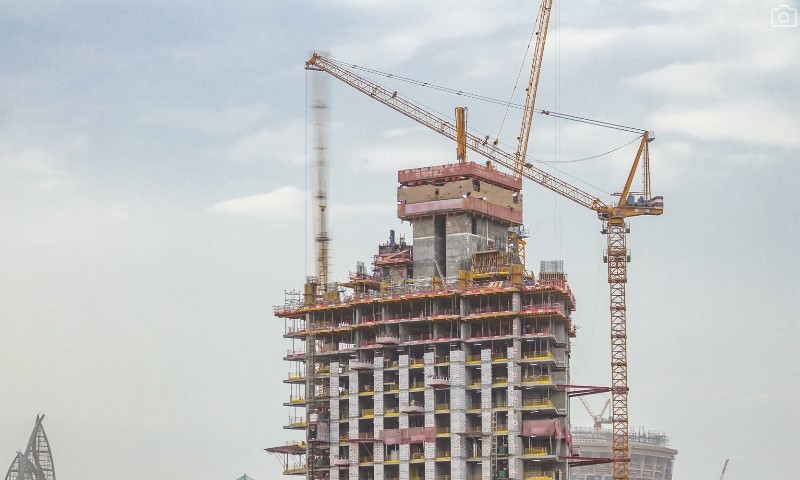
Construction is different from many office-based industries. A builder cannot replace a missing framing crew with software.
A site superintendent cannot pour concrete, hang drywall, wire panels, and pass inspections alone.
For supervisors trying to keep sites compliant while crews stay stretched thin, resources such as the OSHA Education Center can help reinforce hazard awareness and safety responsibilities.
Work happens in sequence, and one missing trade can hold up the next.
Labor shortages in construction also tend to ripple outward:
- A delayed excavation crew can stall foundations
- Slow framing can push back plumbing, electrical, and roofing
- Late finishes can delay inspections, financing milestones, and occupancy
Because projects are interdependent, even a modest workforce reduction can create longer completion times than raw headcount numbers might suggest.
According to the U.S. Bureau of Labor Statistics, construction employment stood at about 8.309 million in February 2026.
That headline figure sounds large, but it does not mean labor is abundant. Industry groups and employer surveys have been warning for years that available skilled workers are already scarce.
Associated Builders and Contractors said in January 2026 that the industry needs to attract 349,000 net new workers in 2026 just to meet demand.
ABC also pointed to retirement, immigration enforcement, materials costs, and policy uncertainty as part of the strain facing contractors.
When an industry already needs hundreds of thousands of additional workers to stay balanced, removing a meaningful slice of the workforce is unlikely to end well.
How Much Of Construction Relies On Immigrant Labor
One reason deportation policy matters so much for construction is simple: immigrant labor is deeply woven into the sector.
The National Association of Home Builders reported that immigrants made up 25.5% of the construction workforce in 2023.
Among construction tradesmen, the share was even higher at 32.5%. In practical terms, about one in four construction workers, and roughly one in three craft workers in key trades, was foreign-born.
Dependence is even more concentrated in certain jobs. NAHB data show especially high immigrant shares among plasterers and stucco masons, drywall and ceiling tile installers, roofers, painters, and floor installers.
Carpenters and construction laborers, two of the most common occupations on American jobsites, also include large foreign-born shares.
That matters because construction labor is not interchangeable. Losing workers in a trade already running short does not produce a neat one-for-one substitution from another category.
A shortage of roofers does not get solved by having more estimators. A shortage of concrete finishers does not disappear because a firm has extra office staff.
A separate 2025 analysis from the Center for Migration Studies added another important piece. It found that construction accounts for the largest share of undocumented workers by industry, about 20% of the undocumented workforce.
No serious analyst should assume every undocumented worker in construction would be removed under any single enforcement campaign.
Mass deportation in real life would unfold unevenly and face legal, budget, and logistical limits. Even so, the figures show why the sector is unusually exposed.
Labor Shortage Is Already Slowing Projects

Any argument about deportation and construction has to start with current conditions, because labor scarcity is already shaping project delivery.
An August 2025 workforce survey from the Associated General Contractors of America found that 92% of construction firms were having a hard time filling open positions. Forty-five percent said labor shortages were causing project delays.
AGC also found that 28% of firms reported being affected directly or indirectly by immigration enforcement activity during the prior 6 months.
Some reported workers failing to appear after real or rumored enforcement actions, while others said subcontractors had lost workers.
That finding is important because it shows disruption does not require millions of removals to begin. Fear, uncertainty, absenteeism, subcontractor instability, and worker exit from a local market can all affect schedules before any full-scale deportation program reaches its theoretical peak.
Home building research points the same way. NAHB and Home Builders Institute findings released in 2025 estimated that the skilled labor shortage was costing the home building sector about $10.8 billion per year through higher carrying costs and lost single-family production.
Their estimate linked scarce labor to about 19,000 single-family homes not built and to longer construction times.
So the baseline condition is already fragile. Deportation would not be hitting a relaxed labor market with large reserves of ready-to-train workers. It would be hitting an industry that already reports chronic difficulty hiring.
What Recent Federal Reserve Research Suggests
One of the strongest recent pieces of evidence came from the Federal Reserve Bank of San Francisco in February 2026.
Using new county-level estimates of unauthorized immigrant worker flows, Fed researchers found a nearly one-for-one causal effect between unauthorized immigrant worker flows and local employment growth.
Industry-level estimates suggested that the recent slowdown in unauthorized immigration reduced employment disproportionately in construction and manufacturing.
Reuters summarized the research in plain terms: areas with the biggest slowdowns in unauthorized immigrant flows also saw the biggest slowdowns in construction employment growth. The researchers added that falling unauthorized worker flows could be slowing residential construction and, in turn, slowing growth in housing supply.
That does not prove every deportation scenario would produce the exact same result in every county.
But it does reinforce the core economic logic. When a labor-constrained sector loses access to a major source of workers, job growth and output slow down rather than magically rebalancing overnight.
Which Projects Would Be Hit First
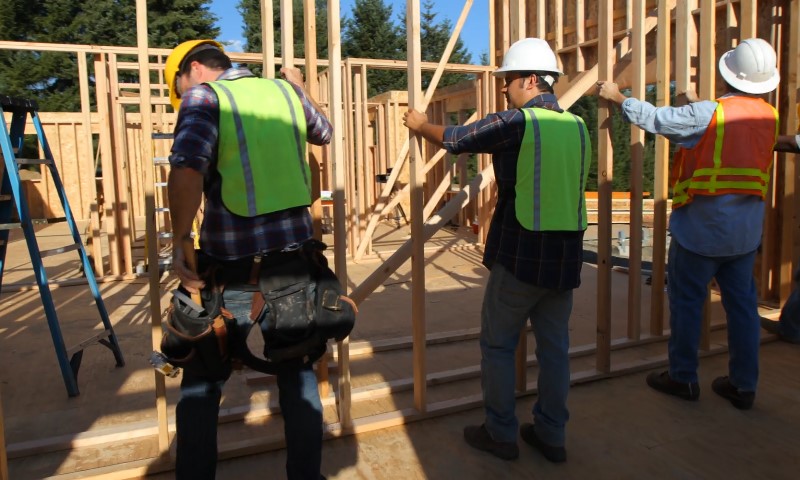
Not every project would face the same level of risk. Some categories would likely feel pressure sooner than others.
Residential Homebuilding
Housing is probably the clearest case. Residential construction depends heavily on trade labor that is already hard to recruit.
NAHB has repeatedly shown high immigrant concentration in trades central to homebuilding, including roofing, drywall, painting, flooring, and labor-intensive finish work.
A broad reduction in labor supply would likely lead to:
- Longer build times
- Higher subcontractor bids
- More selective project starts
- Fewer entry-level homes penciling out financially
For a country already dealing with an affordability problem and years of underbuilding, slower housing supply growth would be a serious consequence.
Small And Mid-Sized Contractors
Large national builders and major commercial firms sometimes have deeper subcontractor networks, stronger balance sheets, and more ability to shift crews across markets. Smaller contractors tend to have less room to absorb labor shocks.
If a small drywall subcontractor loses a chunk of its crew, replacing that capacity quickly is difficult. Training takes time. Hiring across state lines adds cost. Delays can threaten cash flow, lender relationships, and customer confidence.
Sun Belt And High-Growth States
Regional exposure would not be equal. NAHB reports immigrant construction shares of 41% in California, 38% in Texas, 38% in Florida, and 37% in New York.
States with fast population growth, high building activity, and heavy reliance on immigrant labor would be especially vulnerable to workforce disruption.
Time-Sensitive Infrastructure And Industrial Projects
Public works and industrial construction have different funding structures than homebuilding, but deadlines still matter.
Delays on roads, utility upgrades, semiconductor plants, manufacturing expansions, and data center projects can raise financing costs and delay economic activity linked to project completion.
Could Higher Wages Solve The Problem?

Supporters of stricter immigration enforcement often argue that reduced labor supply would push wages higher and pull more U.S.-born workers into construction.
Wage gains probably would happen in some trades and regions. A tighter labor market usually does raise pay.
But wage pressure alone is not a quick fix.
Construction has several structural hurdles:
Training Takes Time
A laborer can be brought onto a site relatively fast, but many jobs require experience, licensing, safety knowledge, apprenticeship hours, or trade-specific skill.
Electricians, plumbers, HVAC technicians, heavy equipment operators, and finish specialists cannot be replaced overnight.
Geography Matters
Workers are not evenly distributed. A labor shortage in Austin, Phoenix, Miami, or Los Angeles cannot always be solved by workers in a weaker market hundreds of miles away.
Relocation is expensive, housing near job centers is costly, and short-term mobility is limited for many households.
Work Conditions Matter
Construction is physically demanding, weather exposed, and cyclical. Higher wages help, but they do not remove injury risk, commute burdens, or irregular employment patterns.
Demographics Are A Problem
ABC has warned that retirement is a major driver of workforce need. NAHB has also noted that native-born construction employment remains below mid-2000s peak levels by more than half a million workers.
In other words, the industry has been trying for years to attract more domestic labor and still has not filled the gap.
A wage response might soften part of the damage over time. It would not fully prevent near-term disruption, especially if deportation happened on a large scale and over a short period.
Could Lower Housing Demand Offset Slower Construction?
Some advocates of reduced immigration argue that fewer immigrants would also mean less demand for housing, which could offset slower homebuilding. There is some internal logic there. Population growth affects housing demand.
But the picture is more complicated.
First, construction depends on labor supply today, while any demand adjustment unfolds through a broader demographic and economic process. Second, much of the country already has a housing shortage.
Slowing labor supply in construction can tighten availability even if demand growth cools somewhat. Third, recent Fed research suggests falling unauthorized immigrant worker flows are associated with slower residential construction. That points to supply-side damage happening in real time.
A smaller inflow of residents can reduce demand at the margin. Yet if the workforce that builds homes shrinks at the same time, affordability does not necessarily improve. In many markets, the supply effect could still be painful.
Reuters reported that the Trump administration has argued reduced immigration could help affordability by reducing housing demand, but the same Fed-linked findings suggest labor shortages can slow the pace of homebuilding.
What Mass Deportation Could Look Like On The Ground
Economic debates often stay too abstract. On a jobsite, the effects would likely show up in familiar ways:
More Gaps In Specialty Trades
Roofing, drywall, stucco, painting, flooring, and general labor crews could become harder to staff, especially in immigrant-heavy metros.
More Schedule Slippage
A builder waiting on one trade often has to reshuffle every trade behind it. Slippage early in the schedule can compound for months.
Higher Bids And Change Orders
Subcontractors facing labor scarcity usually bid more cautiously. Owners and general contractors then face higher costs, thinner contingency margins, or redesign pressure.
More Informal Workarounds
Some firms may rely more heavily on labor brokers, less stable subcontracting chains, or rushed hiring. That can increase safety, compliance, and quality risks.
Wider Regional Inequality
Areas with stronger labor pipelines and more capital may absorb disruption better than smaller markets. Result: project slowdowns could become more uneven across the country.
The Bottom Line
Could mass deportation slow construction projects in the United States? Yes, very likely.
Available evidence does not support the idea that large-scale removals would be absorbed smoothly by the existing labor market. Construction already faces worker shortages, aging trades, delayed projects, and strong dependence on immigrant labor in several core occupations. Industry surveys show enforcement effects are already being felt.
Recent Federal Reserve research indicates that weaker unauthorized immigrant worker flows have already slowed construction employment growth in some places.
None of that means every project would stop. Large firms would keep building. Some regions would adapt faster than others. Wage gains might attract additional domestic workers over time. Technology and prefabrication could also reduce labor needs in certain segments.
Still, adaptation takes time, and construction schedules do not pause while the labor market slowly reorganizes itself. If workforce losses arrive faster than training, recruitment, and legal labor channels can replace them, delays become the logical result.
For housing, infrastructure, and industrial expansion, the practical question is less about politics and more about capacity. America can promise more building, but promises alone do not frame walls, wire schools, or finish apartment units. Workers do that.