Skip to content
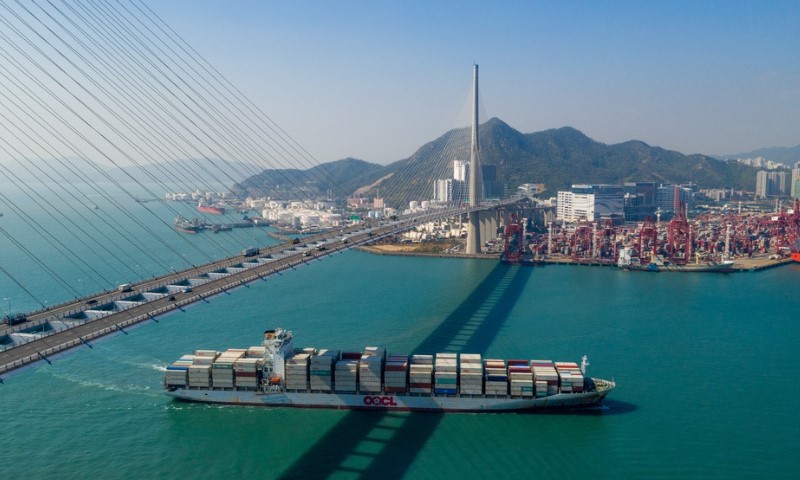

For years, Hong Kong has sat in the middle of one of the hardest business questions in Asia: where should a multinational place regional leadership, finance, legal coordination, and market access functions when it needs reach across Asia and a working link into mainland China?
Even after political tension, tighter scrutiny from Washington, and stronger competition from Singapore and Shenzhen, a large number of American firms still keep major operations there.
According to InvestHK, in 2025, Hong Kong counted 11,070 companies with parent firms based outside the city, up 11% from 2024, and U.S. parent companies ranked tied for second by origin with 1,550.
A simple reason sits at the center of that staying power: Hong Kong still solves several business problems at once. It gives firms a convertible currency, deep capital markets, common-law style dispute resolution, a territorial tax system, major logistics capacity, and unusually strong financial links with mainland China.
Few places in Asia bundle all of that in one jurisdiction.
Key Points
- Hong Kong still gives U.S. firms strong access to China and Asia.
- Finance, tax, and legal systems keep it highly useful.
- Many American companies remain there and are not planning to leave.
- Offshore renminbi business is still a major Hong Kong advantage.
- Hong Kong works best now as a specialized regional hub.
Why the Hub Question Still Matters
When companies talk about an Asia-Pacific hub, they are usually talking about more than a sales office. A real regional hub often handles treasury, legal structuring, compliance, procurement, regional management, investor relations, and coordination across multiple markets.
Once a city is built into that operating model, moving out is expensive, slow, and disruptive. That helps explain why Hong Kong remains sticky even when debate around it gets louder.
The American Chamber of Commerce in Hong Kong found in its 2025 member sentiment survey that 79% of respondents had no plans to move headquarters away from Hong Kong in the next 3 years.
It also found that 75% viewed Hong Kong as a competitive international business hub in Asia. Numbers like that do not mean every company is fully satisfied, but they do show that many still see enough value to stay put.
The China Factor Still Carries Enormous Weight
For many U.S. companies, Hong Kong remains the cleanest place to manage exposure to China without placing every regional function directly on the mainland.
Hong Kong Monetary Authority materials continue to describe the city as the largest offshore renminbi hub, with the world’s deepest offshore renminbi liquidity pool at around RMB1 trillion and more than 70% of global offshore RMB payments processed there, according to SWIFT data cited by HKMA.
That matters in practical ways. Firms raising capital, settling cross-border payments, hedging currency risk, or investing into China through established channels still find Hong Kong useful because it sits inside the architecture of Stock Connect, Bond Connect, Mutual Recognition of Funds, and other cross-border systems.
Hong Kong’s role is not merely geographic. It is built into the pipes of finance.
Hong Kong also plugs companies into the Greater Bay Area, which HKMA describes as a region of more than 86 million people with combined GDP above $1.9 trillion.
For U.S. firms that want access to manufacturing, technology supply chains, consumers, and Chinese capital markets without locating every regional decision-maker in one mainland city, Hong Kong still offers a workable middle ground.
Finance Still Gives Hong Kong an Edge
View this post on Instagram
A large share of American firms in Hong Kong are clustered in trade, finance, banking, and professional services.
According to the 2025 survey of overseas and mainland parent companies, the biggest business segment was import-export, wholesale, and retail at 5,100 firms, followed by financing and banking at 2,390, then professional, business, and education services at 1,770.
That sector mix says a lot about why Hong Kong remains important. It is built for coordination, capital, and cross-border business services.
The city’s foreign exchange market remains a major draw. HKMA reported in September 2025 that Hong Kong remained the world’s fourth-largest foreign exchange center, with average daily FX turnover rising 27.2% to $883.1 billion in April 2025.
A treasury team choosing a regional base wants liquidity, deep banking relationships, fast settlement, and a place where major counterparties are already active.
Hong Kong still offers all of that, especially for companies with China exposure or renminbi funding needs. Singapore can compete on many fronts, but Hong Kong’s RMB role remains unusually hard to replicate.
Tax and Capital Mobility Still Matter
Hong Kong’s tax system remains one of its most business-friendly features. The Inland Revenue Department states that Hong Kong uses a territorial basis of taxation, meaning profits tax is charged only on profits arising in or derived from Hong Kong.
The normal profits tax rate for corporations is 16.5%, with a two-tier rate of 8.25% on the first $2,000,000 of assessable profits and 16.5% above that threshold.
Business leaders have noticed. In AmCham’s 2025 survey we mentioned earlier, members who viewed Hong Kong as competitive pointed to international connectivity, free flow of capital, a low and simple tax system, gateway access in and out of China, and the legal and regulatory system as leading advantages.
Corporate location choices are rarely romantic. Firms stay where structures work.
A Quick Look at the Business Case
| Factor | Why U.S. Companies Care | Current Signal |
| China access | Manage mainland exposure through cross-border channels | Stock Connect, Bond Connect, offshore RMB infrastructure |
| Finance | Treasury, FX, banking, fundraising, liquidity | $883.1 billion average daily FX turnover in April 2025 |
| Tax | Efficient regional structuring | Territorial taxation, 16.5% corporate rate, 8.25% first-tier rate |
| Disputes and contracts | Cross-border legal certainty | 582 new HKIAC cases in 2025 |
| Trade and shipping | Regional logistics and transshipment | 13.7 million TEUs handled in 2024, around 60% transshipment share |
| Market confidence | Whether firms are still committing | 79% in AmCham survey had no plans to move HQ in next 3 years |
Legal Infrastructure Still Supports Cross-Border Business
A regional hub also needs a place where disputes can be handled credibly. Hong Kong still sells that advantage aggressively, and companies still use it.
HKIAC reported 582 new cases in 2025, including 388 arbitrations, with strong international reach. AmCham’s 2025 survey also found that 67% of companies expected Hong Kong to retain its position as an arbitration center to a great or moderate extent over the next 3 years.
That piece often gets overlooked in casual discussions about corporate location strategy. A finance team may care about tax and liquidity.
A general counsel may care just as much about enforceability, governing law, dispute forums, and counterparties that are comfortable using the venue. Hong Kong still carries weight on that front, especially in contracts involving Chinese parties.
Logistics Still Help, Even in a More Competitive Region
Hong Kong is not the only logistics hub in Asia, and regional competition is fierce. Still, the city remains deeply connected to trade flows.
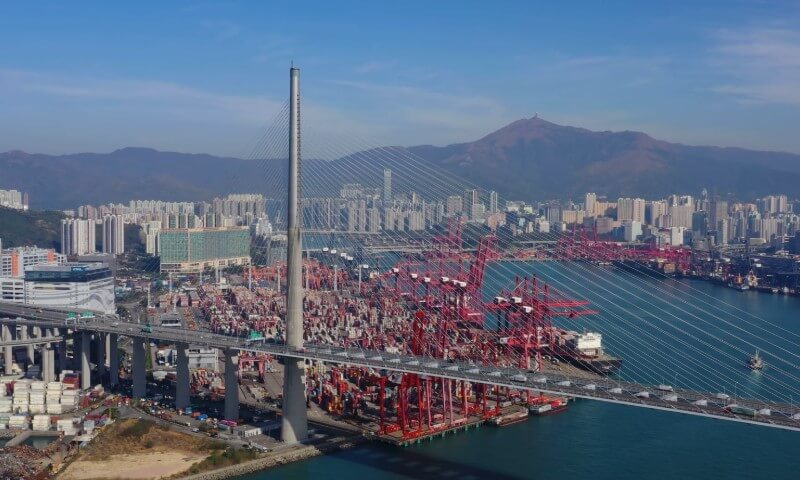
The Marine Department says Hong Kong handled 13.7 million TEUs in 2024, with Kwai Tsing terminals alone handling about 10.4 million TEUs. It also notes that transshipment cargo accounts for around 60% of total container throughput.
For U.S. companies in sourcing, consumer goods, electronics, and industrial supply chains, that matters because logistics is rarely about one port in isolation. It is about the wider network of freight forwarders, customs expertise, shipping services, financiers, insurers, and regional managers sitting around it.
Hong Kong still offers a thick ecosystem, even if some manufacturing and operational weight has shifted elsewhere in southern China.
Why Some Companies Still Choose Hong Kong Over a Full Relocation

A move out of Hong Kong can look sensible on paper, but many companies end up taking a more mixed approach. Instead of pulling out entirely, they split functions.
Senior management, treasury, legal, or investor-facing roles may stay in Hong Kong, while research, tech development, or parts of commercial expansion go to Singapore, Shenzhen, or other cities.
AmCham’s 2025 survey hinted at that pattern: nearly half of respondents said their Hong Kong office still served as either a global headquarters or Asia-Pacific headquarters, while 45% described it as a local office.
That matters because the modern regional hub is often less centralized than it was 15 years ago. Companies do not always need one city to do everything.
Hong Kong remains valuable because it can still do several high-value functions very well, especially finance, China coordination, and regional legal-commercial management.
Hong Kong Is Still Useful, but the Formula Has Changed
None of that means Hong Kong has no challenges. AmCham’s own 2025 findings show a more complicated mood beneath the headline numbers.
Sixty percent of respondents said they did not see a rebound of company functions returning to Hong Kong after leaving. The same survey found that 70% said their operations had not been negatively impacted by the National Security Law, which also means a meaningful minority did report some negative effect.
So the honest picture is not one of a city that has simply returned to an older business era. Hong Kong today works best for firms that need a highly international financial and legal platform linked closely to mainland China.
For businesses looking mainly for neutral regional branding, startup energy, or English-language commercial expansion into Southeast Asia, other cities may look more attractive.
FAQs
Why Reliance Continues
U.S. companies still rely on Hong Kong because the city keeps solving real operational problems.
It remains deeply plugged into China finance, offers a tax system multinationals know how to use, supports major cross-border legal work, and still hosts a large concentration of trade, banking, and professional services firms.
Fresh 2025 data shows firms are still there in large numbers, and many still plan to stay.
A better way to frame Hong Kong in 2026 is as a more specialized hub than before, but still a powerful one.
For the right kind of U.S. company, especially one tied to China-facing finance, trade, treasury, or legal work, Hong Kong remains hard to replace.