Skip to content
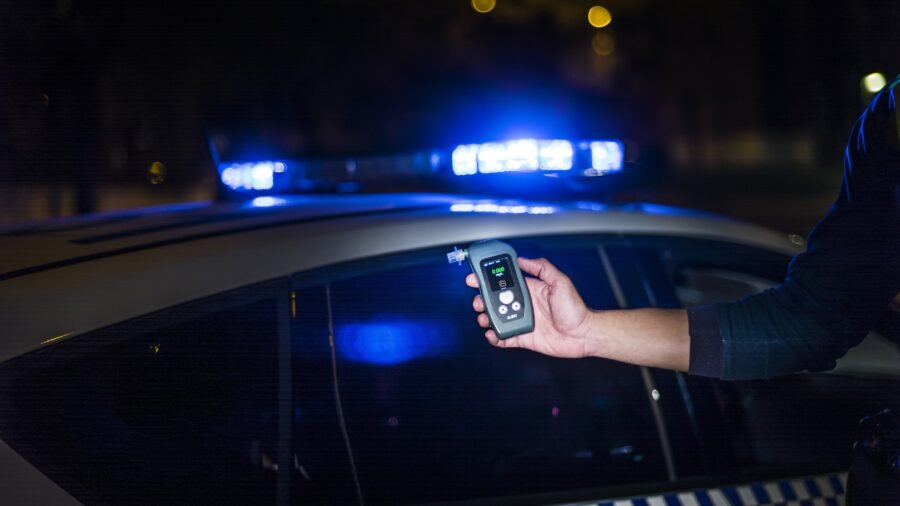

A lot of Massachusetts drivers have heard some version of the same claim: new cars are about to start “watching” drivers for alcohol and stopping drunk driving automatically.
That headline grabs attention, but the real legal picture in 2026 is more measured, more technical, and more important than most quick summaries make it sound.
Congress did order the U.S. Department of Transportation to create a federal safety standard for advanced impaired-driving prevention technology. Yet as of early 2026, NHTSA still has not issued the final federal motor vehicle safety standard that would make such technology mandatory in new passenger vehicles.
For Massachusetts vehicle owners, buyers, dealers, and fleet operators, that means 2026 is a transition year, not the year when every new car on a Boston lot suddenly comes with a built-in anti-drunk-driving lockout.
Massachusetts Drivers Are Hearing the Hype, But the Rule Still Isn’t Here
- No final federal rule requires drunk-driving detection in 2026 vehicles yet.
- Massachusetts buyers are still shopping under a waiting-phase federal process.
- NHTSA is still testing accuracy, reliability, and false-positive risks.
- Any real mandate would come later, after a final rule and compliance date.
What Congress Actually Required
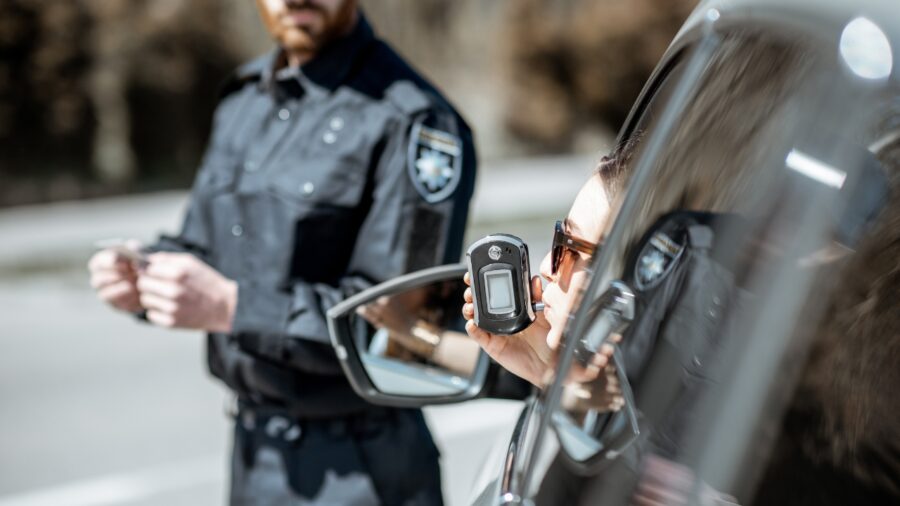
The legal starting point is section 24220 of the Infrastructure Investment and Jobs Act.
Congress directed the Secretary of Transportation to issue a federal motor vehicle safety standard requiring advanced drunk and impaired driving prevention technology in new passenger motor vehicles. The law describes qualifying technology in three possible forms:
- passive monitoring of driver performance to identify impairment and prevent or limit vehicle operation
- passive detection of a driver’s BAC at or above the legal limit and prevention or limitation of vehicle operation
- a combination of both approaches
Two words in that definition carry a lot of weight: passive and accurate. Congress did not ask for a system that works only when a driver blows into a tube on command.
Congress also did not ask for a vague “best effort” feature with sloppy detection. NHTSA has to produce a rule that fits the Motor Vehicle Safety Act, which means the standard has to be practicable, objective, and genuinely tied to motor vehicle safety.
Congress also built timing into the statute. The final rule was supposed to arrive within 3 years of enactment, but the law allows up to a 3-year extension if NHTSA determines a standard cannot yet satisfy the governing federal safety-law requirements.
Separately, the compliance date cannot be earlier than 2 years after the final rule is issued. That timing structure is a major reason why 2026 vehicles in Massachusetts are not suddenly all required to carry the technology.
Where the Federal Rule Stands in 2026
As of early 2026, NHTSA is still in rulemaking, not at the finish line. The agency published an Advance Notice of Proposed Rulemaking on January 5, 2024.
NHTSA’s 2024 and February 2026 reports to Congress both say the agency is still evaluating comments and technical readiness, and the Spring 2025 Unified Agenda still lists the matter at the prerule stage under RIN 2127-AM50.
NHTSA’s latest report to Congress says the agency remains committed to issuing a federal motor vehicle safety standard, but it also says commercially available technology that can passively and accurately detect driver alcohol impairment in a way that satisfies the statute and the Safety Act has not yet been found.
That is the practical headline for Massachusetts in 2026. A mandate exists in federal law, but the mandatory equipment standard itself is still unfinished.
NHTSA’s public record also shows how much work remains. The agency says it is still working on alcohol-detection system readiness, objective test procedures, false-positive concerns, and the larger question of how to write an enforceable performance standard.
A December 2025 Federal Register notice about “advanced drunk driving prevention technology telltale development” also points to ongoing development activity rather than a finished nationwide equipment requirement.
What Technology NHTSA Has Been Looking At
NHTSA’s research and rulemaking materials point to two broad families of technology.
Passive alcohol-detection systems
View this post on Instagram
One track focuses on direct alcohol measurement. NHTSA and its public-private DADSS program have worked on passive breath and touch-based sensing systems.
The idea is simple to explain, even if the engineering is hard: a vehicle could estimate whether a driver is at or above the legal BAC limit without requiring a traditional roadside-style breath test.
NHTSA has described the touch sensor as something that could be embedded in a push-button start switch, a steering wheel, or a gear selector.
Driver-performance monitoring systems
Another track focuses on behavior rather than direct BAC measurement. NHTSA’s reports discuss systems using cameras, physiological indicators, lane-position data, and other measures that may help infer impairment from poor performance or abnormal behavior.
In theory, such systems could detect more than alcohol, including some drug-related impairment or severe driver incapacity.
In practice, NHTSA says most reviewed technologies remain early in development, are not designed for real vehicle deployment, or do not yet achieve the level of passive, accurate detection required.
A short comparison helps:
| Approach | What it tries to detect | Main attraction | Main problem in 2026 |
| Passive breath sensor | Alcohol in exhaled breath | Close tie to legal BAC threshold | Integration, reliability, and objective testing |
| Touch or tissue sensor | BAC-related signal through skin/tissue contact | Passive measurement at start-up touchpoints | Accuracy, production readiness, validation |
| Driver-monitoring system | Behavioral signs linked to impairment | Could address broader impairment risks | Hard to prove impairment accurately and avoid false positives |
What 2026 Means for Massachusetts Vehicle Buyers

For a Massachusetts consumer shopping in 2026, the most important answer is also the least dramatic one: no final federal FMVSS is in force yet for advanced impaired-driving prevention technology.
A buyer in Worcester, Springfield, Cambridge, or on the South Shore is still shopping in a national vehicle market that has not yet been put under a final federal mandate for passive drunk-driving detection.
That leads to a few practical takeaways.
1. No universal 2026-model requirement
A 2026-model passenger vehicle sold in Massachusetts is not automatically required by a finalized federal drunk-driving detection standard to include passive alcohol detection or impairment lockout hardware.
Congress ordered the rulemaking, but the actual binding equipment standard has not been finalized.
So if a drunk-driving crash happens in Massachusetts in 2026, the response still depends far more on existing criminal law, insurance systems, and injury representation, including help available from firms such as Earley Law Group.
2. Some related driver-monitoring features may still appear
Many newer vehicles already carry cameras, attention monitoring, lane-centering support, drowsiness warnings, and related driver-assistance features.
Some of that hardware could become relevant later if regulators move toward impairment-related performance standards. Yet a fatigue warning or driver-attention alert in a 2026 car is not the same thing as a federally mandated drunk-driving prevention system.
3. Massachusetts will not get a separate “state version” of the rule
Federal motor vehicle safety standards generally govern nationally. Under 49 U.S.C. § 30103, once a federal motor vehicle safety standard is in effect, a state generally may keep or impose a standard on the same aspect of performance only if it is identical to the federal one.
In plain terms, Massachusetts drivers should expect any future equipment mandate in new passenger vehicles to come through the federal FMVSS route, not through a stand-alone Massachusetts design rule for consumer cars.
What 2026 Means for Massachusetts Dealers and Automakers
Dealers in Massachusetts are in a waiting phase. They do not yet have a final federal drunk-driving technology compliance checklist to apply across their new-vehicle inventory. For automakers, suppliers, and compliance teams, the picture is more demanding.
They know Congress wants a safety standard. They also know NHTSA has signaled that any final rule will need objective test procedures, measurable performance requirements, and enough technical maturity to avoid unacceptable error rates.
False positives are one of the most important legal and engineering issues here. A system that wrongly blocks a sober driver from operating a car could create safety, liability, and usability problems of its own.
NHTSA’s ANPRM explicitly asked about adverse consequences, including the risk that an impaired person denied vehicle use could be stranded and exposed to crime or environmental danger. Federal regulators are plainly aware that “stopping drunk driving” sounds straightforward in a headline but becomes harder once real vehicles, real roads, and real edge cases enter the picture.
Massachusetts dealers will likely feel the effects later in product planning, marketing language, software disclosures, warranty questions, and customer education. In 2026, though, the legal burden remains mostly prospective.
How the Federal Plan Differs From Massachusetts OUI Enforcement
Massachusetts already has a mature legal framework for OUI enforcement, license suspensions, hardship-license rules, and ignition interlock requirements for certain offenders. Federal advanced impaired-driving prevention technology works at a different point in the chain.
A simple comparison helps:
| Massachusetts existing system | Federal future system under section 24220 |
| Targets people after an OUI event, charge, or conviction | Aims to affect new passenger vehicles before impaired driving occurs |
| Often uses ignition interlocks for certain offenders | Focuses on passive in-vehicle detection or passive driver monitoring |
| Runs through state criminal, RMV, and licensing processes | Runs through federal vehicle safety regulations and manufacturer compliance |
| Applies to covered drivers under Massachusetts law | Would apply to covered new passenger vehicles nationally once finalized |
Massachusetts’ ignition interlock program remains fully relevant in 2026 because federal passive-detection rules have not replaced it.
For many Bay State drivers, that existing state system still has more immediate legal consequences than the federal rulemaking process.
Why NHTSA Has Not Moved Faster
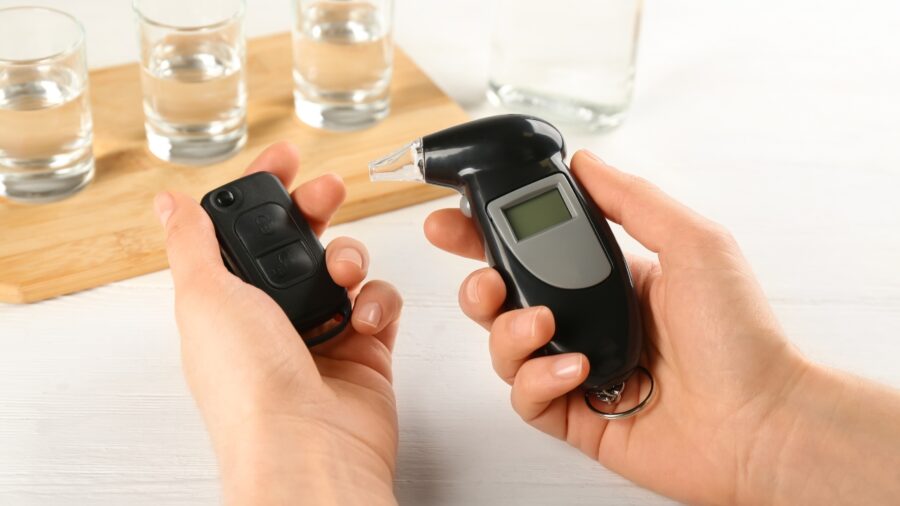
A common reaction is frustration. Congress set a deadline. Why is the final rule not already done?
NHTSA’s own documents give the answer. The agency says it has not yet identified commercially available technology that can passively and accurately detect alcohol impairment in a way that satisfies the statutory standard and the broader Safety Act requirements.
Agency reports also emphasize test-method development, production readiness, and the need to write requirements in objective terms. Federal safety rules are not supposed to be aspirational product wish lists. They have to be enforceable across a national market.
A rule that sounds bold but fails in practice would invite litigation, compliance confusion, and public backlash.
A false lockout in a freezing New England parking lot at 2 a.m. is not a trivial scenario. Neither is a system that misses actual impairment often enough to create a false sense of security. NHTSA’s slower pace reflects that tension.
What Massachusetts Drivers Should Watch Next
For Massachusetts readers trying to separate rumor from reality, a few markers matter more than anything else.
Watch for a proposed rule or final rule, not just headlines
The key event is not another broad statement of support for anti-drunk-driving technology. The key event is the publication of a proposed or final FMVSS with actual requirements, definitions, test procedures, and dates. As of early 2026, that has not happened.
Watch the compliance date
Even after a final rule appears, the law says compliance cannot begin earlier than 2 years after issuance of the final rule. So even a finalized rule would not instantly transform the Massachusetts new-car market overnight.
Watch whether NHTSA leans toward alcohol sensing, behavioral monitoring, or both
Congress allowed multiple pathways. A future federal standard could emphasize direct BAC detection, performance monitoring, or a blended approach. That choice will shape everything from vehicle design and privacy debates to cost and reliability.
Watch Massachusetts crash and enforcement trends separately
State OUI enforcement, ignition interlock use, sobriety checkpoints, saturation patrols, and public-safety messaging will keep moving regardless of federal vehicle-equipment timelines.
Massachusetts’ own highway safety materials show impaired driving remains a major enforcement and funding priority.
The Bottom Line
@newsnationnow Drunk driving detection: Here’s a look at how one company is using alcohol-detecting sensors to improve #safety ♬ original sound – NewsNation
Massachusetts vehicles in 2026 are being shaped by a serious federal mandate, but not yet by a finalized federal equipment rule. Congress has already told NHTSA where to go.
NHTSA has already opened the rulemaking and published annual reports explaining why the final standard has not been finalized. Yet no finalized nationwide requirement currently forces every new passenger vehicle sold in Massachusetts to carry passive drunk-driving detection technology.
For Bay State drivers, 2026 is the year to pay attention, not the year to assume the system has already arrived. Federal law has created the path. The hardware mandate still needs a final rule, a compliance date, and technology that can survive real-world scrutiny.