Skip to content
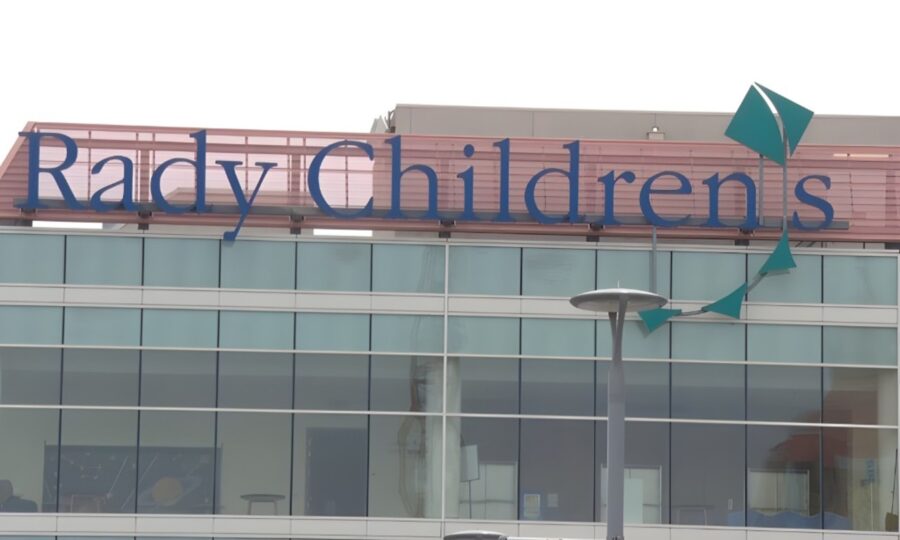

California Attorney General Rob Bonta has sued Rady Children’s Health, arguing the San Diego-based pediatric system illegally moved to end gender-affirming medical care for patients under 19 after committing, in a state-approved merger, to maintain those services through 2034.
The lawsuit, filed in San Diego Superior Court, lands in the middle of an accelerating national fight over transgender health care, where hospitals and clinics say federal investigations and funding threats have pushed them to retrench, while states with stronger protections have searched for enforcement tools with real teeth.
A Shutdown Date, and a State Response
According to KPBS, the hospital system planned to stop providing gender-affirming care for under-19 patients starting Friday, February 6, 2026.
In a press release dated January 30, 2026, Bonta’s office said the state’s complaint seeks to block that move and enforce conditions attached to a 2024 merger involving Rady Children’s Hospital-San Diego and Children’s Hospital of Orange County.
At the center is a simple claim: California approved a nonprofit hospital transaction, set binding terms to protect patient services, and now alleges the system is violating those terms.
The Core Legal Theory, Merger Conditions as an Enforcement Lever

Bonta’s office says it conditioned its approval of the merger on requirements that the hospital system maintain existing services, including gender-affirming care, through 2034 unless it obtained state approval to reduce or end them.
In the state’s telling, the case is not primarily a referendum on medical standards. It is an enforcement action rooted in state oversight of nonprofit hospital transactions and the contractual commitments the system made to secure approval.
That narrower posture is a major reason the lawsuit is being watched closely. If California can compel continuation of care by enforcing merger conditions, it offers a template for other states and advocates searching for ways to stop abrupt shutdowns, even when providers claim federal pressure is driving their decisions.
What California Says Motivated the Cutoff
In its public statements, the hospital system has pointed to fear of federal consequences, including potential impacts on participation in federal programs that are financially central to pediatric hospitals.
A spokesperson for the system told LAist the decision was guided by its responsibilities to continue serving all children, including through participation in “essential federal programs.”
Bonta’s office, by contrast, frames the decision as preemptive compliance with what it calls an unlawful federal campaign targeting providers of gender-affirming care. In the state’s estimate, the cutoff would affect roughly 1,450 under-19 patients.
A Widening Pattern, Providers Pull Back as Federal Pressure Rises
The California case arrives after a wave of federal subpoenas and investigations tied to gender-affirming care, many of which have been challenged in court.
In late January, Reuters reported that a federal judge rejected a U.S. subpoena demand aimed at patient records, describing it as an improper “fishing expedition” used to intimidate providers.
Another Reuters report described the Justice Department withdrawing parts of a subpoena demand involving records for thousands of minors at a Los Angeles hospital after litigation and settlement negotiations.
The upshot is a climate where hospitals weigh legal exposure and funding risk in real time. In San Diego, Voice of San Diego has described the dispute as existential for the health system, not only for families seeking care but for a hospital network facing massive financial and regulatory pressure.
Why Advocates Say the Case Matters, and Why Some Still Want More
View this post on Instagram
Even supporters of the lawsuit have raised questions about the state’s choice of legal footing.
CalMatters reported that some advocates wanted California to lean more heavily on broader civil-rights protections for equal access to health care, including the Unruh Civil Rights Act, which experts cite as a foundational state safeguard against discrimination.
A lawyer from Transgender Law Center told KPBS the Attorney General is seeking an order to require continued care during the litigation.
Separately, TransFamily Support Services has described the situation as part of a broader national pattern in which providers respond to federal pressure by pulling back services.
The Medical Consensus Backdrop, and What This Case Is Not Deciding Yet
The case does not resolve the broader scientific and clinical debate in a courtroom record, at least not at the outset.
Still, the political fight frequently invokes medical authority, and major professional organizations have long defended access to gender-affirming care under appropriate clinical standards.
CalMatters referenced positions and evidence summaries that align with support for gender-affirming care from groups such as the American Academy of Pediatrics and the American Medical Association.
What Happens Next
Near-term outcomes will likely hinge on emergency court action and the court’s interpretation of the merger conditions.
Key questions:
- Whether the court grants immediate relief, such as an injunction requiring the hospital system to keep providing care while the case proceeds.
- Whether California can enforce the merger commitments as written, and whether the hospital system can persuade the court that federal pressure makes compliance impracticable or unlawful.
- Whether this approach becomes a repeatable model, where state regulators treat merger approvals as enforceable guardrails for protecting specialty services when political winds shift.