Skip to content
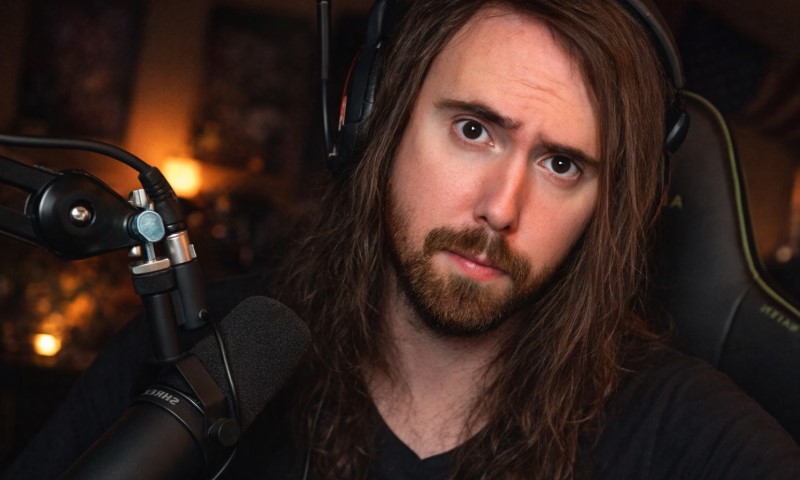

For years, Asmongold was known mainly as a gaming personality, especially in the world of World of Warcraft and reaction-heavy gaming commentary. By 2025, though, a different pattern had become hard to miss. Political arguments, culture-war topics, and headline-driven reactions were no longer occasional detours.
They had become a major engine of audience growth, clip circulation, platform leverage, and business insulation. Coverage around his own exit from OTK even tied that break directly to the strain created by his “controversial political content.”
Calling it a pivot from games to politics misses part of the story. A better reading is that he found a way to monetize attention inside a hybrid lane, gaming culture, internet grievance, livestream reaction, and politics all folded into one format.
That model fit a wider media shift already underway, where creators increasingly act like news hosts, opinion broadcasters, and audience magnets all at once.
Pew found in late 2024 that about 1 in 5 Americans regularly got news from influencers on social media, and 37% of adults under 30 said the same.
So, How Did “Roach King” Get Political Attention?
- Asmongold turned political attention into audience growth.
- Gaming culture wars helped open that path.
- Politics gave him more reach, clips, and leverage.
- The shift brought gains, but also backlash and tradeoffs.
The Old Asmongold Brand Already Had the Right Ingredients
Asmongold did not arrive at politics as a blank slate, because his rise came out of a WoW-centered internet culture where game economies, grinding, boosting, and names like EpicCarry were already part of the background conversation.
People tuned in for long monologues, instant reactions, blunt judgments, and a strong sense that whatever topic appeared on screen would get filtered through his personality first.
That matters because modern streamer influence rarely depends on staying inside one subject area. Once a creator trains viewers to show up for the person, not merely the game, topical expansion becomes easier.
In Asmongold’s case, that expansion was helped by a broader trend in livestreaming itself. Streams Charts reported in 2025 that Twitch hosted over half of politically oriented livestreaming channels, even though YouTube dominated actual political viewership.
In other words, gaming-native platforms had already become fertile ground for political talk, argument, and commentary. Asmongold did not invent that climate, but he fit it very well.
Gaming Culture Wars Opened the Door
A key bridge from gaming into explicit politics came through arguments over “wokeness,” representation, and the belief among parts of the gaming audience that political values were being forced into entertainment.
Spencer Kornhaber wrote in The Atlantic that the gaming world’s rightward drift could be traced back to Gamergate, while identifying Asmongold as one of the streamers whose political commentary gained growing cultural influence by 2025.
Academic work backed up that larger pattern. Adam Ruch’s 2025 article in the International Journal of Communication examined how anti-“woke” game criticism framed politics as an outside imposition on games, and specifically cited Asmongold as one of the visible figures in that ecosystem.
Search excerpts from the paper note that critics like Asmongold were central examples in debates over “woke” politics in games.
A 2024 WIRED report on the Sweet Baby Inc. harassment campaign captured how tightly election-year politics and gaming backlash were becoming intertwined.
The article described the anti-Sweet Baby campaign as part of a broader “Gamergate 2.0” environment and quoted experts saying large-scale harassment campaigns around games both fuel and are fueled by political events.
Asmongold Learned That Politics Travels Better Than Gaming
Gaming content can be huge, but much of it is perishable. A patch note dies fast. A boss kill gets “doable” after a while. A game launch cools off. Political outrage lasts longer, travels farther, and clips more easily.
That is where the business angle becomes obvious.
A political rant can become:
- a live segment with high chat activity
- several short clips for YouTube
- reposts across X, Reddit, and TikTok
- reaction fodder for allies and critics alike
- a reason for mainstream outlets to write about the creator
- a new entry point for viewers who were never there for games
Gaming clips often stay inside gaming circles. Political clips travel across the internet.
Asmongold’s own numbers during major political moments show how valuable that can be.
Streams Charts reported that his livestream covering Donald Trump’s January 20, 2025 inauguration drew over 310,000 concurrent viewers and became Twitch’s most-watched creator broadcast of the event, excluding media companies.
Another Streams Charts report said his channel ranked second on Twitch in Q1 2025 by total watch hours.
Political Attention Paid Off in at Least Five Ways
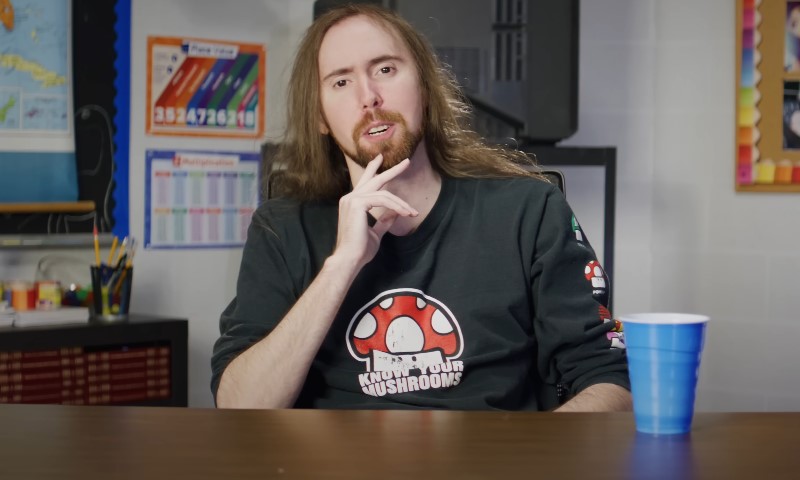
Saying he “cashed in” should be kept precise. Publicly available reporting does not show a neat ledger labeled “politics money.” What reporting does show is a set of business gains that followed political attention very clearly.
More Live Viewers
Political moments produced major spikes. Trump’s inauguration coverage set a new record for his Twitch channel, according to Streams Charts.
Political and controversy-driven discussion also remained a major part of his regular stream mix in Q2 2025, when Streams Charts said Zack “zackrawrr” Hoyt led North American streamers with over 26 million hours watched for the quarter.
More Clip Inventory
Reaction-driven politics is highly recyclable content. One live take can become multiple uploads and circulate for days.
That makes the creator less dependent on one full broadcast and more dependent on a constant churn of arguable moments.
More Algorithmic Reach
Political argument attracts both supporters and hate-watchers. For creators, both can still produce clicks, comments, watch time, and circulation. In the creator economy, outrage often functions like distribution.
More Platform Leverage
By June 2025, Asmongold had joined Kick and embraced multistreaming. Streams Charts said his Kick debut expanded his reach, while another report framed multistreaming as a major part of his 2025 rise.
More Independence From Traditional Sponsor Friendliness
Politics can make mainstream sponsors uneasy, but large direct audiences can offset that by boosting platform payouts, fan support, clip revenue, and bargaining power.
Ironically, controversy can make a creator harder to package and harder to ignore at the same time.
Asmongold’s OTK Exit Made the Tradeoff Public
One of the clearest windows into the business logic came when Asmongold left OTK. Dot Esports reported on February 22, 2025, that he said his controversial political content made it harder for OTK to find sponsors and exposed other members to harassment.
He also described such content as hard to combine with less extreme material and said separation was better for his career path and health.
That admission matters for two reasons.
First, it confirmed that politics had become central enough to reshape his organizational life. Second, it showed that political attention was valuable enough for him to keep pursuing, even when it clashed with a gaming-and-entertainment brand built for broader partnerships.
A simpler version of the equation looks like this:
| Stage | What changed | Business effect |
| Gaming fame | Large loyal audience built through WoW, reactions, and commentary | Strong base audience |
| Culture-war gaming talk | Broader appeal beyond game-specific viewers | Higher clip spread |
| Explicit political commentary | Bigger headlines, stronger reactions, more polarized loyalty | Audience growth and higher attention density |
| Multiplatform expansion | Twitch plus Kick plus clip ecosystem | More monetization paths |
Controversy Was Part of the Fuel, Not a Detour
One uncomfortable truth about modern creator media is that condemnation can function like promotion. Major controversies can cause reputational damage, platform penalties, and business fallout. They can also lock a creator into the center of public attention.
Asmongold’s October 2024 suspension after his remarks about Palestinians is a sharp example. PC Gamer reported that Twitch banned one of his accounts after the rant, and later reported that he stepped back from leadership roles while saying he had become a far worse version of himself.
That dynamic has been visible across online politics for years. Reuters Institute’s 2025 Digital News Report said online influencers and personalities were seen globally as one of the biggest threats for false or misleading information, tied with national politicians at 47%.
Such findings do not prove intent. They do show the kind of media space where a polarizing creator can thrive: high distrust, strong identity, constant reaction, weak separation between entertainment and civic discourse.
He Benefited From a Much Bigger Political-Creator Shift
Asmongold’s rise as a political-adjacent streamer did not happen in isolation. The broader media world had already started treating creators as political intermediaries.
Pew documented that both Republicans and Democrats credentialed content creators at their 2024 conventions and encouraged them to share political messages.
AP reported that more than 200 influencers, streamers, and social media personalities were capturing and livestreaming impressions from the Democratic National Convention in Chicago.
That background matters because it changed the incentives for creators. Politics was a growth category.
In the older internet model, gaming creators could avoid civic topics and still remain culturally central. By 2024 and 2025, that line had weakened.
Politics had become one of the easiest ways to gain relevance outside a niche, generate repeat engagement, and compete with traditional media for attention.
For someone with Asmongold’s style, long reactions, strong opinions, low-filter delivery, and an audience already primed for grievance narratives, political expansion was almost built into the product.
The Audience He Built Was Primed for the Move
A creator does not make a shift like that alone. The audience has to want it, reward it, or at least keep watching.
Kornhaber’s Atlantic piece, which we mentioned earlier, argued that gaming-streamer politics often draws power from a feeling that ordinary play has been invaded by ideology.
Such rhetoric gives creators a simple frame: gaming used to be fun, politics invaded it, now someone must push back.
That frame is commercially useful because it converts entertainment habits into identity habits.
A viewer may begin by wanting:
- reactions to a game trailer
- commentary on a studio controversy
- a rant about monetization or censorship
Later, that same viewer may stay for:
- election talk
- congressional reactions
- immigration arguments
- culture-war commentary
- ideological loyalty
Once politics becomes part of the audience bond, every new public controversy becomes usable content.
Politics Also Helped Solve a Creator Aging Problem
Long-running gaming creators often face a common problem. They age out of dependence on one title, one genre, or one game community. Politics offers a way to remain relevant without chasing every new release.
That seems especially important in Asmongold’s case. His gaming identity was durable, but no single game could reliably carry the scale he reached at peak moments. Politics and controversy gave him a renewable supply of subjects.
Streams Charts’ Q2 2025 ranking captured that hybrid identity well. His streams still included popular games like Clair Obscur: Expedition 33 and The Elder Scrolls IV: Oblivion Remastered, but the report said much of his output centered on reacting to controversies and trending topics.
For a veteran creator, that is powerful. Games can remain in the mix while politics keeps the engine running between game highs.
Did He Really Leave Gaming Behind?
@adam_sells0 Why Asmon quit WOW #twitchclip #asmongold #twitchhighlights
Not really, and saying so would flatten the story.
Gaming remains part of the package he delivers. He still plays games. He still reacts to gaming news. He still speaks in a language familiar to gaming audiences.
Even his political commentary often comes wrapped in gamer framing, culture-war complaints about entertainment, debates over developers, platform moderation, or internet identity.
So the better phrase is not “after gaming” in a literal sense. It is “after gaming as the main event.”
By 2025, gaming was often the doorway. Politics was the retention layer.
The Limits of the Model
Even so, political monetization carries costs.
His own record shows some of them: bans, public backlash, sponsor friction, strain on partners, and organizational fallout.
Coverage around his departure from OTK and his October 2024 suspension makes clear that political attention can widen audience reach while shrinking institutional comfort around a creator.
There is also a credibility problem. A creator trained in reaction entertainment can hold major influence over public debate without the editorial standards expected from reporters or policy specialists.
Pew’s work on news influencers showed how normalized such figures had become in American information habits.
For the creator, though, credibility in the traditional sense may not be the point. Intimacy, speed, loyalty, and cultural alignment often matter more.
Summary
Asmongold did not stumble into political attention by accident. He moved into a media lane where gaming grievance, internet identity, livestream reaction, and politics all fed one another.
That lane brought bigger audience spikes, more clip value, stronger platform leverage, and a business model less tied to game cycles alone.
Public reporting around his audience numbers, controversy arc, multistream expansion, and OTK exit all point in the same direction: politics became profitable because attention became portable.