Skip to content
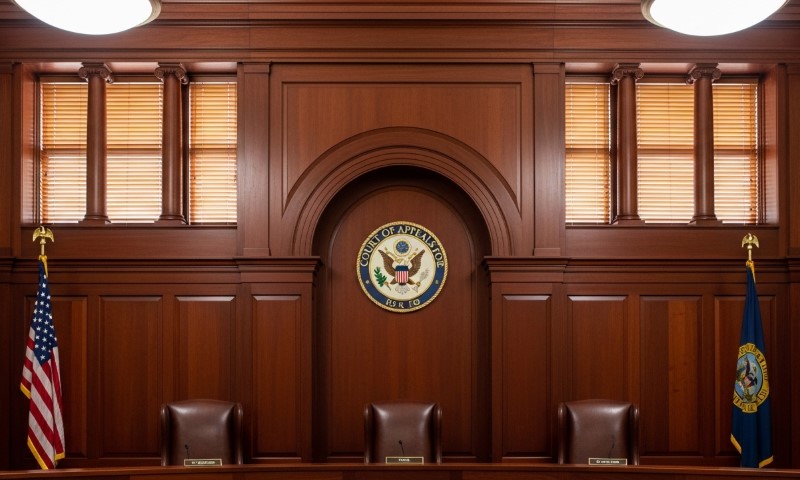

A federal appeals court has delivered one of the strongest warnings yet about sloppy, unreliable legal filings in the age of generative artificial intelligence.
In a March 2026 sanctions opinion, the U.S. Court of Appeals for the Sixth Circuit penalized two lawyers after finding that their appellate briefs contained more than two dozen fake citations and factual misstatements.
The judges said the problem went far beyond bad proofreading. In their view, the filings wasted court resources, burdened the opposing side, and damaged trust in legal advocacy.
For lawyers, judges, law firms, and even clients who do not follow legal ethics closely, the ruling matters for a simple reason: courts depend on lawyers to present real law, real facts, and real citations. Once that basic foundation cracks, every case becomes harder to decide fairly.
What the Sixth Circuit Made Clear
- Sixth Circuit fined two lawyers $30,000 after finding fake citations and factual errors in appellate briefs.
- Court treated the problem as a serious trust failure, not simple sloppy proofreading.
- Judges were especially critical because the lawyers failed to respond meaningfully to the show cause order.
- Ruling signals that courts are moving toward tougher penalties for unreliable, possibly AI-assisted filings.
Why the Case Drew National Attention
Sanctions against lawyers are not unusual by themselves. Courts issue them for missed deadlines, discovery abuse, frivolous claims, and misrepresentations. What pushed this matter into the national spotlight was the nature of the filing.
According to Reuters and the Sixth Circuit’s own opinion, the briefs contained non-existent cases, incorrect quotations, and citations that did not support the propositions for which they were offered.
In other words, the court was not dealing with a stray typo or an occasional weak citation. The panel concluded that major parts of the briefing could not be trusted at all.
That distinction is crucial. Judges do not sanction lawyers simply because an argument fails. Appeals lose every day. Sanctions enter the picture when a filing crosses the line from weak advocacy into something the court views as objectively irresponsible or misleading.
In such situations, the issue is no longer whether the lawyer made a persuasive case. The issue becomes whether the court can rely on anything the lawyer submitted.
Note: Many firms now run drafts through an AI checker as one early screening step before any human cite-check begins.
What the Sixth Circuit Found
The ruling came out of appeals tied to litigation over a 2022 fireworks event in Athens, Tennessee. The opinion identifies the attorneys as Van Irion and Russ Egli.
The panel said their filings across three appeals included more than two dozen fake citations and misrepresentations of fact, even after the court set aside typos and lesser citation errors that might have been mere sloppiness.
That is a remarkably serious judicial finding. A fake citation can mean several different things in practice:
- a case that does not exist,
- a case that exists but contains no quoted language attributed to it,
- a case that exists but says nothing close to what the brief claims,
- or a citation used to give false support to an argument.
The Sixth Circuit said all of that appeared in the briefs before it. Such a pattern told the panel that the problem was systemic, not isolated.
More Than a Bad Citation Check
Courts are used to ordinary human error. Lawyers sometimes cite the wrong page, cite the wrong edition of a case reporter, or paraphrase a holding too broadly. Judges correct such mistakes all the time without writing headline-making opinions about them.
The Sixth Circuit treated the conduct here differently because the volume and nature of the errors imposed a new burden on the court. The opinion says court staff had to verify every single citation individually to determine how serious the misconduct was.
That kind of review takes time away from the actual legal questions a panel is supposed to resolve.
From the court’s perspective, the harm was practical as well as ethical. A broken brief turns judges and clerks into fact-checkers before they can even begin normal legal analysis.
The Show Cause Order Made the Lawyers’ Position Worse

After spotting the problems, the Sixth Circuit did not move straight to punishment. The panel issued a show cause order, which gave the lawyers a chance to explain themselves and respond before sanctions were imposed.
The order asked for several things. Among them, the court wanted copies of the cited authorities, highlighted quoted language, an explanation of who wrote the briefs, whether any ghostwriting was involved, whether generative AI had been used, and how the briefs had been cite-checked. That was a direct opportunity to clarify the record and possibly limit the fallout.
According to the opinion, the response did not help. The judges said the lawyers did not answer the requested questions in a meaningful way. Instead, they challenged the validity of the show cause order, argued that it was improper, and accused the court of misconduct. The panel plainly viewed that response as aggravating rather than mitigating.
Why Judicial Reactions Often Turn on the Response
In sanctions matters, a court often looks not only at the original mistake but also at what happened after the mistake came to light. A lawyer who admits error, explains how it happened, withdraws the bad filing, and shows real corrective steps can sometimes reduce the penalty.
A lawyer who refuses to answer direct questions from the court usually makes things worse. Judges tend to see that as a sign that ordinary warnings will not work. The Sixth Circuit’s opinion reflects exactly that thinking.
The panel described the lawyers’ responses as disrespectful to the court and the rule of law, language that signaled a serious loss of confidence in counsel’s credibility.
The $30,000 Sanction Was Only Part of the Consequence
The headline figure was $30,000, but the total hit did not stop there. The court ordered each lawyer to pay $15,000 in punitive sanctions, and Reuters reported that the lawyers were also ordered to reimburse the City of Athens for legal work on the appeal.
The Sixth Circuit further directed the clerk to send the order to the chief judge to consider disciplinary proceedings under local rules.
Clients see it. Judges see it. opposing counsel see it. Bar authorities may see it. Future adversaries may use it to attack credibility in later litigation.
Sanctions Breakdown
| Penalty or Consequence | What the Court Ordered |
| Punitive sanction against Van Irion | $15,000 |
| Punitive sanction against Russ Egli | $15,000 |
| Opposing side’s fees and costs | Reimbursement to the City of Athens |
| Possible further discipline | Order forwarded for consideration under Sixth Circuit Local Rule 46 |
Why the Court Said a Stronger Penalty Was Necessary
View this post on Instagram
The Sixth Circuit did not pick the number at random. The panel explained why it believed a meaningful punitive sanction was justified.
According to the opinion, the misconduct stretched across three appeals, not a single filing. The judges also said smaller sanctions in other AI-related cases had plainly failed to stop similar problems from happening elsewhere. In other words, the court was aiming for deterrence, not merely correction.
That point deserves attention because it says something larger about how federal courts are approaching AI-linked filing errors in 2026.
Earlier cases often carried smaller fines and were framed as warnings. A ruling like this one suggests the warning phase may be fading. Some judges now appear ready to impose sanctions large enough to reshape law firm behavior.
The Lawyers’ Disciplinary History Also Mattered
The Sixth Circuit cited prior discipline as another aggravating factor.
The opinion states that the Tennessee Supreme Court publicly censured Egli in 2017 for lack of candor to the tribunal. It also states that Irion was suspended in August 2025 from the Eastern District of Tennessee for five years because he lied to the district court in a related matter.
A prior record like that does not automatically decide a sanctions dispute, but it can make a court far less willing to treat later misconduct as a minor lapse.
For judges, repeated candor problems raise a deeper concern. Legal advocacy gives lawyers room to argue hard. It does not give them room to invent authority or distort the record. Once a court concludes that a lawyer has a recurring problem with candor, every future filing from that lawyer carries extra suspicion.
Aggravating Factors Identified by the Court
The panel highlighted several reasons for imposing a serious sanction:
- fake citations and factual misstatements across multiple appeals,
- refusal to comply meaningfully with the show cause order,
- prior discipline involving candor to the tribunal,
- hostile responses accusing the court of misconduct,
- and the burden imposed on the court and opposing party.
Taken together, those factors made the ruling feel far more severe than a routine sanctions order.
Was Generative AI Proven To Be the Cause?

That is one of the most interesting parts of the case. Reuters reported that the filings bore hallmarks of AI hallucinations, and the court specifically asked the lawyers whether generative AI had been used. Yet the sanctions ruling ultimately focused on the unreliability of the filings and the lawyers’ conduct in response to the court’s inquiry.
That matters because courts have increasingly made one point clear: AI is not a defense. Even if a chatbot or drafting tool produced the bad language, the lawyer who signs the brief remains responsible for every citation, every quotation, and every factual statement submitted to the court.
From an ethics standpoint, that makes sense. Judges do not care whether a false citation came from a lazy intern, a flawed database, a rushed copy-and-paste job, or a generative AI tool. What matters is that the lawyer filed it.
A Larger Pattern in the Courts
The Sixth Circuit ruling did not arrive in a vacuum. Reuters has documented a growing string of sanctions tied to fake citations and AI-generated errors in court filings.
One of the best-known early examples came in 2023, when lawyers in the Mata v. Avianca matter were sanctioned after submitting a brief that cited non-existent cases generated by ChatGPT.
Reuters reported that case resulted in a $5,000 sanction against two lawyers and their law firm. In February 2026, Reuters also reported that a Kansas federal judge fined lawyers a combined $12,000 over AI-generated submissions in a patent dispute that included fabricated quotations and non-existent authority.
How the Pattern Has Evolved
| Year | Example | Reported Consequence |
| 2023 | Mata v. Avianca fake ChatGPT citations | $5,000 sanction reported by Reuters |
| 2026 | Kansas patent case involving AI-generated submissions | $12,000 sanction reported by Reuters |
| 2026 | Sixth Circuit case involving Irion and Egli | $30,000 punitive sanctions plus fee reimbursement |
What Ethics Rules Already Require
No new ethics rule had to be invented for conduct like this. The American Bar Association’s Model Rule 1.1 requires competent representation, including the legal knowledge, skill, thoroughness, and preparation reasonably necessary for the matter.
The commentary to the rule also says lawyers should keep up with the benefits and risks of relevant technology.
Federal Rule of Appellate Procedure 38 separately allows a court of appeals to award damages and costs when an appeal is frivolous, after notice and a reasonable opportunity to respond. The Sixth Circuit relied on Rule 38 along with its inherent authority to sanction bad-faith litigation conduct.
Put simply, legal ethics and procedural rules already covered the core problem long before generative AI became part of legal drafting. A lawyer’s duty remains the same: verify what you file.
Old Duties, New Tool
Generative AI changed the speed of drafting. It did not erase:
- the duty of competence,
- the duty of candor to the tribunal,
- the duty to investigate legal support before making an argument,
- or the duty to supervise the preparation of filings.
That is why courts keep returning to the same basic principle. A polished paragraph means nothing if the authority behind it is fake.
Why Faulty Court Filings Are So Dangerous
Outside the legal profession, a fake citation might sound like a technical mistake. In court, it is much more serious.
A judge reading a brief is not supposed to re-create the lawyer’s research from scratch. The court expects the advocates to identify controlling law accurately and describe the record honestly. Once that trust erodes, the entire process becomes more expensive and less reliable.
The damage spreads in several directions:
- judges and clerks spend extra hours checking authorities,
- opposing counsel spend more money responding,
- clients may lose potentially valid claims because their filings become suspect,
- and the public sees another example of professional work that appears careless or dishonest.
The Sixth Circuit’s opinion captured that institutional concern directly. The panel said fake cases burden courts and taxpayers, and it emphasized the need to protect the integrity of its proceedings.
What Lawyers and Law Firms Should Learn From the Case
The lesson is not complicated, but it is increasingly urgent.
Every Citation Needs Human Verification
Any lawyer using AI for research assistance or drafting has to verify the output manually. That means opening the case, reading the relevant section, confirming the quotation, and making sure the authority really supports the proposition in the brief.
A quick skim is not enough. Many fabricated citations look plausible at first glance. Some use real judges’ names, real-sounding case titles, or citations that mimic legitimate formatting. That surface credibility is part of what makes such errors dangerous.
Firms Need Internal Review Protocols
Law firms that allow AI-assisted drafting without clear review standards are taking a needless risk. A sensible internal process usually includes:
- source verification before filing,
- documented cite-check procedures,
- partner review of all record citations,
- limits on unsupervised AI use,
- and training on the ethics risks tied to generative tools.
Without a system like that, a single bad filing can become a public sanctions order.
Candor After Discovery Matters Too
Even when an error has already happened, the response still matters. Courts often distinguish between lawyers who own the mistake and lawyers who attack the court instead of answering basic questions. The Sixth Circuit’s ruling shows how badly that second path can end.
Why the Ruling Reaches Beyond One Case
A sanctions order like this reaches past the lawyers involved. It speaks to a much larger shift in professional expectations.
For years, many people treated AI errors as an awkward side effect of fast-moving technology. That attitude is becoming harder to sustain in court. Judges now have enough examples in front of them to see a pattern. They know fake citations can appear. They know lawyers know about the risk. And they know some lawyers still file unverified material anyway.
That changes the tone of judicial response. What might once have drawn a warning may now draw a serious financial sanction, fee shifting, reputational harm, and possible disciplinary review. The Sixth Circuit’s opinion lands squarely in that tougher phase.