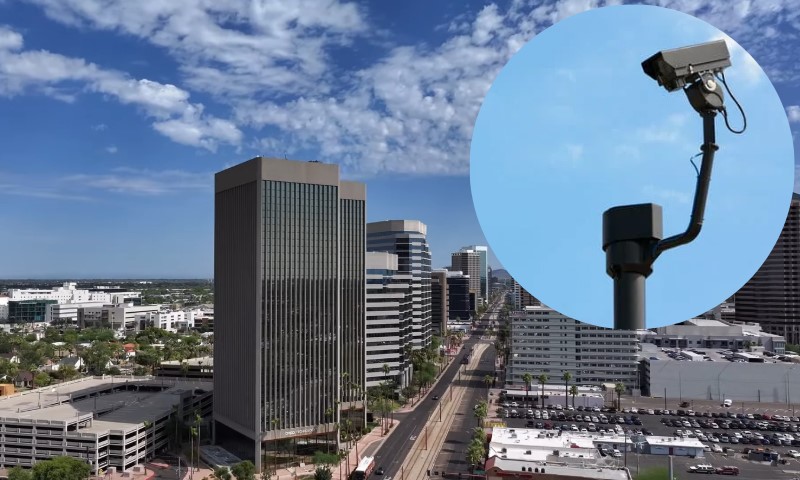

Automated speed enforcement returns to Phoenix on February 23, and the city is trying to make the reset feel different from past chapters. The plan is measured, staged, and unusually transparent for a topic that tends to inflame tempers.
Cameras go live first with warnings, then citations follow a month later. Locations are published. Funding claims are spelled out. Legal guardrails are emphasized.
For drivers, parents, commuters, and anyone who uses Phoenix streets daily, the details matter. Speed camera programs succeed or fail on specifics, not slogans.
Let’s lay out how the system works, where devices appear, why the city chose those corridors, what Arizona law allows, and how to move through the 30-day warning window without surprises.
What Starts Feb 23, And What Changes March 25
Phoenix structured the return as a two-phase rollout rather than a cold start.
Phase 1: Feb 23 To March 24
According to the City of Phoenix statement, a 30-day warning period opens on February 23. Vehicles recorded above the posted speed limit trigger mailed warning notices only. No fines attach during the window.
Phase 2: Starting March 25
Civil traffic citations begin for drivers exceeding the posted speed limit. Mailing, payment options, and court processes follow standard city pathways.
Program At A Glance
| Item | What Phoenix Is Doing |
| Start date | Feb 23, warnings begin |
| Citation date | March 25, enforcement begins |
| Total cameras | 17 speed-monitoring cameras |
| Corridor cameras | 9 locations, rotated after 6 months |
| School-zone cameras | 8 cameras in 15-mph school zones, rotating weekly during the school year |
| Stated funding goal | Cost recovery, with remaining funds tied to Vision Zero Road Safety Action Plan work |
The warning month is designed as a behavior reset, not a revenue sprint. Drivers receive a clear signal about monitored corridors, then get time to adjust habits before penalties arrive.
Where The Cameras Are Going
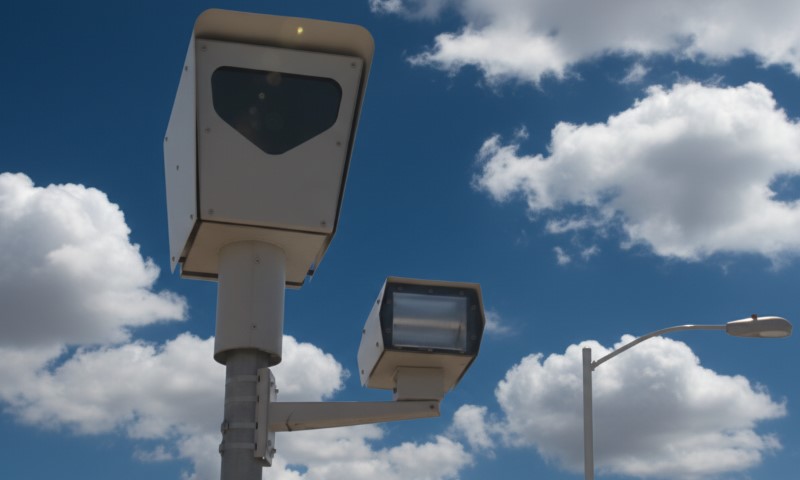
Phoenix places corridor cameras mid-block on specific segments the city links to speed-related crash history.
School-zone devices rotate weekly through the academic year, focused on 15-mph zones where small speed differences can carry severe consequences. Here’s what we know according to the official sources:
Corridor Camera Segments (9)
- Thunderbird Road: 35th Avenue to I-17
- 32nd Street: Greenway Parkway to Bell Road
- Thunderbird Road: I-17 to 19th Avenue
- 7th Street: Thomas Road to Indian School Road
- Indian School Road: 83rd Avenue to 75th Avenue
- Camelback Road: 24th Street to 32nd Street
- 51st Avenue: Van Buren Street to I-10
- Baseline Road: 16th Street to 24th Street
- Bell Road: I-17 to 19th Avenue
Each segment reflects a pattern Phoenix says shows higher rates of serious or fatal injuries tied to speed.
School Zones (8 Cameras)
Eight additional cameras rotate through 15-mph school zones on a weekly schedule during the school year. Phoenix also points the public to a city-hosted map of device locations, a move meant to reduce guesswork and claims of secrecy.
Why Phoenix Is Bringing Them Back
View this post on Instagram
The city’s messaging centers on safety, staffing reality, and a broader Vision Zero framework. Local reporting adds context.
Speed, Serious Injuries, And Fatalities Drive Site Selection
When speed-related crashes result in injuries, affected drivers and families often turn to legal guidance early, and resources to explore that path are available if you click here.
Phoenix frames the locations as data-driven, aimed at corridors with high numbers of serious and fatal injuries and areas with high instances of speed-related crashes or known high-speeding behavior.
Reporting by KJZZ connects the return to road safety planning and an urgency created by severe crashes. A city transportation official pointed to serious injury and fatality collisions as the reason to do more.
A Supplement To Traffic Enforcement
The program is positioned as a supplement to the Phoenix Police Department, not a replacement.
KJZZ ties the decision to staffing limits that constrain traffic patrol coverage in a city as large and spread out as Phoenix. Cameras fill gaps on corridors where speed remains persistent even when patrols rotate elsewhere.
Vision Zero Framing, And A Live Dispute About The Numbers
Phoenix’s Road Safety Action Plan annual update reports 263 traffic deaths in 2023. For 2024, the document flags early-stage and unconfirmed data, estimating 219 traffic deaths, an approximate 17% drop from 2023.
At the same time, AZFamily reported different figures, saying Phoenix recorded 278 traffic deaths in 2024 and 307 the year before.
The discrepancy matters. Traffic death counts vary by dataset, timing of case closure, and roadway network included. Phoenix’s own document warns that 2024 data is not finalized.
How Automated Speed Enforcement Works, In Plain Terms
Phoenix uses camera-based speed monitoring with citations processed like traffic enforcement, initiated by automated detection and evidence capture.
A typical workflow looks like the following:
- Speed Detection: A device monitors vehicle speeds in a defined zone.
- Evidence Capture: Images or video record a vehicle when speed exceeds the posted limit.
- Human Review Before Citation: Arizona law requires law enforcement review of recorded evidence before a citation issues. Vendors cannot decide whether a violation occurred.
- Warning Or Citation: During the warning period, Phoenix mails notices without fines. After March 25, citations issue.
- Resolution Options: Phoenix lists online, mail, and in-person payment pathways for civil traffic or parking ticket fines.
Camera enforcement often shifts disputes away from officer recollection toward records and evidence.
What Happens If You Get Flagged In Phoenix
The city’s FAQ aims at regular drivers and offers clear anchors.
- Expect warnings first from Feb 23 through March 24.
- Expect citations starting March 25.
- Payment channels mirror standard civil traffic or parking ticket processes.
Phoenix says revenue is not the point. Officials describe a cost-recovery model, with remaining funds directed back into Vision Zero plan implementation.
Arizona’s Legal Framework Shapes What Phoenix Can Do
Arizona allows photo enforcement within defined boundaries. Several state-level rules show up in daily practice.
Photo Enforcement Is Allowed, With A Highway Caveat
A nonpartisan issue brief from the Arizona State Senate explains that Arizona law allows photo radar for violations involving speed or traffic signs, signals, or markings. A 2016 law change prohibited photo radar on state highways.
Phoenix can run a program on city streets and certain locally controlled corridors. State highways sit under different restrictions.
Law Enforcement Review Is Mandatory
Legislative text for SB1110 states that before a citation issues, a law enforcement agency must review recorded evidence to determine whether a violation occurred. Phoenix’s messaging aligns with the requirement by stressing that cameras supplement police enforcement rather than outsource decisions to a vendor.
Service And Timing Rules Matter
Arizona statutes on commencement of action lay out timelines. When a case begins by filing, filing must occur within 60 days after the alleged violation and service must occur within 90 days after the filing date.
A formal opinion from the Arizona Attorney General’s Office discusses service requirements for citations generated from photo enforcement, including disclosures required when agencies attempt service by methods outside statutory authorization.
For a Phoenix-focused explainer, the safe framing is simple: Arizona sets specific timelines and service rules for traffic complaints, and photo enforcement citations intersect with those rules.
Key Arizona Rules In Real Life
| Topic | What State Materials Say | Why It Matters For Phoenix Drivers |
| Photo enforcement allowed | Allowed for speed and traffic control violations | Explains why Phoenix can run a program on city streets |
| State highway restriction | Prohibited on state highways | Limits where cameras appear |
| Law enforcement review | Evidence must be reviewed before a citation issues | Central to due process |
| Filing and service timing | Statutes set deadlines | Shapes mailed notices versus formal service |
| Attorney General guidance | Opinions discuss service methods and disclosures | Often cited in public debates |
What Drivers Should Do During The Warning Period
Phoenix offers 30 days to adjust behavior before citations begin. Practical steps help avoid surprises.
- Assume mid-block enforcement. Corridor cameras sit mid-block, not only at intersections.
- Treat listed segments as active zones. Devices are mobile and rotate based on need. Seeing a device move does not mean a corridor goes inactive.
- Respect school zones. Fifteen miles per hour leaves little margin, and cameras rotate weekly during the school year.
- Avoid grace assumptions. City language says “over the posted speed limit” without publishing a numeric buffer.
Are Speed Cameras Effective, And What Does The Evidence Say
Phoenix calls automated enforcement a proven tool. Broad research supports reductions in speeding and, in many contexts, reductions in crashes.
Evidence Cited By Safety Researchers
A research summary from the Insurance Institute for Highway Safety reports that studies show speed safety cameras reduce speeding.
Findings include a New York City school zone analysis showing a 14% reduction in crashes at camera sites during operating hours, with ticket volumes falling 75% within 2 years.
The Vision Zero Network points to a Cochrane review describing crash reductions near camera locations and reductions in fatal or serious injury crashes, with ranges varying across studies and contexts.
Phoenix’s strategy concentrates cameras on corridors with serious crash histories and in school zones, matching the safety logic used elsewhere.
National Context On Speeding
Speeding remains a persistent contributor to fatal crashes. The National Highway Traffic Safety Administration reports that in 2023, speeding was a contributing factor in 29% of all traffic fatalities.
That national backdrop explains why cities keep returning to camera enforcement after political backlash, especially when staffing limits and road design changes cannot scale fast enough.
Pushback And Arizona Politics Keep Resurfacing
Automated enforcement in Arizona rarely settles for long. Early February 2026 coverage by KJZZ described renewed efforts by some state lawmakers to ban photo radar statewide, with proposals moving through the legislative process as Phoenix rolls cameras out.
Axios reported activity aimed at putting a ban question before voters, outlining arguments about due process and revenue motives alongside city and law enforcement claims about safety outcomes.
For Phoenix residents, the practical point is straightforward. Even with a Feb 23 launch, the legal and political environment can keep shifting.
Program design choices matter. Site transparency, clear signage, outcome reporting, and how funds are used will influence whether the program sticks.
What To Watch After Feb 23 If You Track Results
Phoenix makes specific claims about intent and outcomes. Accountability requires tracking measurable items implied by city messaging.
Operational Metrics
- Number of warnings issued during the 30-day window
- Speed distribution changes on the nine corridor segments
- Repeat violations after warnings
Safety Metrics
- Speed-involved crashes on targeted corridors
- Serious injury and fatal crash counts, reported with clear definitions and data source notes
Governance Metrics
- Published costs and what “cost recovery” means in practice
- How any net revenue funds Road Safety Action Plan work
Practical Questions Drivers Ask, Answered
The Road Ahead
Phoenix’s reintroduction of automated speed enforcement lands in a familiar tension zone. Safety data, staffing limits, and national trends push cities toward cameras. Political skepticism and legal challenges push back. The city’s choice to stage the rollout with a warning period, publish locations, and emphasize law enforcement review reflects lessons learned from past programs.
For drivers, the message is practical rather than moral. The corridors listed are active. School zones carry a tight margin. The warning month offers a clean reset. After March 25, the rules look like any other civil traffic enforcement pathway, only initiated by a camera rather than a stop.
Whether the program lasts will depend on outcomes, transparency, and trust. Phoenix has tied its credibility to measurable safety improvements and reinvestment in Vision Zero goals. The months after Feb 23 will show whether that framing holds.