


For more than 20 years, e-commerce has followed a familiar rhythm. A shopper searches, clicks a result, lands on a product page, adds to cart, fills out a checkout form, then maybe buys.
Every store learned how to optimize each step. SEO teams fought for rankings. Performance marketers chased the click. UX teams shaved seconds off checkout.
Google is now testing a different shape of funnel in the United States.
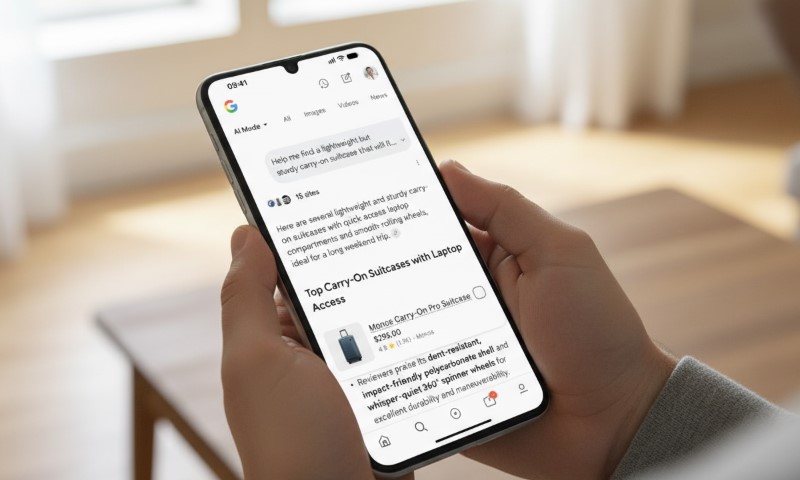
With checkout built directly into the Gemini app and into AI Mode in Google Search, shoppers can research, decide, and complete a purchase without ever reaching a merchant website in the traditional way. Google calls the shift “agentic commerce,” where AI does more than suggest. It can act.
Under the hood sits a new standard, the Universal Commerce Protocol, or UCP. It connects retailers, payment providers, and AI interfaces so purchases can happen wherever the decision occurs.
For stores that depend on organic search, paid search, and retargeting, the implication is blunt. A growing share of high-intent shoppers may complete the most valuable steps of the journey inside Google’s interface.
The customer still comes from Google, but the click, the session, the pixel, and sometimes even the checkout page never happen.
That is a new traffic gate.
Below is what Google announced, how Gemini Checkout works in practice, and what it changes for acquisition, measurement, merchandising, and retention in the US market.
What Gemini Checkout Means In Practice
Instagram पर यह पोस्ट देखें
Google says UCP will “soon power a new checkout feature” on eligible product listings inside AI Mode in Search and inside the Gemini app, initially for eligible US retailers.
Shoppers can complete checkout using Google Pay, with payment methods and shipping information already saved in Google Wallet. PayPal support is planned.
The Associated Press described it in plain terms: an instant checkout function that lets customers make purchases from some businesses without leaving the Gemini chat experience they used to find products.
Google announced the feature at the National Retail Federation’s annual convention in New York, which AP said is expected to draw about 40,000 attendees.
From a shopper’s perspective, the flow feels simple.
- Search or ask Gemini about a product.
- Compare options inside the AI interface.
- Select an item.
- Pay with Google Pay, no form filling.
From a merchant perspective, the shift is more subtle and more disruptive.
The Seller Of Record Detail Matters
Google’s Merchant Center documentation stresses one key point. Merchants remain the seller of record. The store still fulfills the order, handles customer support, manages returns, and owns the commercial relationship in principle.
That responsibility makes it critical for merchants to assess the tools and services surrounding checkout and acquisition, including insights found at https://www.highsocial.com/reviews/.
Google also says checkout requirements can be customized. Age verification, delivery scheduling, final sale rules, and similar constraints can be preserved. The company argues that keeping shoppers in a secure Google Pay flow reduces steps and can reduce cart abandonment.
So Google is not positioning itself as the retailer.
Instead, it becomes the front door and the transaction layer.
How much control merchants retain depends on implementation choices and on how much of the journey moves off-site.
The Technology Behind It, Universal Commerce Protocol

Google describes UCP as an open standard for agentic commerce that works across the full shopping journey, from discovery and buying to post-purchase support.
The goal is a shared language so AI agents and commerce systems can talk to each other without custom integrations for every platform.
Google also says UCP is compatible with existing protocols like Agent2Agent, Agent Payments Protocol, and Model Context Protocol.
In practical terms, UCP tries to solve a problem that every retailer knows well. Checkout is full of edge cases.
- Discount codes.
- Loyalty validation.
- Subscriptions.
- Inventory rules.
- Regional compliance.
Who Is Involved
Google says UCP was co-developed with Shopify, Etsy, Wayfair, Target, and Walmart, and endorsed by more than 20 additional companies across retail and payments.
That list matters. Standards only become real when large platforms treat them as default plumbing rather than experiments.
When Walmart and Shopify show up early, smaller merchants pay attention.
Why Google Is Pushing A Protocol
Search Engine Land summarized the motivation clearly. Agentic shopping moves decision-making into AI interfaces, often before a shopper ever reaches a retailer site. Discovery and conversion concentrate inside AI-driven experiences.
For Google, UCP makes embedded checkout scalable. Without a standard, every retailer would require a custom engineering project. With a protocol, checkout can appear wherever the AI decides the moment is right.
Why Stores Should Treat Gemini Checkout As A New Traffic Gate
A traffic gate forms whenever a platform sits between shopper intent and merchant access.
- Shopping malls were a gate.
- Marketplaces are a gate.
- Search has always been a gate, but it usually pushed users onto your site.
Embedded checkout changes the nature of that gate.
When checkout lives inside Google’s interface:
- Site visits can drop even when sales hold steady.
- Persuasion space shrinks because long PDPs disappear.
- Attribution becomes fuzzier.
- Feed quality and platform rules matter more than page design.
Google is explicit about the goal. Enable checkout right as shoppers are researching on Google.
For SEO teams and performance marketers, the unit of competition shifts. It is no longer only about earning the click. It becomes about earning the AI’s selection and closing the sale inside the AI.
Funnel Before And After, What Changes Operationally
Two numbers explain why Google is targeting checkout friction so aggressively.
Baymard’s documented average cart abandonment rate is 70.22% across studies.
Google argues that fewer steps and a trusted Google Pay flow can reduce abandonment by removing form fill and uncertainty at payment time.
Even a small reduction in abandonment translates into serious revenue at scale.
Measurement, SEO, And Paid Media Get Rewritten
View this post on Instagram
AI-driven checkout pulls conversion into Google’s interface, forcing measurement, SEO, and paid media teams to rethink what success looks like when clicks and sessions no longer tell the full story.
Analytics And Attribution Become Less Clean
When checkout happens inside Gemini or AI Mode, many merchants will see:
- Lower sessions and pageviews.
- Weaker correlation between spend and site behavior.
- More orders that look like direct or lightly attributed referrals.
Fewer steps can mean fewer drop-offs, which is good. The challenge is operational clarity. Teams still need to know which queries, creatives, offers, and attributes lead to AI selection and purchase.
Google’s guidance points merchants toward Merchant Center attributes designed for conversational commerce. Measurement shifts toward feed diagnostics and platform reporting, not only on-site event streams.
SEO Becomes Structured Reality
Content still matters for trust, education, and long-tail discovery. But AI Mode shopping is powered by Shopping Graph data, not by page copy alone.
Google says Shopping Graph contains more than 50 billion product listings, with more than 2 billion listings refreshed every hour.
In that environment, winners tend to share a few traits:
Clean variant data, sizes, colors, materials.
- Accurate availability.
- Consistent pricing feeds.
- Strong reviews and reputation signals.
- Clear shipping and return policies.
If product data is messy, AI selection becomes less likely. When selection happens, the presentation may include hedging language that hurts conversion.
Paid Search Tilts Toward The Moment Of Decision
Google is also introducing a pilot ad format called Direct Offers inside AI Mode. The goal is to surface exclusive discounts when Google detects a shopper is close to buying.
That signals where paid media is headed:
- Less broad keyword coverage.
- More focus on eligibility inside high-intent AI surfaces.
- More pressure on offer strategy and margin discipline.
When discounts appear inside an AI interface, they compete with email capture, loyalty programs, and promo calendars. Offer design becomes strategic, not reactive.
Shopify’s Role Signals A Broader Market Shift
Shopify is not treating agentic checkout as a single Google integration. Shopify says integrations across Google AI Mode, Gemini, Microsoft Copilot, and ChatGPT are managed centrally from Shopify Admin via “Agentic Storefronts.”
Shopify also reports that its Catalog is opening to every brand through an “Agentic plan.” Brands on other platforms can use Shopify infrastructure to sell on AI channels without running a Shopify online store.
Digital Commerce 360 framed Shopify’s strategy clearly. Enable purchases directly inside AI search and chat tools instead of sending shoppers to traditional sites.
If Shopify normalizes AI surfaces as a standard channel alongside marketplaces and paid social, many merchants will feel pressure to participate. Opting out risks invisibility at the decision layer.
Early Retailer Signals And Rollout Shape
AP reports Walmart is among the partners and highlights account linking. Customers can manage purchases alongside Walmart or Sam’s Club carts when accounts are connected.
Google’s UCP partner list includes Walmart, Target, Wayfair, Etsy, and Shopify, plus endorsements across payments and retail.
What remains unclear publicly is rollout pace and category coverage. Merchant Center documentation shows the feature is phased and tied to eligibility requirements, including a “native_commerce” product attribute tied to the Buy button experience.
Where Merchants Lose Leverage
As checkout and decision-making move inside Google’s AI interfaces, merchants begin to lose leverage at the exact moment where brand control, customer data, and differentiation once mattered most.
Differentiation Compresses
When shoppers never land on a PDP, differentiation depends on what the AI shows:
- Shipping speed and cost.
- Return policy.
- Ratings and reviews.
Rich storytelling and UX nuance matter less when everything becomes a summary.
Platform Dependency Increases
Eligibility rules change. Policies change. Surfaces change.
UCP being open helps long-term, but early distribution power lives inside Google’s ecosystem. Third-party analysis notes that while the standard is open, execution power is concentrated where consumers already are.
Customer Data Continuity Is A Real Question
Google says merchants keep customer relationships, but practical details matter. Identity handoff, consent, marketing opt-ins, and post-purchase touchpoints depend on integration choices and shopper permissions.
Fraud And Chargeback Dynamics Shift
A Google Pay flow increases trust, but it also changes fraud patterns. Disputes may involve platform artifacts, merchant policies, and payment provider logic.
Google emphasizes security and clear accountability between merchants, credential providers, and payment services.
Practical Preparation Checklist For US Retailers

Google’s materials point to Merchant Center feeds and UCP integration as the foundation. A realistic readiness checklist looks like:
Product Data Hygiene
- Complete variant data.
- Accurate pricing.
- Reliable availability signals.
- Clean images for AI surfaces.
Checkout Requirements Mapping
- List edge cases that must survive embedded checkout.
- Verify promotions, loyalty, and subscription handling.
- Digital Commerce 360 notes UCP supports discount codes and loyalty validation.
Policy Clarity
- Make shipping and returns policies explicit and machine-readable.
- Remove ambiguous language that forces AI hedging.
Offer Strategy For AI Mode
Decide what discounts are acceptable at the decision moment.
Treat Direct Offers as a margin tool, not a panic lever.
Measurement Planning
- Expect fewer sessions.
- Track outcomes by product and feed attribute.
- Align internal reporting so sales without sessions are not misread.
How Gemini Checkout Fits The Bigger Shift In Shopping Interfaces
Google is pairing AI Mode shopping with Shopping Graph scale and agentic capabilities that move beyond browsing into action. Think with Google describes AI Mode running multiple simultaneous searches to refine suggestions and emphasizes the scale and freshness of product data.
UCP and embedded checkout then turn that discovery layer into a transaction layer.
Google’s announcement frames the direction clearly. Agentic commerce is moving from concept to operational reality, supported by standardized actions and secure payment protocols.
Competitive pressure is obvious. Industry coverage points to similar embedded checkout pushes from OpenAI and Microsoft.
Gemini Checkout is not a standalone feature. It is part of a platform race to own the interface where shoppers decide and buy.
For US retailers, the message is uncomfortable but clear. Traffic still comes from Google. Control over how that traffic converts is changing. The new gate is already being built.